

Good accounting software is the financial backbone of a small business, tracking income and expenses, sending invoices, and keeping you ready for tax season. The right platform saves hours of manual work and helps you understand exactly how your business is performing.
With options ranging from genuinely free tools to robust systems for established companies, the best choice depends on your size and needs. Below we rank the seven best accounting software platforms for small business in 2026, with each tool’s starting price and who it suits best, so you can manage your books without overpaying.
| Rank | Software | Starting Price | Best For |
|---|---|---|---|
| 1 | QuickBooks Online | $38/mo | Best overall |
| 2 | Xero | $25/mo | Best for growing teams |
| 3 | FreshBooks | $19/mo | Best for freelancers |
| 4 | Wave | Free | Best free option |
| 5 | Zoho Books | $20/mo | Best value and ecosystem |
| 6 | Patriot Software | $20/mo | Best for micro-businesses |
| 7 | Sage 50 | $124.42/mo | Best for established businesses |
The 7 Best Accounting Software Platforms in 2026, Ranked
1. QuickBooks Online: The Best Overall Choice
Starting Price: $38/mo | Best For: Most small businesses wanting depth and support
QuickBooks Online remains the industry standard for small business accounting in 2026, thanks to its deep feature set and more than 750 integrations. It is also the software most US accountants know best, making it easy to hand off your books at tax time.
Its Simple Start plan begins at $38 a month, scaling up through Essentials, Plus, and Advanced tiers as your needs grow. For businesses that want a comprehensive, widely supported platform, QuickBooks is the safe and powerful default.
2. Xero: The Best for Growing Teams
Starting Price: $25/mo | Best For: Businesses with multiple users
Xero stands out by including unlimited users on every plan, a rarity that makes it ideal for businesses sharing access with partners, bookkeepers, or accountants. Its clean interface and strong app ecosystem rival QuickBooks at a lower entry price.
Starting at $25 a month, with a $55 Growing plan popular among expanding teams, Xero often works out cheaper than QuickBooks once extra users are factored in. For collaborative businesses, it delivers excellent value.
3. FreshBooks: The Best for Freelancers
Starting Price: $19/mo | Best For: Service businesses and solo owners
FreshBooks was purpose-built for service businesses like consultants, agencies, and freelancers, where time tracking, client billing, and project profitability matter most. Its invoicing tools are among the most polished in the industry.
The Lite plan starts at $19 a month for up to five clients, scaling to unlimited clients on higher tiers. For independent professionals who bill by project or hour, FreshBooks is the most tailored option.
4. Wave: The Best Free Option
Starting Price: Free | Best For: Startups and very small businesses
Wave offers genuinely free accounting and invoicing, with no monthly fee for its core bookkeeping features. You only pay when you add payroll or use its payment processing, making it perfect for brand-new or very small businesses.
Despite being free, it covers income and expense tracking, professional invoices, and basic reports. For solopreneurs and side hustles watching every dollar, Wave delivers remarkable value at no cost.
5. Zoho Books: The Best Value and Ecosystem
Starting Price: $20/mo | Best For: Zoho users and budget-conscious owners
Zoho Books combines affordable pricing with a genuinely useful free plan for businesses earning under $50,000 a year. Paid plans start at just $20 a month, offering strong automation and features that punch above their price.
Its biggest advantage is integration with the wider Zoho suite of CRM, email, and business apps. For companies already using Zoho tools or seeking low-cost power, Zoho Books is a standout.
6. Patriot Software: The Best for Micro-Businesses
Starting Price: $20/mo | Best For: Simple needs and tight budgets
Patriot Software focuses on simplicity and affordability, making it a favorite among micro-businesses that want straightforward bookkeeping without a steep learning curve. Its Basic plan runs $20 a month and Premium $30, with US-based support.
It pairs seamlessly with Patriot’s payroll product, giving small employers an affordable all-in-one option. For owners who need the essentials done well at a low price, Patriot is a smart, no-frills pick.
7. Sage 50: The Best for Established Businesses
Starting Price: $124.42/mo | Best For: Inventory-heavy, growing companies
Sage 50 targets more established small businesses with complex needs, offering robust inventory management, advanced reporting, and multi-user collaboration. It blends desktop power with cloud connectivity for reliability and depth.
At $124.42 a month for the single-user Pro plan, it is the priciest option here, aimed at companies that have outgrown simpler tools. For businesses managing significant inventory or detailed accounting, Sage 50 justifies its cost.
Why Your Small Business Needs Accounting Software
Accurate bookkeeping is not optional, since it determines how much tax you owe, how well you understand cash flow, and whether you can secure financing. Software automates the tedious parts, reducing errors and freeing you to run your business.
It also keeps you compliant and audit-ready, which matters because the IRS requires businesses to maintain thorough records. Solid recordkeeping protects you at tax time and is far easier with the right tool than with spreadsheets.
Free Versus Paid Accounting Software
Free tools like Wave and Zoho Books’ entry tier handle core accounting well and are ideal for startups, freelancers, and very small operations. If your needs are simple and your budget is tight, a free option may be all you require.
Paid software adds automation, deeper reporting, inventory, payroll integration, and stronger support that growing businesses need. As your transactions and team expand, the modest monthly cost of a paid platform usually pays for itself in saved time.
What to Look For in Accounting Software
Match the software to your business model, since a freelancer’s needs differ sharply from a retailer managing inventory. Prioritize features you will actually use, such as invoicing, expense tracking, payroll, or project profitability.
Also weigh ease of use, integrations with tools you already rely on, and whether your accountant supports the platform. Scalability matters too, so choose software that can grow with you rather than forcing a painful switch later.
Do You Still Need an Accountant?
Accounting software handles day-to-day bookkeeping, invoicing, and reporting, and for many small businesses it covers nearly everything they need. Automation and bank feeds mean you can keep clean books without deep accounting knowledge.
An accountant still adds value at key moments, such as tax planning, complex filings, or major decisions like taking on investment. The smartest approach for most owners is to use software for routine work and bring in a professional periodically, which keeps costs low while ensuring accuracy where it matters most.
How We Ranked the Best Accounting Software
This ranking weighs the factors that matter most to small businesses: features and automation, price across plans, ease of use, scalability, and support quality. The goal is to match each platform to the businesses it serves best rather than crown a single winner.
We used verified 2026 pricing and current feature sets, and we encourage confirming tax and recordkeeping basics through the Small Business Administration. Prices and plans change, so check current terms on each provider’s site.
How to Choose the Right Software for Your Business
Start with your business type and size, since they narrow the field quickly. Freelancers lean toward FreshBooks or Wave, growing teams toward Xero, and most general small businesses toward QuickBooks, while established firms with inventory may need Sage 50.
Then factor in your budget and whether you need payroll or advanced features. Many platforms offer free trials, so test one or two before committing, and remember that switching later is easier if your data is well organized from the start, especially after forming your business through one of the best LLC formation services.
Frequently Asked Questions
What is the best accounting software for small business in 2026?
QuickBooks Online ranks best overall for 2026, thanks to its deep features, 750-plus integrations, and widespread support among US accountants, with plans starting at $38 a month.
What is the best free accounting software?
Wave is the best genuinely free option, offering unlimited accounting and invoicing at no cost. Zoho Books also provides a strong free tier for businesses earning under $50,000 a year.
Do I need accounting software as a freelancer?
It is highly recommended, since it simplifies invoicing, tracks deductible expenses, and prepares you for taxes. FreshBooks and Wave are especially well-suited to freelancers and service businesses.
Is QuickBooks worth the price?
For most small businesses, yes, because its depth, integrations, and accountant familiarity save time and reduce errors. Budget-focused owners, however, can get strong results from Xero, Zoho Books, or free Wave.
Can accounting software handle payroll and taxes?
Many platforms offer payroll as a paid add-on and generate reports that simplify tax filing. Always confirm your specific tax obligations, since software assists with but does not replace proper tax compliance.
Related Articles
- Best LLC Formation Services in 2026: Top 7 Compared
- Best States to Start a Business in the US: Top 10 for 2026
- Best Cities for Young Professionals in the US: Top 10 for 2026
- Best Website Builders in 2026: Top 7 Compared
- Best Payment Processors for Small Business: Top 6
- Graphic Design Programs: 10 Free and Paid Tools Compared
- Free VoIP: 8 Services Compared on Numbers, Limits and Hidden Costs
- ZoomInfo Alternatives: 5 Competitors Compared on Real Pricing
- Best Inventory Management Apps: 8 Compared for Small Business

Get the Fox Bulletin briefing
The stories that matter, in your inbox. No spam, unsubscribe anytime.
Newsletter signup will be available soon.
Related stories
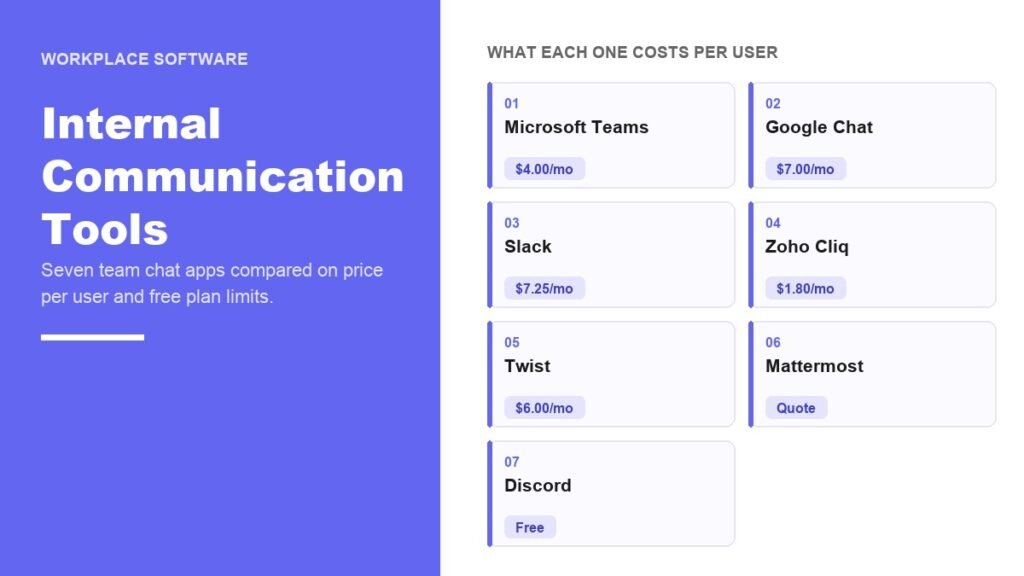
Internal Communication Tools: 7 Team Chat Apps Compared
Seven internal communication tools compared on price per user and free plan limits, starting with whether your existing subscription already includes one.
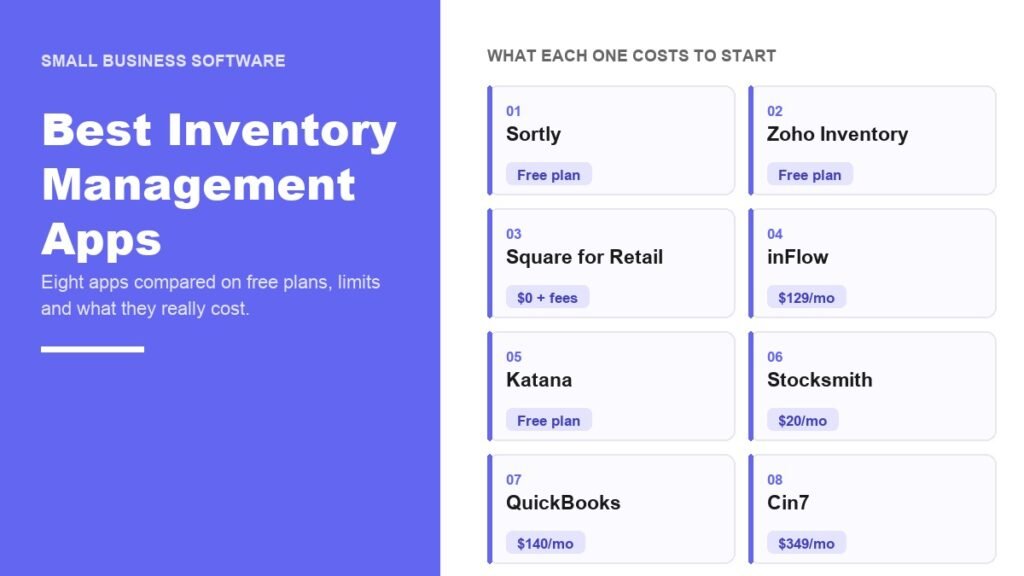
Best Inventory Management Apps: 8 Compared for Small Business
Eight inventory apps compared on free plans, item and order caps, and what each one costs once add-ons and per location charges are included.
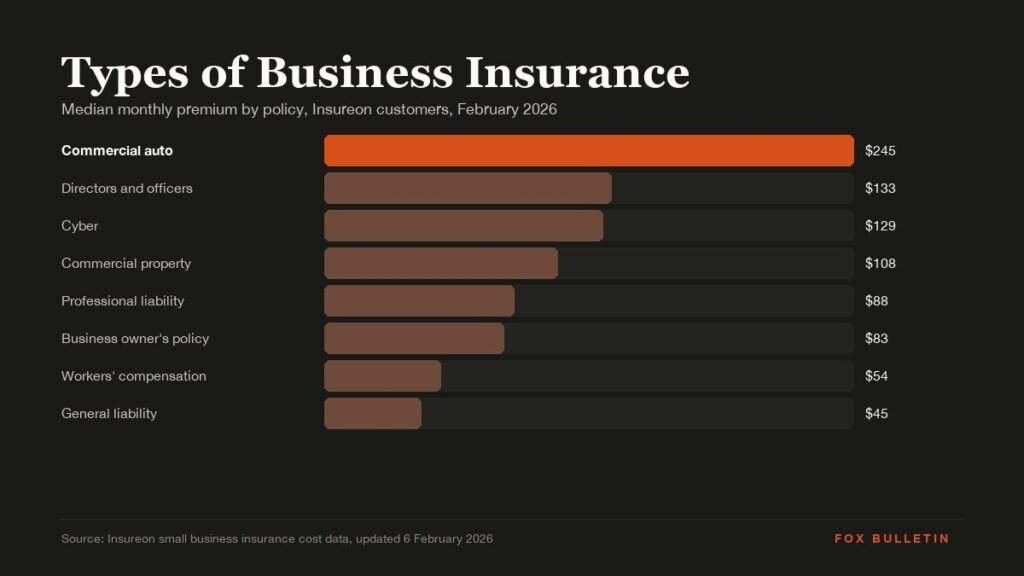
Types of Business Insurance: What Each Policy Covers and Who Must Carry It
General liability, professional liability, workers' compensation, property, BOP, cyber, commercial auto, product liability and D&O: what each covers, when the law requires it, and what small firms pay.