

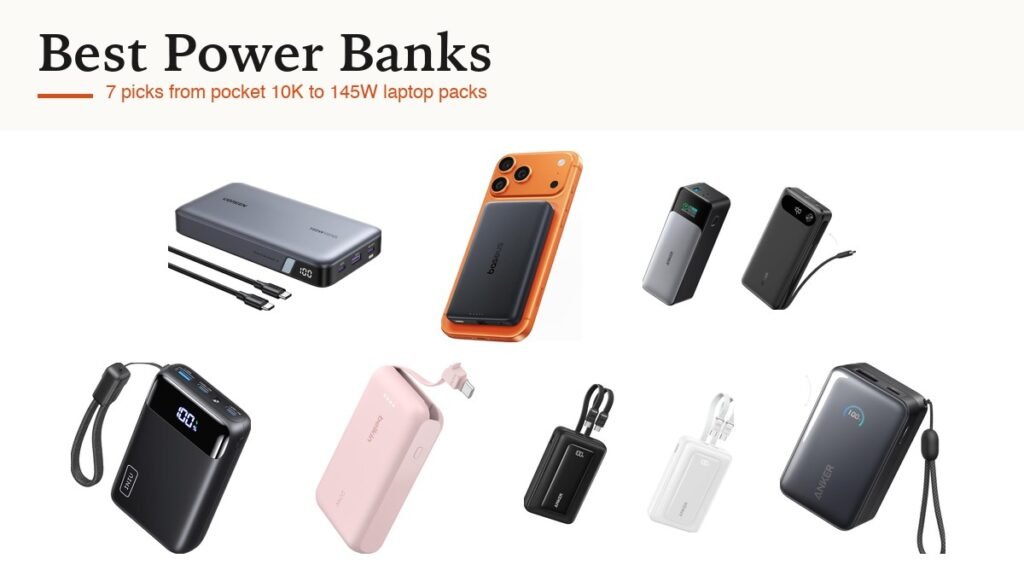
The best power bank is not simply the biggest one. A pack that stores plenty of energy but can only push 20W will keep a phone alive and do almost nothing for a laptop, while a slim magnetic pack that charges an iPhone without a cable may be the only one you actually carry every day.
These seven cover the jobs people really buy a power bank for: a daily phone top-up, a laptop on the road, a shared pack for a family and a budget spare for the glovebox. Specifications are the manufacturers’ own, and charging speeds are presented as the claims they are.
Fox Bulletin is an Amazon Associate. We earn from qualifying purchases made through links on this page, at no extra cost to you. Prices and availability change often, so check the listing before you buy.
Power Bank Comparison: Capacity, Wattage and Ports
The fastest single output is the column to read first if you want to charge a laptop, since a pack’s total wattage is usually split across several ports.
| Model | Capacity | Fastest single output | Ports and cables |
|---|---|---|---|
| Anker Power Bank 20K 87W | 20,000mAh | 65W | Built-in USB-C cable, USB-C, USB-A |
| Anker Nano Power Bank 45W | 10,000mAh | 45W | Retractable USB-C cable, USB-C |
| Baseus Picogo AM52 | 10,000mAh | 45W wired, 25W wireless | USB-C, Qi2.2 magnetic pad |
| UGREEN Nexode 25,000mAh | 25,000mAh | 140W | Two USB-C, one USB-A |
| INIU P512 | 20,000mAh | 22.5W | USB-C lanyard cable plus ports |
| Anker Zolo 20K | 20,000mAh | 45W | Two built-in USB-C cables, USB-C, USB-A |
| Belkin 10K 20W | 10,000mAh | 20W | Built-in USB-C cable, USB-C |
1. Anker Power Bank 20K 87W: The Best All-Rounder
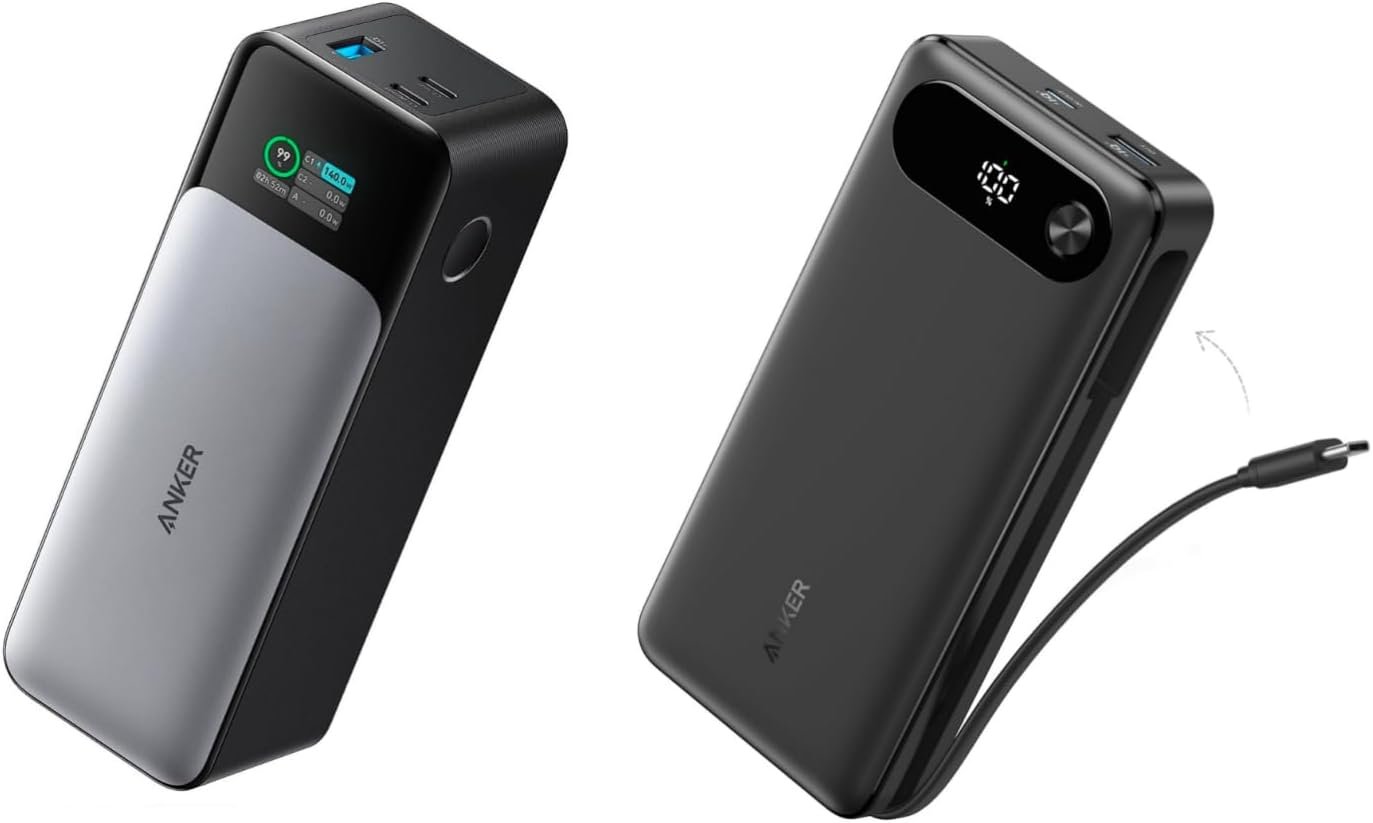
Anker sells this as model A1383, and Amazon lists it as the 737 Power Bank Gen 2. Inside is a 20,000mAh battery rated at 72Wh, feeding three outputs that share 87W: a USB-C cable built into the body, a USB-C port and a USB-A port. Any one of them can deliver 65W, which Anker says takes a 14-inch MacBook Pro to half charge in under 40 minutes.
What makes it the default recommendation is that nothing is missing. The attached cable removes the most common reason a power bank fails you, the screen shows exactly how many watts are flowing in and out, and a 65W wall charger refills the whole pack in around an hour and a half, by Anker’s figure. The price of that versatility is weight, at around 430g.
What it does well
- Up to 65W from a single output and 87W across three.
- Cable built in, so it cannot be left at home.
- Live wattage and time-to-full display.
- Rated at 72Wh, comfortably under airline limits.
What to know before buying
- Heavy for pocket carry at about 430g.
- Some listing text describes the older 24,000mAh 737; the capacity here is 20,000mAh.
2. Anker Nano Power Bank 45W: The Pocket Pack
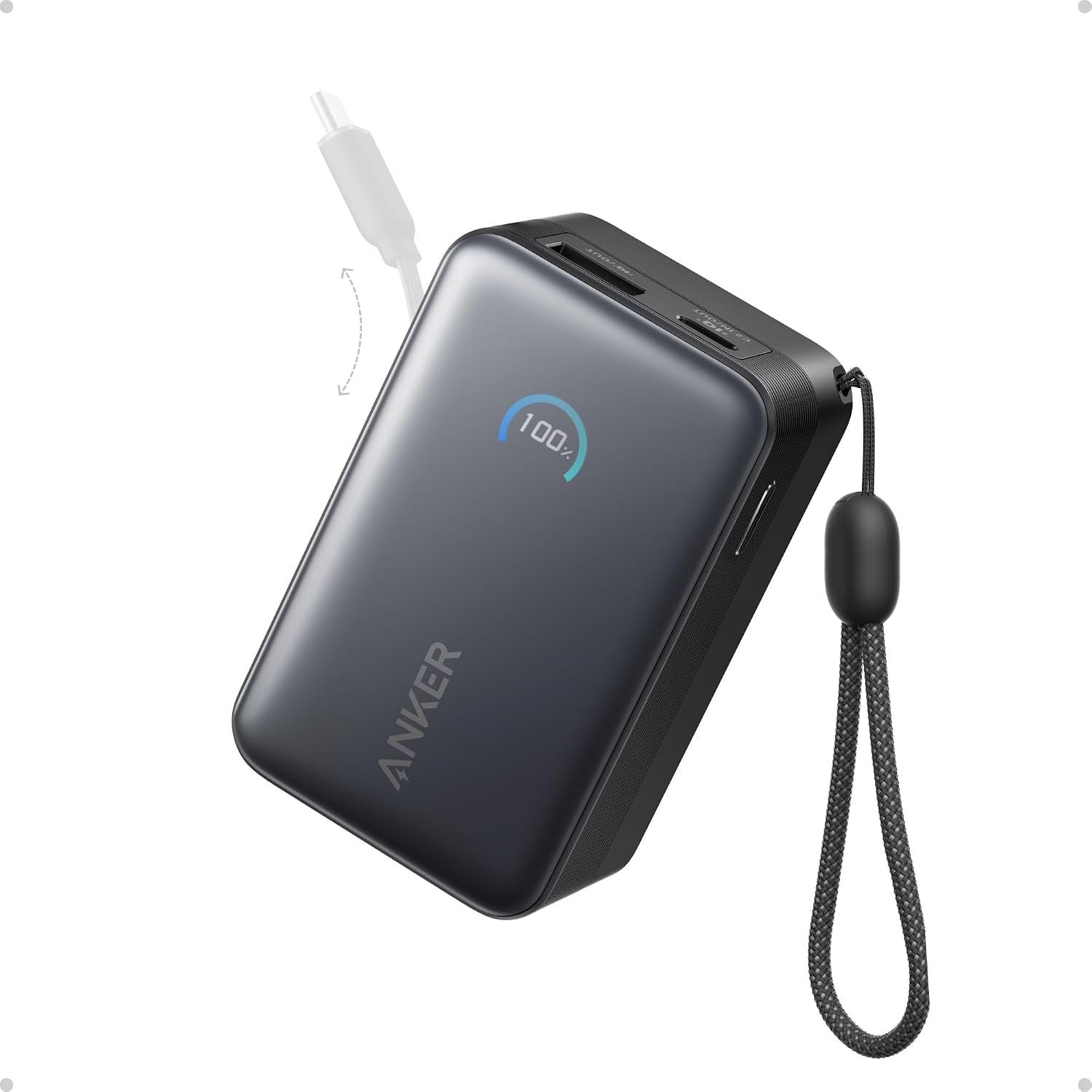
This is the small one: 3.21 by 1.99 by 1.42 inches and 8.2 ounces, with a USB-C cable that pulls out of the case and winds itself back in. Anker says that cable is built to survive more than 20,000 bends, which matters on a part you will flex every day.
It still manages 45W, which Anker says charges an iPhone 16 Pro to 50 percent in 27 minutes. There is a display for the remaining charge, a 30W input that refills the pack in about two hours, and pass-through support, so the pack and a phone can charge from one wall socket overnight.
What it does well
- Genuinely pocket-sized for a 45W pack.
- Retractable cable, nothing to pack separately.
- Pass-through charging from one wall plug.
- Remaining-charge display.
What to know before buying
- 10,000mAh is for phones and earbuds, not laptops.
- If the retractable cable ever fails, you fall back on the USB-C port.
3. Baseus Picogo AM52: Cable-Free Charging for iPhone
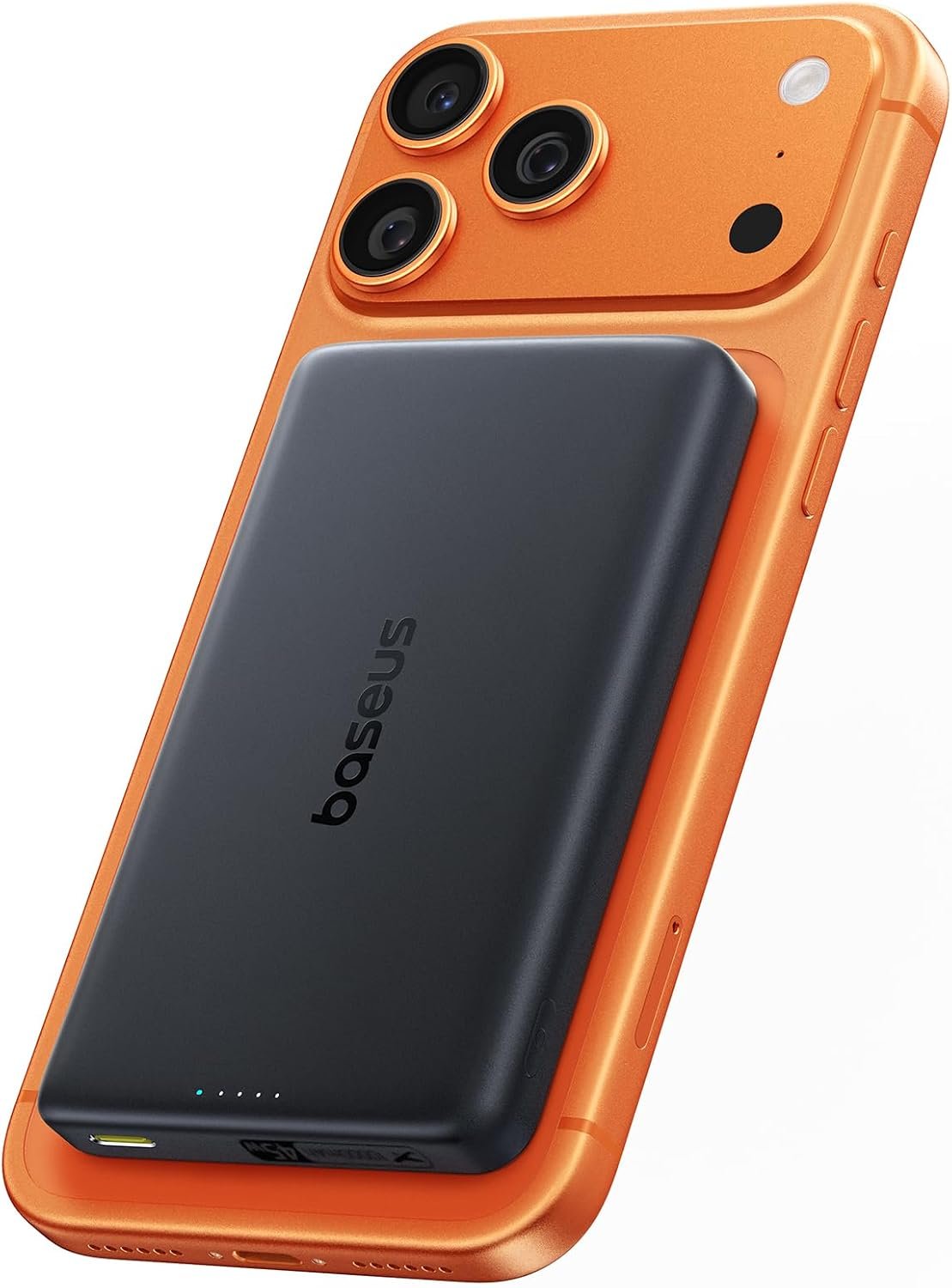
The AM52 is certified for Qi2.2, the 25W tier of the Wireless Power Consortium’s magnetic standard, so it clamps to a MagSafe iPhone and charges it with no cable at all. The iPhone 16, 17 and 18 get the full 25W, and the iPhone 12 to 15 are limited to 15W. Baseus quotes 50 percent on an iPhone 17 Pro in 34 minutes.
Its aluminium body is 0.6 inches thick, and a 45W USB-C port handles wired charging when you need speed or have an Android phone, which cannot use the magnetic mode. Use it bare or with a case that has its own magnets: Baseus says it does not work with non-MagSafe cases, and our iPhone 18 Pro Max cases guide is a good place to find one that does.
What it does well
- Qi2.2 certified, up to 25W wirelessly.
- A 45W USB-C port for wired charging.
- Aluminium shell, 0.6 inches thick.
- 30W input, with Baseus quoting 1.5 hours to refill.
What to know before buying
- iPhone 12 to 15 charge at 15W, not 25W.
- Needs a MagSafe-compatible case.
- Wireless charging wastes more energy than a cable, so you get fewer top-ups per charge.
4. UGREEN Nexode 25,000mAh 145W: Built for Laptops
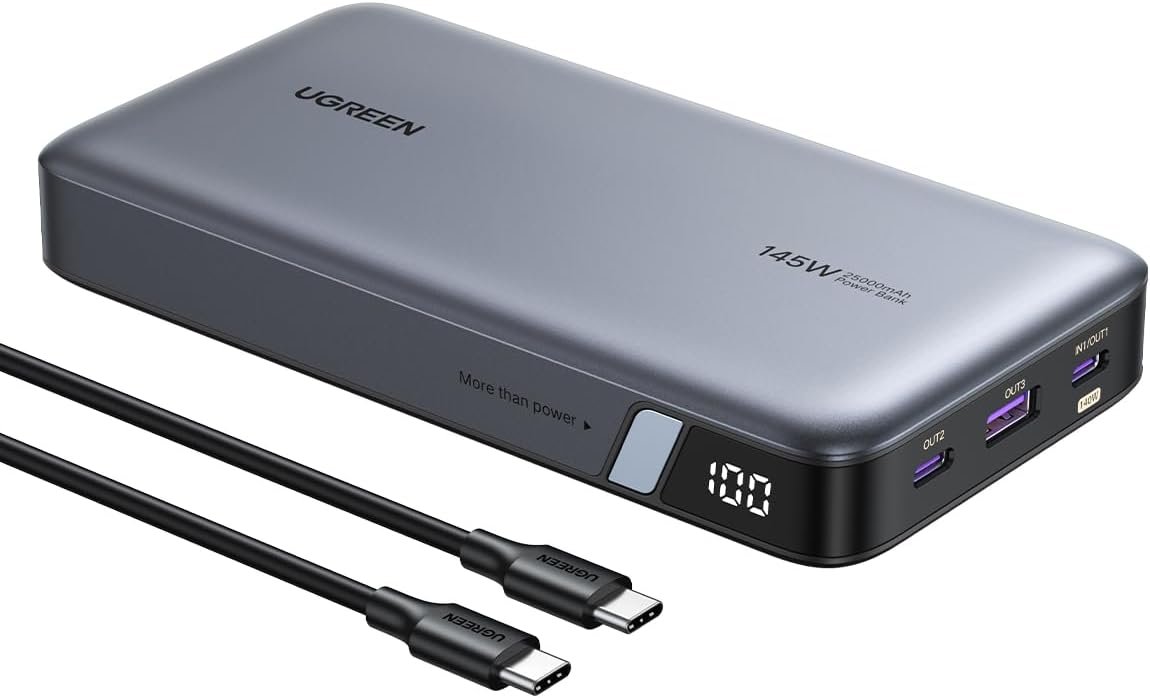
This is the one to take if a laptop is the reason you want a power bank. Its first USB-C port puts out up to 140W, matching the charger Apple ships with the 16-inch MacBook Pro, and UGREEN says that laptop reaches 56 percent in 30 minutes. A second USB-C port gives 65W and a USB-A port 22.5W, for 145W in total.
The battery is rated at 90Wh, which is as large as a spare battery gets before airlines have to approve it. That capacity has a size and weight cost: 160 by 80 by 26mm and 513g, according to UGREEN. A 65W charger refills it in about two hours, and it can charge itself and a laptop at the same time. At a desk, a docking station is the better way to power a laptop; this is for everywhere else.
What it does well
- 140W from one USB-C port, 145W in total.
- 90Wh, the most here and still under the 100Wh limit.
- Charges itself and your devices at the same time.
- Battery-level display.
What to know before buying
- 513g, heavy enough to notice in a backpack.
- Slow to refill from a phone charger: up to six hours at 20W.
- Use a 5A-rated cable, such as the one included, for the full 140W.
5. INIU P512: Budget Capacity With a Flashlight
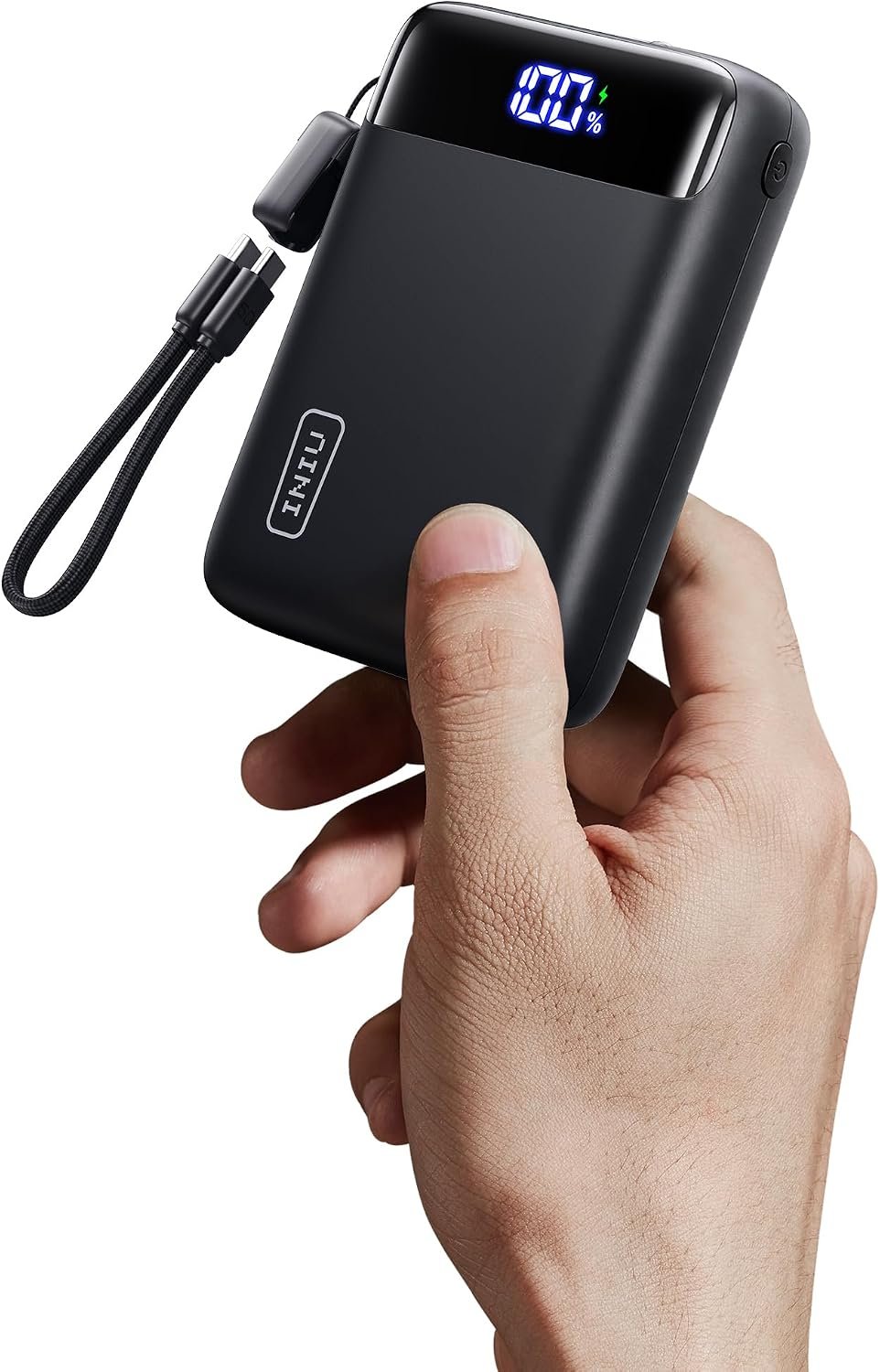
For a spare that lives in a car or a travel bag, the INIU P512 puts 20,000mAh into a 4.1 by 2.8 by 1.1-inch case of about 11 ounces. The USB-C cable is short and detachable and doubles as a carrying loop, and a built-in flashlight earns its place during a power cut.
The limit is speed. At 22.5W it charges phones quickly but is no use for a laptop, and INIU lists 5.4 hours to refill the pack. INIU offers a three-year replacement guarantee. The company’s December 2025 recall covered its older BI-B41 model with specific 2021 and 2022 serial numbers, not the P512.
What it does well
- 20,000mAh at the budget end of the list.
- Detachable USB-C cable that works as a loop.
- Built-in flashlight.
- Three-year replacement guarantee.
What to know before buying
- 22.5W maximum, so phones only.
- Slow to refill at 5.4 hours.
6. Anker Zolo 20K: One Pack, Four Devices
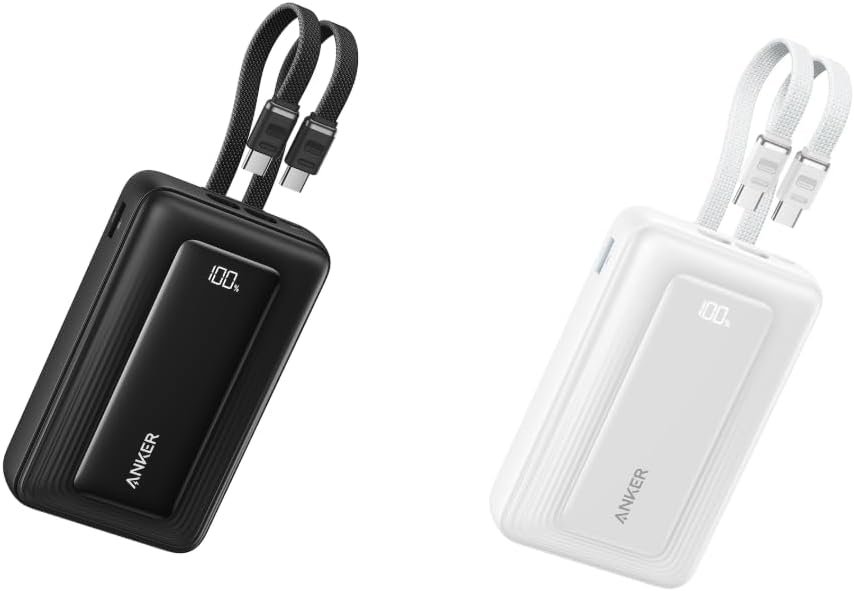
The Zolo has two USB-C cables fixed to the body plus a USB-C port and a USB-A port, so up to four devices can charge at once. For a couple or a family on the road, that means one pack covers everyone without a tangle of spare cables.
Anker quotes 45W for Samsung phones and 40W for the iPhone 17 series. The pack weighs 12.85 ounces and measures 4.72 by 2.89 by 1.24 inches. Watch the listing: a two-pack is sold under almost the same name, and the link below is for a single unit.
What it does well
- Two attached USB-C cables and two ports.
- Up to 45W.
- 20,000mAh at 12.85 ounces.
What to know before buying
- 18-month warranty, compared with 24 months on the Anker Nano.
- Speed drops per device when all four are connected.
7. Belkin 10K 20W: The No-Fuss Option
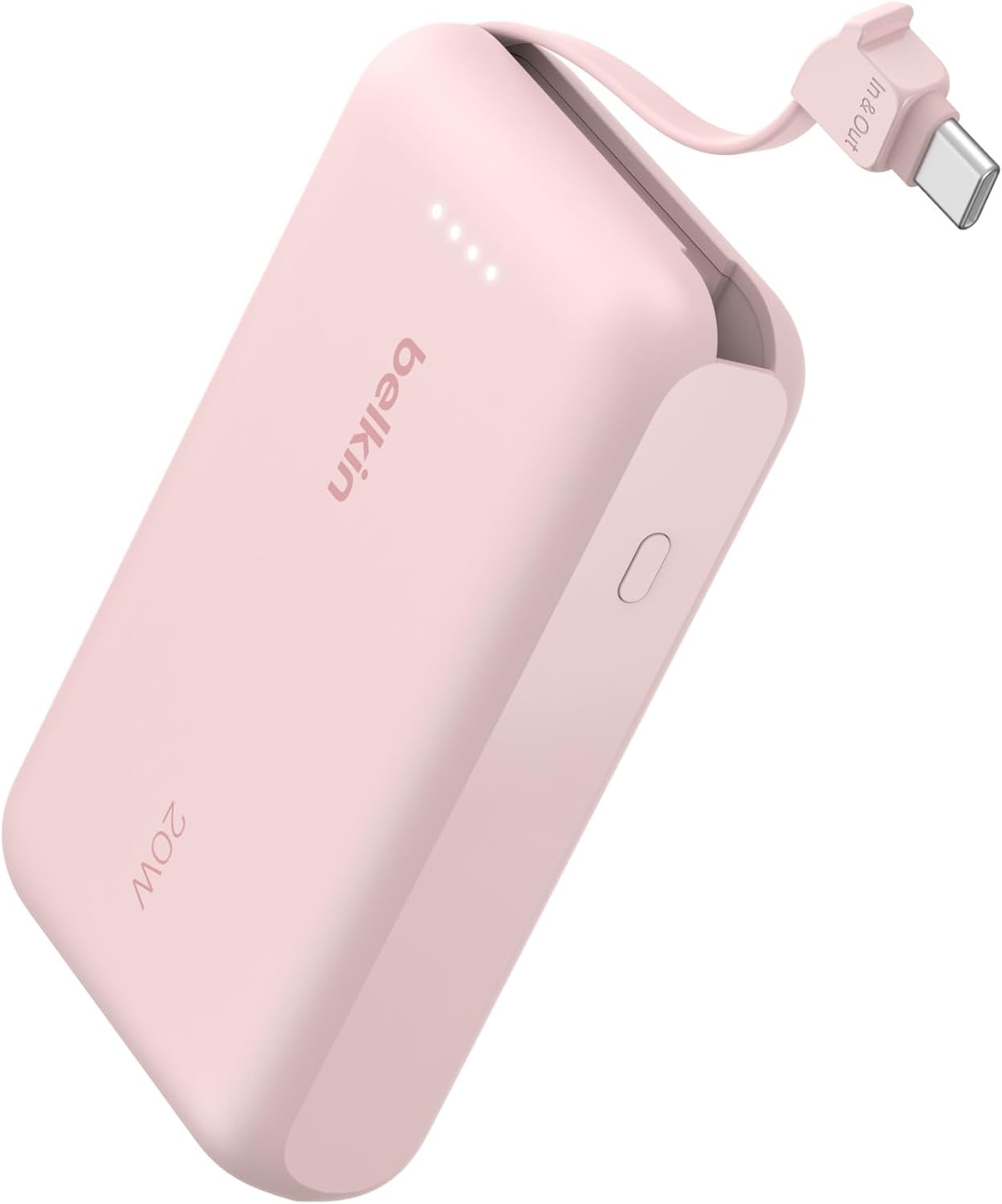
Belkin rates this 10,000mAh pack at 37Wh and gives it an integrated USB-C cable, a second USB-C port and an LED charge indicator. At 20W it fast charges an iPhone, with Belkin claiming 50 percent on an iPhone 16 in 28 minutes.
Connect two devices and they split 15W between them. The model number is BPB021; Belkin’s November 2025 recall applied to its older BPB002 and PB0003 power banks sold from 2020 to 2025, not to this one.
What it does well
- Integrated USB-C cable plus a USB-C port.
- 20W is enough for iPhone fast charging.
- 221g and under an inch thick.
What to know before buying
- Not powerful enough for laptops.
- Two devices share 15W.
What the Watts Figure on the Box Actually Promises
The large wattage on a power bank box is usually the total across every port. What decides laptop charging is the highest figure any single port can deliver, because a laptop draws from one port. That is why the UGREEN, at 140W from one port, and the Anker 20K, at 65W, charge laptops properly, while 45W packs suit phones, tablets and small laptops.
Capacity follows a similar trap. Milliamp-hours are counted at the cell’s 3.6 or 3.7V, so multiply by that voltage and divide by 1,000 to get watt-hours, the figure airlines use. Converting up to USB voltages and charging the phone costs roughly 20 to 30 percent along the way, so a 20,000mAh pack gives around three phone charges rather than four or five.
Airport Security, Cabin Rules and the 100Wh Ceiling
Power banks must go in your carry-on, never in checked bags, and TSA screens them on that basis. The FAA allows spares up to 100Wh without approval, 101 to 160Wh with the airline’s approval and no more than two, and nothing larger. All seven packs here are under 100Wh.
Using one on board is a separate question. Emirates banned using or charging power banks in flight from October 2025, and Southwest requires one in use to stay in view rather than inside a bag. Check your airline’s rules before you fly, and keep the pack in the bag that stays with you; our guide to carry-on bag size covers what each US airline lets you bring.
A few habits keep power banks safe wherever you are:
- Stop using a pack that swells, gets unusually hot or smells of burning.
- Check the model and serial number on the back against recall notices.
- Charge it on a hard surface rather than a bed or sofa.
Which Power Bank to Buy
Start with the Anker 20K 87W unless you have a reason not to. It covers phones and laptops, has its cable attached and tells you what it is doing. Swap to the UGREEN if you work from a 16-inch laptop or want the largest battery you can fly with.
For phone-only use, the Anker Nano is the one that disappears into a pocket, the Baseus AM52 is the one for iPhone owners who would rather not plug in, and the Zolo keeps a family charged from one pack. The INIU and Belkin are the sensible budget spares.
Frequently Asked Questions
What size power bank should I buy?
For a day of phone use, 10,000mAh is enough for one or two full charges. For a weekend away or for sharing, 20,000mAh gives around three. For a laptop, look for 20,000mAh or more with at least 45W, and 65W or higher for faster charging.
Is a 20,000mAh power bank allowed on a plane?
Yes. A 20,000mAh pack is about 72 to 74Wh, below the 100Wh limit for carrying a spare battery without airline approval. It must go in your carry-on, and some airlines restrict using it during the flight.
Can a power bank charge a laptop?
Yes, if it has USB-C Power Delivery and enough wattage from a single port. Match the laptop’s own charger where possible; a smaller pack will still charge it, only more slowly, and may just slow the drain under heavy use.
How do I check whether my power bank has been recalled?
Find the model and serial number printed on the back and compare them with the maker’s recall page and the Consumer Product Safety Commission’s recall notices. Recent power bank recalls have applied only to specific models and serial ranges, so check both numbers.
Related Articles

Get the Fox Bulletin briefing
The stories that matter, in your inbox. No spam, unsubscribe anytime.
Newsletter signup will be available soon.
Related stories
Best Mobile Cooler for Gaming: 7 Phone Coolers Compared on Power and Noise
The best mobile cooler for gaming is a magnetic Peltier cooler that plugs into a wall charger and chills the back of your phone below room temperature, because that is what stops…
Best Samsung Galaxy Z Fold8 Ultra Cases: Top 8 Picks
The 6 best Samsung Galaxy Z Fold8 Ultra cases, from Spigen to official Samsung, plus why Fold8 cases will not fit the Ultra.
Best Samsung Galaxy Z Fold8 Cases: Top 8 Picks
The 6 best Samsung Galaxy Z Fold8 cases, from Spigen to official Samsung and dbrand, plus why Fold8 Ultra cases will not fit.