

Royalty free music is a licence model, not a promise that the music costs nothing: it means the library or artist asks for no further per-use royalty once you hold the licence, while the licence itself still sets limits on where, how and for whom the track can be used. Pixabay puts it plainly by stating that only its full Content License is legally binding, and the same logic applies to every name on this page.
The chart below sorts 12 legitimate libraries and services into three buckets: free libraries, subscription libraries and business services. It reflects each vendor’s licence or terms page as of November 2026 and holds no prices. After the chart, each source gets its own short section, followed by how the buckets differ in law, what YouTube’s Content ID means for these licences and how to give credit correctly.
Twelve Royalty Free Music Sources Compared: Bucket, Licence Coverage and Credit Rules
| Source | Bucket | Licence covers | Attribution needed |
|---|---|---|---|
| YouTube Audio Library | Free library | Use in YouTube videos; monetisable for Partner Program members; no Content ID claims | Depends on the track: Creative Commons tracks need a credit in the video description |
| Pixabay Music | Free library | Commercial use inside a larger creative work; no standalone sale or distribution | No, though appreciated |
| Free Music Archive | Free library | Whatever the track’s Creative Commons licence allows; only tracks without NC permit commercial use | Yes for any licence containing BY |
| Incompetech | Free library | YouTube (monetisable) and streaming under CC BY 4.0; a paid Standard License covers uncredited use | Yes under CC BY 4.0; no under the Standard License |
| Epidemic Sound | Subscription | Sync licence for online videos and podcasts, scoped by plan; channels must be cleared to monetise | Creator licence: a credit line where reasonably possible |
| Artlist | Subscription | Social licence or Pro/Business licence; channels cleared through a clearlist | No credit condition stated |
| Soundstripe | Subscription | Plan-dependent: Personal through Enterprise, plus a Single-Song License | No credit condition stated |
| Uppbeat | Subscription (with a free tier) | Monetised and sponsored content on paid plans; Pro and Business for client and commercial work | Check the plan terms |
| Soundtrack | Business | In-store background music; public performance rights bundled in US plans | None stated |
| SiriusXM Music for Business | Business | In-store background music with public performance royalties included | None stated |
| ASCAP | Business (PRO licence) | Public performance licence for venues and businesses | None stated |
| BMI | Business (PRO licence) | Public performance licence across 25 million+ works | None stated |
Only the four business rows cover music played on premises. A free or subscription licence is built for videos, podcasts and social posts, which is why a shop owner who picks from the first eight rows has solved a different problem from the one in front of them.
Royalty Free Music Sources, Bucket by Bucket
The sections run in chart order. Free libraries come first, then subscriptions, then the business bucket, with each source’s licence facts set out in the same shape.
YouTube Audio Library: Safe on YouTube, Silent Off It
The Audio Library lives only inside YouTube Studio, so a sign-in is needed to browse it, and YouTube adds new releases twice a month. Tracks fall under two licences: the standard Audio Library licence with no credit needed, and Creative Commons tracks that must be credited in the video description. A filter for ‘Attribution not required’ separates the two.
YouTube Partner Program members can monetise videos that use Audio Library music and sound effects, and those tracks will not be claimed through Content ID. The protection stops at the platform edge: YouTube states it is not responsible for ‘royalty-free’ music from other libraries and cannot give legal guidance for use off YouTube.
Pixabay Music: Free, No Credit, With One Hard Limit
The Pixabay music page advertises over 300,000 free tracks, and the licence allows free use and modification with no attribution. A credit is appreciated, and the suggested format is ‘by [Contributor] via Pixabay’.
Commercial use is allowed when the track is part of a larger creative work, which covers client videos, promos and paid training. Selling or distributing a track on a standalone basis is prohibited, as is using it in a trade-mark or business name. Pixabay adds that putting a track on streaming platforms may bring extra distributor requirements, and that you must not claim or monetise the original track.
Free Music Archive: The Licence Is on Each Track Page
FMA hosts open-licensed music from independent artists, most of it under Creative Commons, with some CC0 or public domain. The archive states that it cannot and does not license music itself, so the terms are whatever the artist attached: CC BY, BY-SA, BY-ND, BY-NC, BY-NC-SA or BY-NC-ND.
BY means a credit with Title, Author, Source and Licence. NC blocks commercial use, so only tracks without it suit a monetised channel. FMA treats putting a song in a video as a derivative work, which means ND tracks need extra permission for video. For gym or hold music, FMA says to learn the local collecting-society rules and contact the artist when unsure.
Incompetech: Kevin MacLeod’s Two-Track Licence Choice
Incompetech offers two licences. The free route is Creative Commons Attribution 4.0, which allows YouTube use with monetisation, streaming and live productions, provided the credit is in place. The credit format is the track title, Kevin MacLeod (incompetech.com), the line ‘Licensed under Creative Commons: By Attribution 4.0’ and the link https://creativecommons.org/licenses/by/4.0/.
The Standard License is a paid PDF licence with no attribution, aimed at projects where credit is unwanted or impossible: radio and TV ads, corporate presentations and on-hold music. The choice here is simply credit or licence.
Epidemic Sound: A Sync Licence Scoped by Plan
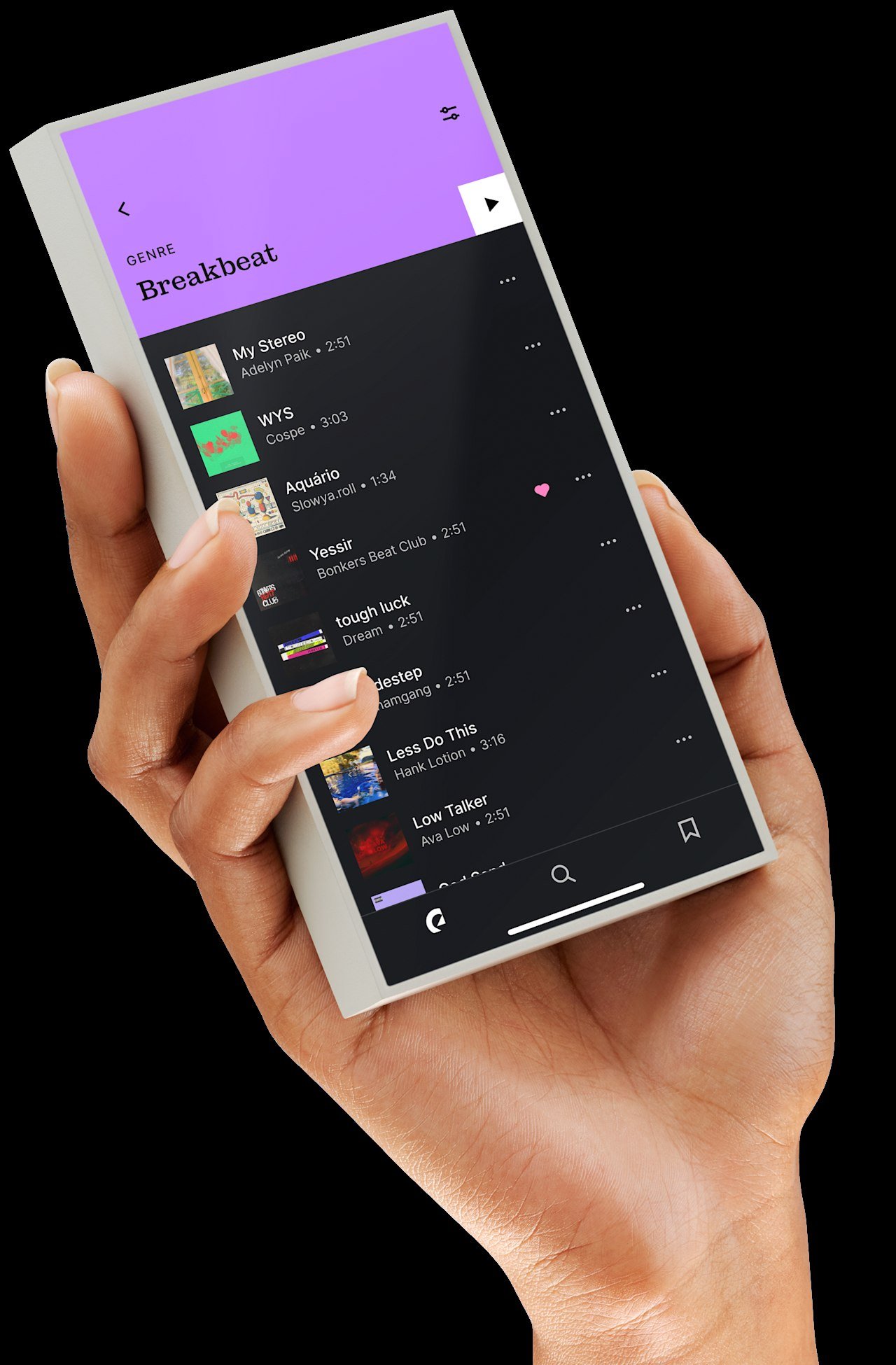
Epidemic Sound publishes a separate licence document per plan. Creator is personal use for one user on personal online channels, with no corporate channels, paid-media ads, live settings or broadcast. Pro suits individual creators, influencers and freelancers publishing anywhere online, but not offline, live or TV. Business allows up to two users, excludes major corporations and government entities, and covers online use including streaming services, with offline use only for internal events.
Monetising needs the channel cleared, with one channel per platform under Creator, and un-cleared uses can be claimed and monetised by Epidemic. Videos published during the subscription stay licensed forever, but no new productions can start after it ends. The licence does not include the right to collect public performance royalties, and Epidemic is not a business background music service.
Artlist: Social Versus Pro/Business, Plus a Clearlist
Artlist has two licence types. Social covers monetisation and sponsorship on personal channels, one channel per platform, with no client work, paid or promoted videos or broadcast. Pro/Business allows up to 3 channels per platform, client work, paid and promoted videos and broadcast; Max Business has unlimited channels and Teams up to 5 per platform.
Projects published during the subscription can be used and monetised forever, and channel URLs added to the clearlist avoid claims. Public performance is permitted, but PRO and collecting-society royalties are not covered, so the user pays if asked. Prohibited uses include standalone use, music channels, radio, static or lyric videos built on Artlist music and registering the music in Content ID.
Soundstripe: Broadcast Rights Rise With the Plan
Soundstripe’s terms run Personal, Pro, Pro Plus, Business and Enterprise, plus a Single-Song License. Personal excludes commercial promotion of a brand, product or service and any broadcast distribution. Pro and Pro Plus allow commercial promotion but not TV, radio or film. Broadcast is permitted on Business, Enterprise and Single-Song, with Business distribution limited to a single designated market area.
Projects are usable in perpetuity but only when created while a plan is active, and downloads are capped at 50 songs, 50 videos and 100 sound effects per day. Monetisation works once channels are ‘Listed’ through Content ID features. Public performance rights are not included for WCPM music, and cue sheet duties apply on any plan when the work is performed through a PRO-licensed medium.
Uppbeat: Plan Table Instead of a Licence Document
Uppbeat grants permission on download and publishes no separate licence document. Its plans run Free, Essentials, Creator, Pro and Business, and all are described as copyright-safe for monetisation. Essentials and Creator suit individuals on their own channels, safelisting 1 or 3 YouTube channels respectively.
Pro is for individuals, freelancers and solo professionals, covering their own content and client projects, and Business is for businesses, agencies and organisations. The free, Essentials and Creator plans do not correctly license business or client work. Creating new tracks from Uppbeat music and redistributing it are not allowed.
Soundtrack: The US Page and the Global Page Say Different Things
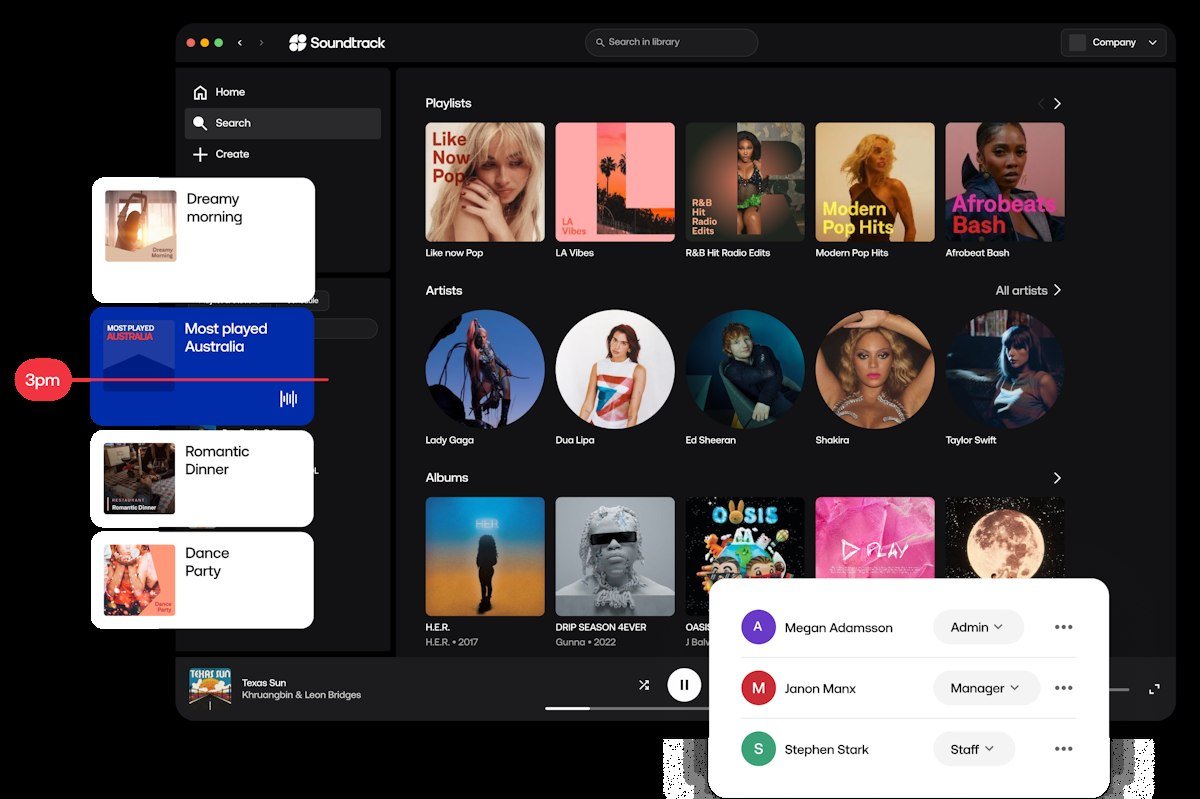
Soundtrack’s US licensing page says a plan includes recording, publishing and public performance rights, with ASCAP, BMI, GMR and SESAC licences included. Extra permissions may be needed for admission fees, live music and timed exercise classes. The catalogue is described as 125 million songs and 2,500+ playlists.
Its global page reads differently: it says to add public performance licences from your local collecting societies. Both statements stand together, because the US plan bundles the performance licences and other markets do not. Soundtrack also states that personal music services such as Spotify are not approved for any business environment.
SiriusXM Music for Business: Royalties Folded Into the Rate
SiriusXM’s business service offers 240+ business-friendly channels by streaming or satellite. The required public performance royalties to ASCAP, BMI, SESAC, GMR and SoundExchange are included in the monthly rate, so the customer does not arrange separate performance licences.
The Customer Agreement for Music for Business Services is the governing document. SiriusXM says that using a consumer subscription for a business violates the Customer Agreement for consumers, and that only Music for Business meets business needs.
ASCAP: The Licence Behind the Songwriters
ASCAP is a not-for-profit membership association of 1.1 million+ songwriters, composers, lyricists and publishers. It states that public performance is a right of music creators, and that is why it licenses businesses such as bars, restaurants and venues.
Its licence categories include Restaurant, Bar and Nightclub, a general licence for all other businesses, and separate licences for fitness facilities, dance schools and churches or ministries. A PRO licence covers the performance of its members’ works; it is not a source of tracks, so it pairs with a music supply.
BMI: 25 Million Works, Over 60 Licence Types

BMI states that federal copyright law requires a business to get permission before publicly performing a work, and its licence covers over 25 million musical works. More than 650,000 businesses are licensed.
The catalogue of over 60 licence types includes Retail, Restaurant/Bar/Brewery and Fitness Club. As with ASCAP, the licence settles the performance right for a venue and does not hand over a library of music files.
Why Spotify Is Left Off the Chart
Spotify’s Terms of Use, last updated 4 September 2026, grant a limited, non-exclusive, revocable permission for personal, non-commercial use of the service and its content. A shop, salon or gym playing a personal account on its speakers sits outside that permission, and Soundtrack makes the same point about personal services in general. No Spotify business product page turned up in the research for this page.
The legitimate route for premises is the business bucket: a service that bundles or requires public performance licences, such as Soundtrack or SiriusXM Music for Business, or direct PRO licences from ASCAP or BMI. For the artist side of the service, see Spotify for Artists, and for what plays actually earn, how much Spotify pays per stream.
How the Three Buckets Differ Legally
A free library grants permission to use a recording, usually on stated conditions such as a credit or a ban on standalone sale. A subscription library sells a sync licence, the right to pair music with video or audio, scoped by plan, channel count and audience, with projects published during the subscription staying licensed after it ends at Epidemic Sound, Artlist and Soundstripe.
The business bucket addresses a different right. Playing recorded music to customers is a public performance, and that right belongs to the creators, which is why ASCAP and BMI license venues. Several subscription licences say outright that they exclude it: Epidemic does not include the right to collect public performance royalties, Artlist does not cover PRO royalties, and Soundstripe grants no public performance rights for WCPM music. For the wider family of rights involved, see copyright, trademark and patent compared.
No page reviewed for this chart states a legal exemption for small businesses, so none should be assumed.
What YouTube Content ID Means for These Licences
Content ID is the system that can attach a claim to a video using registered music. The Audio Library is the one collection YouTube says will not be claimed through it. Elsewhere the outcome depends on the licence and on whether your channel has been cleared.
- Epidemic Sound: un-cleared uses on YouTube can be claimed and monetised by Epidemic, so clear each channel before publishing.
- Artlist: add channel URLs to the clearlist to avoid claims; registering Artlist music in Content ID is itself prohibited.
- Soundstripe: monetisation works once channels are Listed through its Content ID features.
- Free Music Archive: some artists use Content ID, a claim on a Creative Commons track does not conflict with the licence, and FMA cannot resolve it, so contact the artist.
Giving Credit Correctly When a Licence Requires It
Credit is a licence condition, not a courtesy, wherever the licence contains BY. For Creative Commons BY tracks the credit names Title, Author, Source and Licence, as FMA’s example shows. Incompetech spells out its own three-part line with the CC BY 4.0 link, and YouTube asks for Creative Commons credits in the video description.
Where credit is optional, as with Pixabay, the suggested form is ‘by [Contributor] via Pixabay’. Epidemic’s Creator licence asks for the artist name, the title and ‘courtesy of Epidemic Sound’ where reasonably possible. Paid routes such as Incompetech’s Standard License exist for projects where credit is impossible.
Where Licence Summaries Stop and the Full Terms Begin
Plan names, channel limits and licence updates change, and Epidemic’s Creator, Pro and Business licences carry separate revision dates in 2025 and 2026.
The chart leaves out prices because they are served by region. Uppbeat’s free-plan credit terms are not covered, and Mixkit, Bensound and Envato are not included. The wording above summarises vendor terms and is not legal advice; for anything high-stakes, the full licence text is the binding document.
Choosing a Source by What You Are Making
- Monetised YouTube videos: the Audio Library, or a subscription library with the channel cleared.
- Client work or paid ads: Artlist Pro/Business, Soundstripe Pro or higher, Uppbeat Pro or Business, or Epidemic Business.
- A credit you can live with: Incompetech under CC BY 4.0, or an FMA track with BY and no NC.
- Radio, TV or broadcast: Soundstripe Business, Enterprise or Single-Song, or Artlist Pro/Business.
- Music playing in a shop, salon or gym: Soundtrack, SiriusXM Music for Business, or direct ASCAP and BMI licences.
Before downloading, open the licence page for your plan and read three things: the audience, the channel limit and the public performance clause.
Frequently Asked Questions
Can I use Spotify in my shop?
Spotify’s terms permit personal, non-commercial use only. Soundtrack states that personal music services are not approved in any business environment, and SiriusXM says a consumer subscription used for a business violates its consumer agreement.
What is the legitimate route for in-store music?
A business music service that bundles or requires public performance licences, such as Soundtrack or SiriusXM Music for Business, or direct PRO licences from ASCAP and BMI. SiriusXM’s rate includes royalties to 5 organisations, and Soundtrack’s US plans include 4 PRO licences.
Is the YouTube Audio Library monetisable?
Yes, for YouTube Partner Program members, and its tracks will not be claimed through Content ID. Creative Commons tracks in it still need a credit in the video description.
Do I need to credit Pixabay music?
No, though a credit is appreciated, and the suggested format is ‘by [Contributor] via Pixabay’. A Free Music Archive track under any BY licence does require credit.
Related Articles

Get the Fox Bulletin briefing
The stories that matter, in your inbox. No spam, unsubscribe anytime.
Newsletter signup will be available soon.
Related stories
Conjuring Movies: All 10 Films With Dates and Grosses
Ten films make up the Conjuring series: four main-line entries, three Annabelle films, two Nun films and one standalone. This page lists each in release order with its director, runtime and worldwide gross, and covers the budgets, the Warrens and the film still to come.
Playlist Name Ideas: 14 Themes With Names to Borrow
Playlist name ideas are easiest to find by theme, so this page sorts them into 14 groups with the naming rule and example names for each. It also covers how Spotify, YouTube Music and Alexa+ name playlists and what separates a searchable title from a merely clever one.
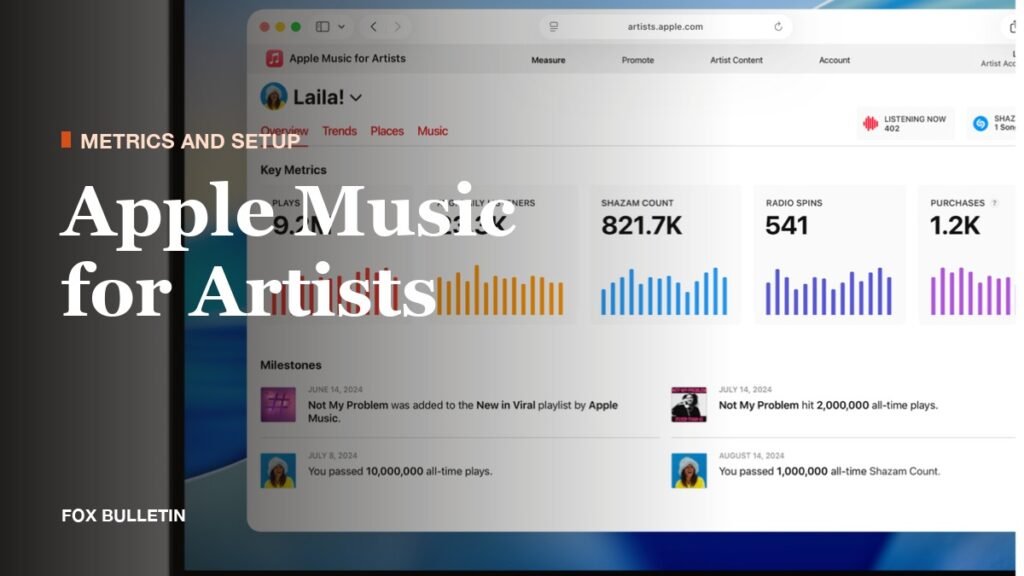
Apple Music for Artists: 8 Metrics, Claiming and Roles
Apple Music for Artists is Apple's artist dashboard for the analytics and artist page tied to your music on Apple Music. This guide lists all 8 metrics with the way each is counted, then walks through claiming a profile, the analytics tabs, release insights, page customization, team roles and the line between the dashboard and your distributor.