

The Nile is the longest of the longest rivers in the world, running about 6,650 km (4,130 miles) from East Africa to the Mediterranean. The Amazon follows at about 6,400 km, the Yangtze at 6,300 km and the Mississippi-Missouri system at 6,275 km, with all four sitting within 400 km of each other.
The lengths in this ranking come from the current compiled list of river systems, which measures each river from its most distant headwater stream to its mouth and gives kilometres and miles. Several entries are named systems, such as the Mississippi-Missouri, because the longest path runs through more than one named river. Basin and flow figures are rounded, so read them as about.
Longest Rivers in the World by System Length, All 10
| # | River | System length (km) | System length (mi) | Flows into |
|---|---|---|---|---|
| 1 | Nile | 6,650 | 4,130 | Mediterranean Sea |
| 2 | Amazon | 6,400 | 3,976 | Atlantic Ocean |
| 3 | Yangtze (Chang Jiang) | 6,300 | 3,917 | East China Sea |
| 4 | Mississippi-Missouri | 6,275 | 3,902 | Gulf of Mexico |
| 5 | Yenisei | 5,539 | 3,445 | Kara Sea |
| 6 | Yellow River (Huang He) | 5,464 | 3,395 | Bohai Sea |
| 7 | Ob-Irtysh | 5,410 | 3,364 | Gulf of Ob |
| 8 | Rio de la Plata-Parana-Rio Grande | 4,880 | 3,030 | Atlantic Ocean |
| 9 | Congo | 4,700 | 2,922 | Atlantic Ocean |
| 10 | Amur-Argun (Heilong Jiang) | 4,444 | 2,763 | Sea of Okhotsk |
Longest Rivers in the World, Ranked
1. Nile: Africa’s Single Line to the Mediterranean
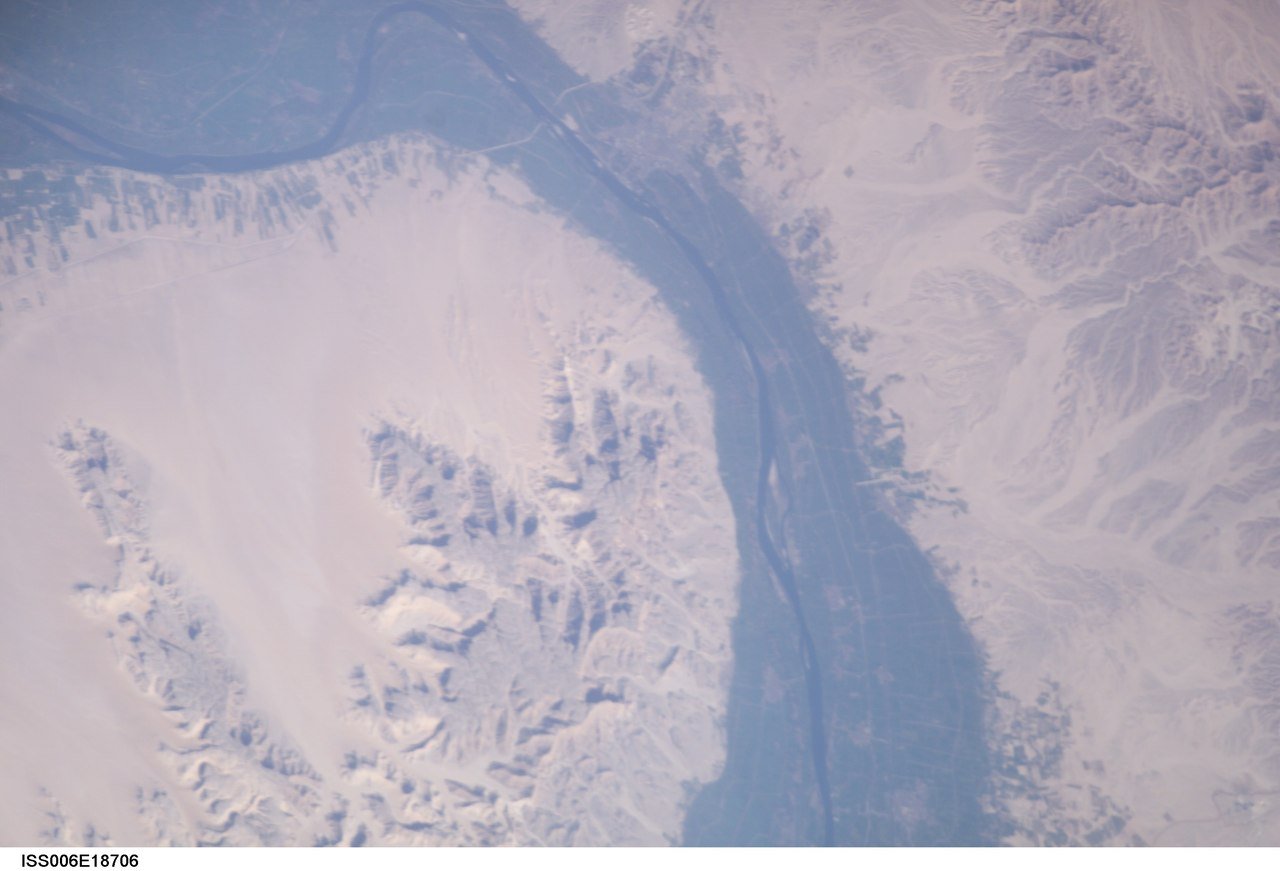
Length: about 6,650 km (4,130 mi) · Basin: about 3,254,555 km2 · Discharge: about 2,490 m3/s · Flows into: Mediterranean Sea
The Nile drains a basin of about 3,254,555 square kilometres that spans 11 African countries: Burundi, DR Congo, Egypt, Eritrea, Ethiopia, Kenya, Rwanda, South Sudan, Sudan, Tanzania and Uganda. Its three main tributaries are the Atbara, the Blue Nile and the White Nile.
For a river this long, the Nile carries little water. Its average discharge is about 2,490 cubic metres per second, about one percent of the Amazon’s. Guinness World Records credits it as the longest river, at 6,695 km (4,160 miles) from its farthest stream in Burundi to the sea.
2. Amazon: The Giant by Volume
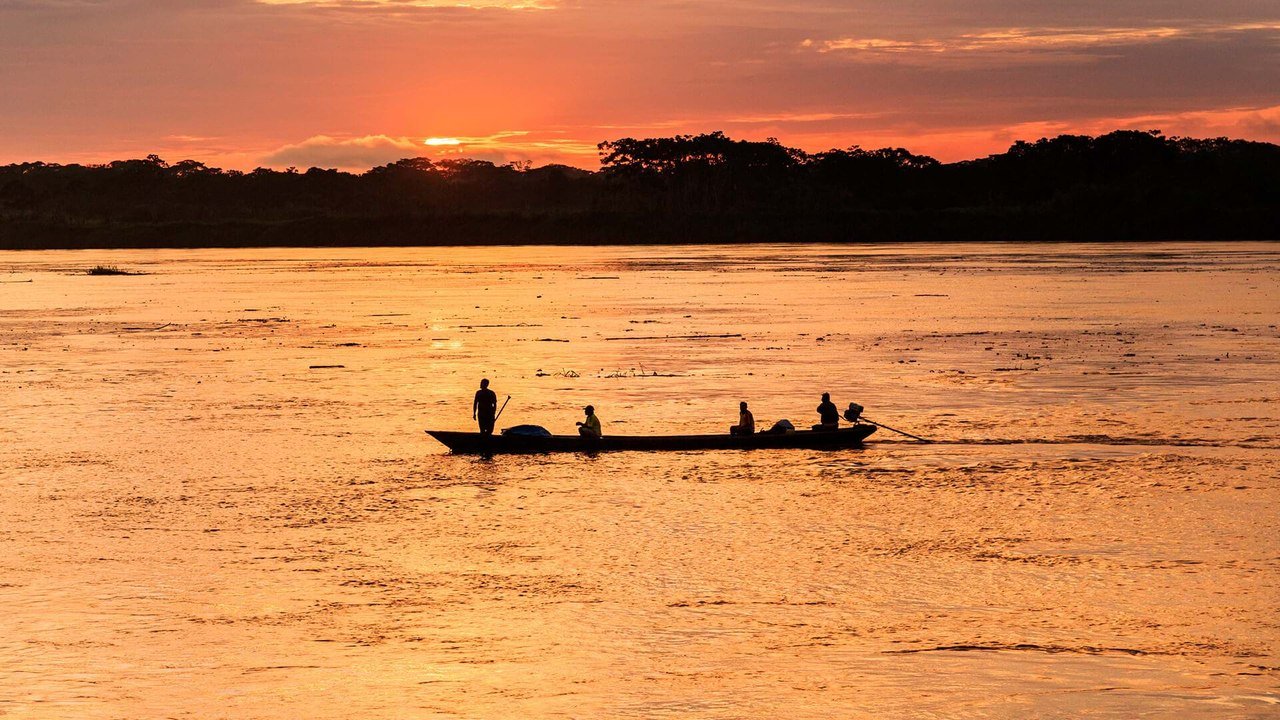
Length: about 6,400 km (3,976 mi) · Basin: about 7,000,000 km2 · Discharge: about 230,000 m3/s · Flows into: Atlantic Ocean
The Amazon’s basin of about 7,000,000 square kilometres is more than double that of any other river system in this ranking. It is the world’s largest river by volume, with an average discharge of about 230,000 cubic metres per second.
It flows through Brazil, Peru and Colombia and is called the Amazon for its final 3,700 km, from the confluence of the Ucayali and Maranon. Its most distant source, Laguna McIntyre, was identified in 1971, and where exactly the river begins is still argued, as the Nile and Amazon section below explains.
3. Yangtze: Asia’s Longest River Runs Entirely Through China

Length: about 6,300 km (3,917 mi) · Basin: about 1,970,000 km2 · Discharge: about 31,900 m3/s · Flows into: East China Sea
The Yangtze, also called the Chang Jiang, is the longest river in Asia and the only top-three river contained in a single country. It drains about 1,970,000 square kilometres and discharges about 31,900 cubic metres per second into the East China Sea.
It is also the most heavily engineered river on the list. The Three Gorges Dam, completed in 2006, created a reservoir that extends more than 600 km upstream, and NASA records that the project relocated 1.2 million people.
4. Mississippi-Missouri: A System Longer Than Either River Alone
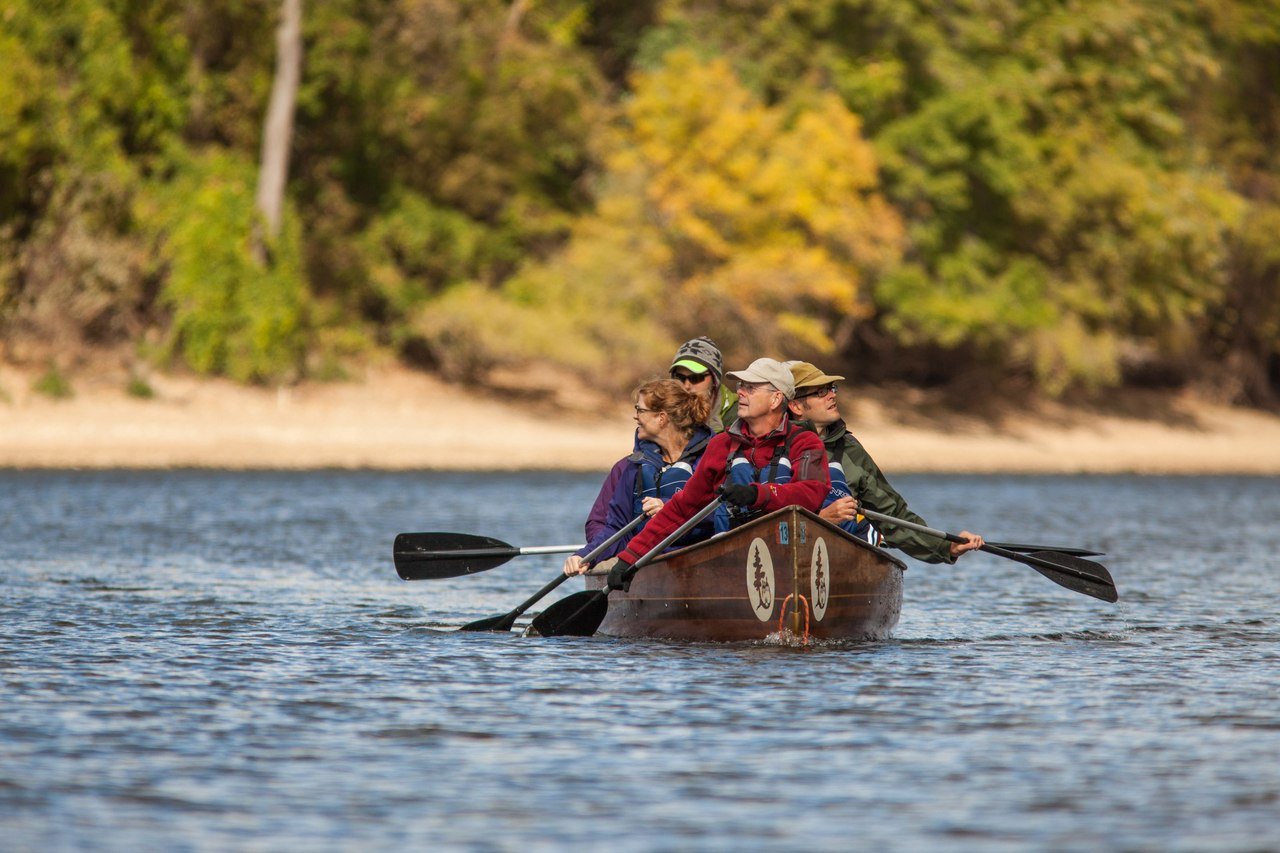
System length: about 6,275 km (3,902 mi) · Basin: about 3,248,000 km2 · Discharge: about 21,300 m3/s · Flows into: Gulf of Mexico
The 6,275 km figure is the length of the whole river system, which runs from the Hell Roaring headwater through the Red Rock, Beaverhead, Jefferson and Missouri rivers and down the Mississippi to the Gulf of Mexico. The Mississippi River on its own is far shorter, at about 2,300 to 2,350 miles depending on the agency measuring it.
The National Park Service ranks the Mississippi-Missouri system fourth in the world, at 3,710 miles (5,970 km) by its count. The basin covers about 3,248,000 square kilometres, with 98.5% in the United States and 1.5% in Canada.
5. Yenisei: A Siberian System Draining North

System length: about 5,539 km (3,445 mi) · Basin: about 2,580,000 km2 · Discharge: about 20,200 m3/s · Flows into: Kara Sea
The 5,539 km length belongs to the Yenisei-Angara-Selenga-Ider system, which has headwaters in Mongolia and ends in the Kara Sea off northern Russia. Its basin of about 2,580,000 square kilometres is 97% Russian and 2.9% Mongolian.
Its discharge of about 20,200 cubic metres per second is nearly as much as the Mississippi-Missouri’s.
6. Yellow River: Long, but Carrying Far Less Water
Length: about 5,464 km (3,395 mi) · Basin: about 752,546 km2 · Discharge: about 2,571 m3/s · Flows into: Bohai Sea
The Yellow River, or Huang He, runs about 5,464 km through China and empties into the Bohai Sea. Its basin of about 752,546 square kilometres is the smallest of the ten, a quarter the size of the Nile’s.
Its flow is the most striking number. At about 2,571 cubic metres per second, it discharges barely more than the Nile and a small fraction of what other rivers of its length deliver. The Hukou Waterfall, on the Shanxi-Shaanxi border, is one of its best-known landmarks.
7. Ob-Irtysh: Four Countries in One Basin

Length: about 5,410 km (3,364 mi) · Basin: about 2,990,000 km2 · Discharge: about 13,100 m3/s · Flows into: Gulf of Ob
The Ob-Irtysh drains about 2,990,000 square kilometres across Russia, Kazakhstan, China and Mongolia, a spread of countries matched by few others on the list. Its water reaches the Arctic through the Gulf of Ob.
Its average discharge is about 13,100 cubic metres per second. The astronaut photo here shows the forested and farmed steppe that lies between the Ob and the Irtysh in Western Siberia.
8. Rio de la Plata-Parana-Rio Grande: South America’s Second System

System length: about 4,880 km (3,030 mi) · Basin: about 3,182,064 km2 · Discharge: about 27,225 m3/s · Flows into: Atlantic Ocean
This entry measures the chain from the Rio Grande through the Parana to the Rio de la Plata estuary, which opens into the Atlantic. The basin of about 3,182,064 square kilometres is shared by Brazil (46.7%), Argentina (27.7%), Paraguay (13.5%), Bolivia (8.3%) and Uruguay (3.8%).
With about 27,225 cubic metres per second, only the Amazon, the Congo and the Yangtze carry more water. The Parana Delta covers about 14,000 square kilometres and lies roughly 40 km from Buenos Aires.
9. Congo: Second Only to the Amazon in Flow
System length: about 4,700 km (2,922 mi) · Basin: about 3,680,000 km2 · Discharge: about 41,400 m3/s · Flows into: Atlantic Ocean
The Congo system runs through the Lualaba, Luvua, Luapula and Chambeshi headwaters and drains about 3,680,000 square kilometres across nine countries, including DR Congo, the Central African Republic, Angola and Zambia. Its discharge of about 41,400 cubic metres per second is the largest on the list after the Amazon.
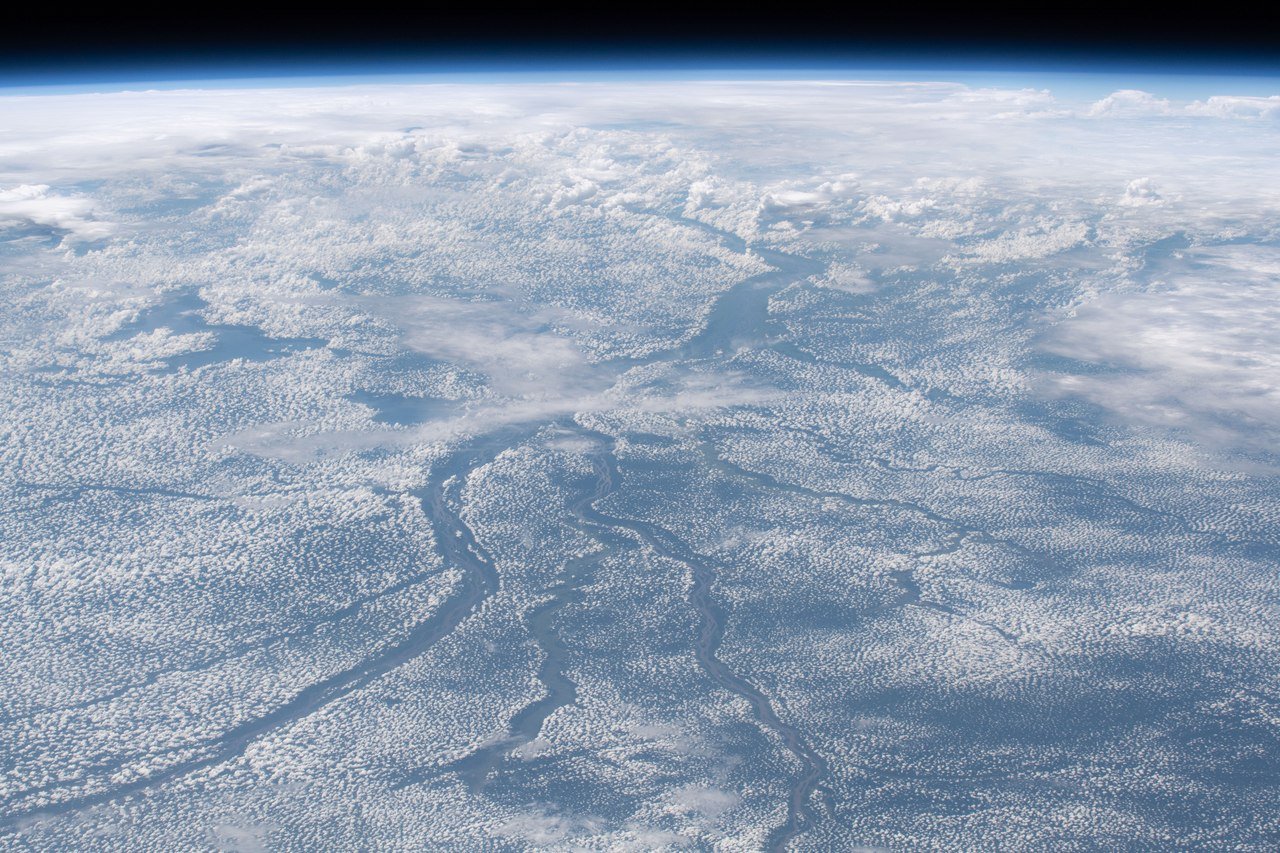
NASA notes that the Congo can be up to 5 km (3 miles) wide, and that its width is enough to deter cloud formation directly above it. The photo here shows the river and its tributaries from orbit, threading through rainforest.
10. Amur-Argun: The Border River of Russia and China

Length: about 4,444 km (2,763 mi) · Basin: about 1,855,000 km2 · Discharge: about 12,360 m3/s · Flows into: Sea of Okhotsk
The Amur, known in China as the Heilong Jiang, is measured together with its Argun headwater and drains about 1,855,000 square kilometres across Russia, China and Mongolia. It reaches the Sea of Okhotsk with an average discharge of about 12,360 cubic metres per second.
Much of its course forms the boundary between China and Russia. NASA published an astronaut photograph of the frozen river on that border in February 2023, taken from the International Space Station.
Nile or Amazon: What Each Way of Measuring Gives
Guinness World Records credits the Nile as the longest river, at 6,695 km (4,160 miles), but states that which is longer is more a matter of definition than simple measurement. The National Park Service lists the Nile at 6,693 km and the Amazon at 6,436 km, and National Geographic cites about 6,437 km for the Amazon as measured by the US Geological Survey. On those figures the Nile leads by about 250 km.
Counting the Para estuary changes the answer. Guinness puts the Amazon at approximately 6,750 km (4,195 miles) if the river’s most distant mouth is used, which would put it ahead of the Nile. In 2007 and 2008, Brazil’s space research institute INPE claimed 6,992 km for the Amazon against 6,853 km for the Nile by adding tidal canals and the Para estuary, while a 2009 peer-reviewed paper gave 7,088 km for the Nile against 6,575 km for the Amazon.
The source matters as much as the mouth. The accepted definition takes the most distant point of the longest tributary that flows continuously, and a 2014 study argued the Mantaro, not the Apurimac, is the true Amazon headwater, which would add 75 to 92 km. The Amazon also has several mouths, so its endpoint is uncertain, while so the finish line is as open to debate as the start. Which river is longest depends on which rule is applied, and no body officially ranks them.
Where the Ten Longest Rivers Are: Asia, Africa and the Americas
Asia holds the most systems. The Yangtze, Yenisei, Yellow River, Ob-Irtysh and Amur-Argun all rank in the top ten, and the Yenisei and the Ob-Irtysh drain north through Russia into the Kara Sea and the Gulf of Ob.
Africa has the Nile and the Congo, and the Americas have the Amazon, the Mississippi-Missouri system and the Plata-Parana-Rio Grande system. The compiled list extends to 13 river systems, adding the Lena at 4,400 km, the Mekong at 4,350 km and the Mackenzie system at 4,241 km. The Mackenzie figure is the whole Finlay-Peace-Slave-Mackenzie system, while the Mackenzie proper is only about 1,800 km.
For a sense of how people cluster along big waterways, see the biggest cities in the world and the most populous countries.
Length Is Not Volume: Why the Amazon Dwarfs the Rest
Ranking by length hides how different these rivers are in size. The Amazon’s discharge of about 230,000 cubic metres per second is roughly five times the Congo’s 41,400 and more than 90 times the Nile’s 2,490.
The basin gap is just as wide: the Amazon’s 7,000,000 square kilometres compares with 3,680,000 for the Congo and 3,254,555 for the Nile. The Yellow River is the clearest case of length without volume, at 5,464 km but only about 2,571 cubic metres per second.
Why These Lengths Move: Headwaters, Deltas and System Names
A river length is a measurement of a path, and the path is a choice. Each figure in the table runs from the farthest headwater stream to the mouth, which is why so many entries carry composite names such as Yenisei-Angara-Selenga-Ider and Amur-Argun. A different headwater picked as the start gives a different length.
The ground also moves. The National Park Service notes that deposition and erosion in a delta change a river’s reported length from year to year, so a figure is a snapshot and depends on the method. The lengths here are the rounded figures of the compiled list, which is why the Mississippi-Missouri reads 6,275 km here and 5,970 km in the National Park Service count.
Reading River Lengths Before You Compare Them
Check whether a figure is a river or a river system. The Mississippi at about 2,300 to 2,350 miles and the Mississippi-Missouri system at 3,902 miles are different measurements of different things. A reader comparing the Mackenzie’s 1,800 km with the Nile’s 6,650 km would be comparing a river with a system and drawing the wrong conclusion.
Check the definition of the end point as well. A figure that stops at the sea differs from one that follows an estuary, and a figure that starts at the longest tributary differs from one that starts at the named headwater. For a quick comparison, use the kilometre column in the table above and treat differences under about 100 km as inside the margin of the measurement. For another way to rank countries and places, see the oldest countries in the world.
Frequently Asked Questions
What is the longest river in the world?
The Nile, at about 6,650 km (4,130 miles) in the compiled list and 6,695 km (4,160 miles) in the Guinness World Records entry. Some measurements that count the Para estuary put the Amazon ahead, so it depends on the definition.
Is the Amazon longer than the Nile?
Not on the standard figures, which are about 6,650 km for the Nile and 6,400 km for the Amazon. Guinness gives the Amazon about 6,750 km (4,195 miles) if the Para estuary is counted, which would exceed the Nile.
Which river carries the most water?
The Amazon, the world’s largest river by volume, with an average discharge of about 230,000 cubic metres per second. The Congo is next at about 41,400, and the Nile carries only about 2,490.
What is the longest river in the United States?
The Missouri is about 100 miles longer than the Mississippi, according to the National Park Service. Together the Mississippi-Missouri system measures 3,710 miles (5,970 km) by that agency’s count and 6,275 km in the compiled list.
Related Articles

Get the Fox Bulletin briefing
The stories that matter, in your inbox. No spam, unsubscribe anytime.
Newsletter signup will be available soon.
Related stories

Coldest Cities in the US: Top 10 by Annual Temperature
Anchorage, Alaska has the lowest annual mean temperature of any US city with 50,000 or more people, 37.6 F. This ranking covers the ten coldest, with coldest-month averages, record lows and the smaller places that are colder still.

Most Expensive Cities in the World: Top 10 Ranked
Hong Kong is the most expensive city in the world for international employees, ahead of Singapore and Zurich. This ranking covers the top 10 with rank changes, cost indexes where published and the forces behind each position.

Average Height by Country: The 10 Tallest Nations Ranked
The Netherlands has the tallest young men of any country, at an estimated 183.8 cm (6 ft 0.4 in). This ranking covers the top 10 countries with men's and women's heights in cm and feet and inches. It also shows how the United States, United Kingdom, China and India compare and which countries sit at the bottom.