

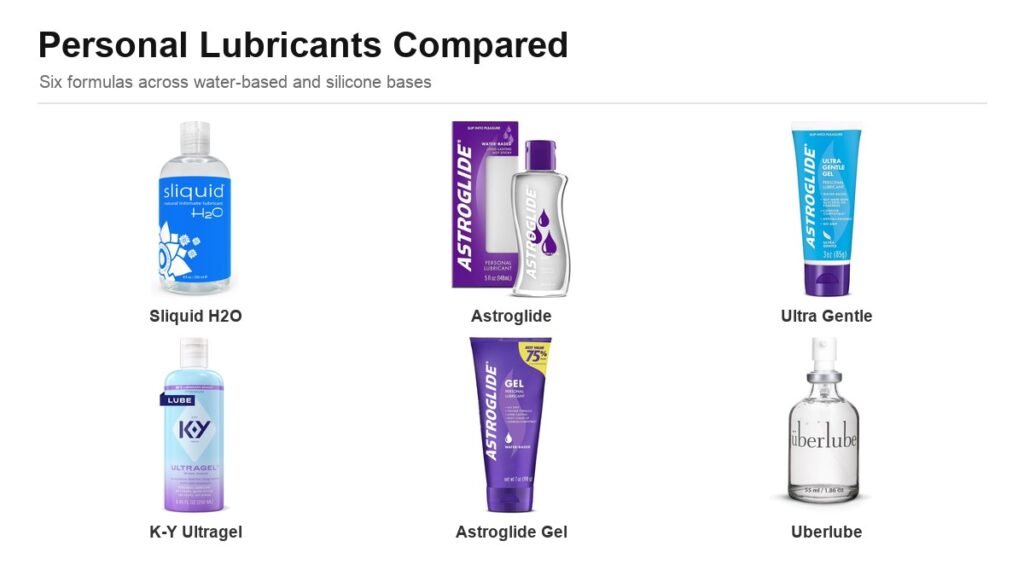
Personal lubricant is one of the few products in a pharmacy aisle that the FDA classifies as a medical device, and one of the fewest that anyone reads the label on. The base a lubricant is built from decides what it is safe to use with, how long it lasts, and whether it irritates you, and those three things are almost entirely independent of price or branding.
This guide covers the six formulas worth knowing across the two bases most people should be choosing between, and the two specifications that actually predict whether a lubricant will suit you: osmolality and ingredient list.
Fox Bulletin is an Amazon Associate. We earn from qualifying purchases made through links on this page, at no extra cost to you. Prices and availability change often, so check the listing before you buy.
The Six Compared
Compatibility is the column to read first. It is the only one where getting it wrong has a consequence beyond comfort.
| Product | Base | Condom safe | Silicone toy safe |
|---|---|---|---|
| Sliquid H2O | Water | Yes | Yes |
| Astroglide Water-Based Liquid | Water | Yes | Yes |
| Astroglide Ultra Gentle Gel | Water | Yes | Yes |
| K-Y Ultragel | Water | Latex and polyisoprene | Yes |
| Astroglide Thicker Gel | Water | Yes | Yes |
| Uberlube | Silicone | Yes | No |
1. Sliquid H2O: The Shortest Ingredient List Here
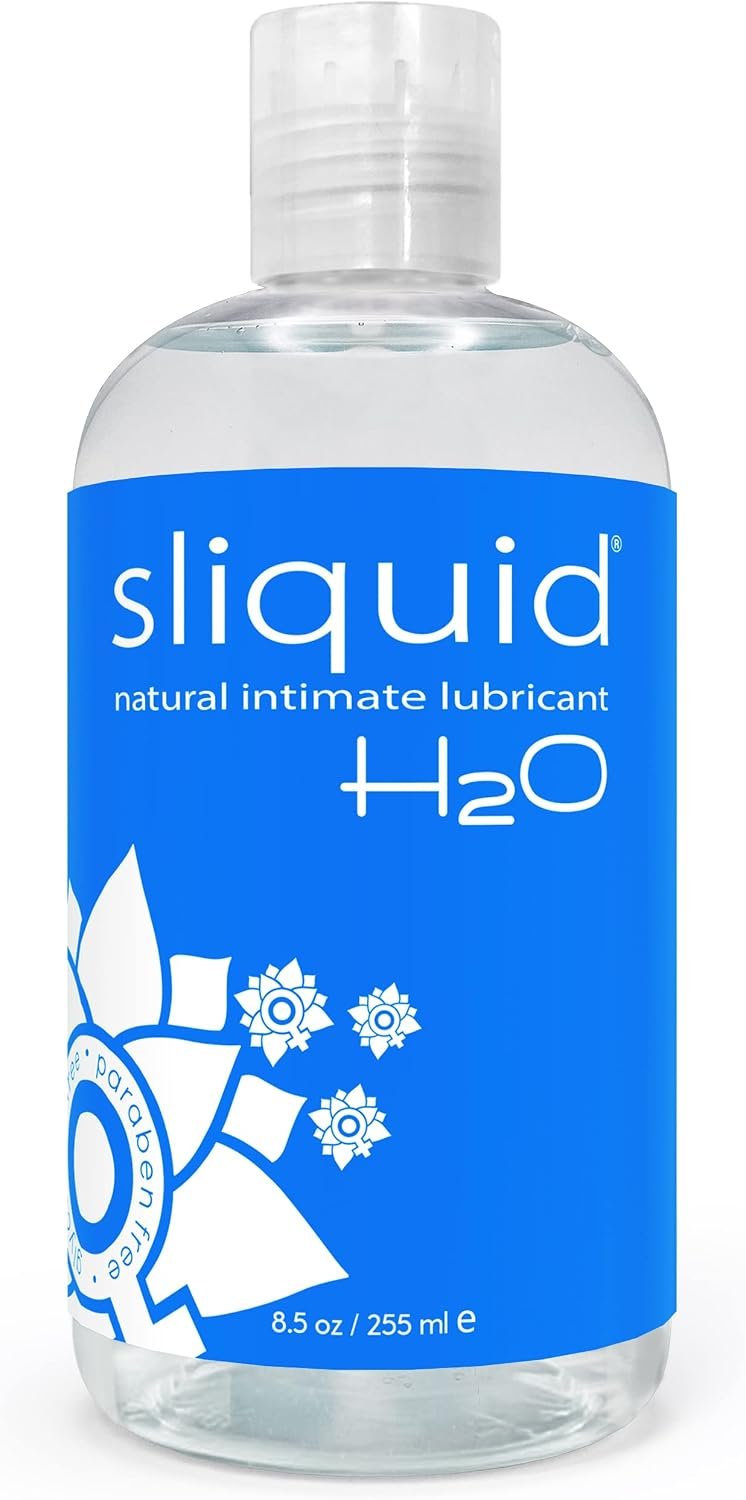
Sliquid built its reputation on leaving things out. H2O is glycerin free, fragrance free, non-staining and made with plant cellulose rather than the sugar alcohols most water-based formulas use for slip.
Glycerin is the ingredient most often linked to irritation and to yeast overgrowth in people prone to it, because it is a sugar. Removing it is the single most useful formulation decision a water-based lubricant can make for sensitive users. Sliquid states the formula is pH balanced and compatible with both toys and condoms, and the 8.5 oz bottle is the largest in this group.
What it does well
- Glycerin free, which matters for anyone prone to irritation.
- Plant cellulose base rather than sugar alcohols.
- pH balanced, fragrance free and non-staining.
- Safe with condoms and silicone toys.
What to know before buying
- Water-based, so it dries out faster than silicone and needs reapplying.
- Costs more per ounce than drugstore brands.
2. Astroglide Water-Based Liquid: The Default, and a Reasonable One
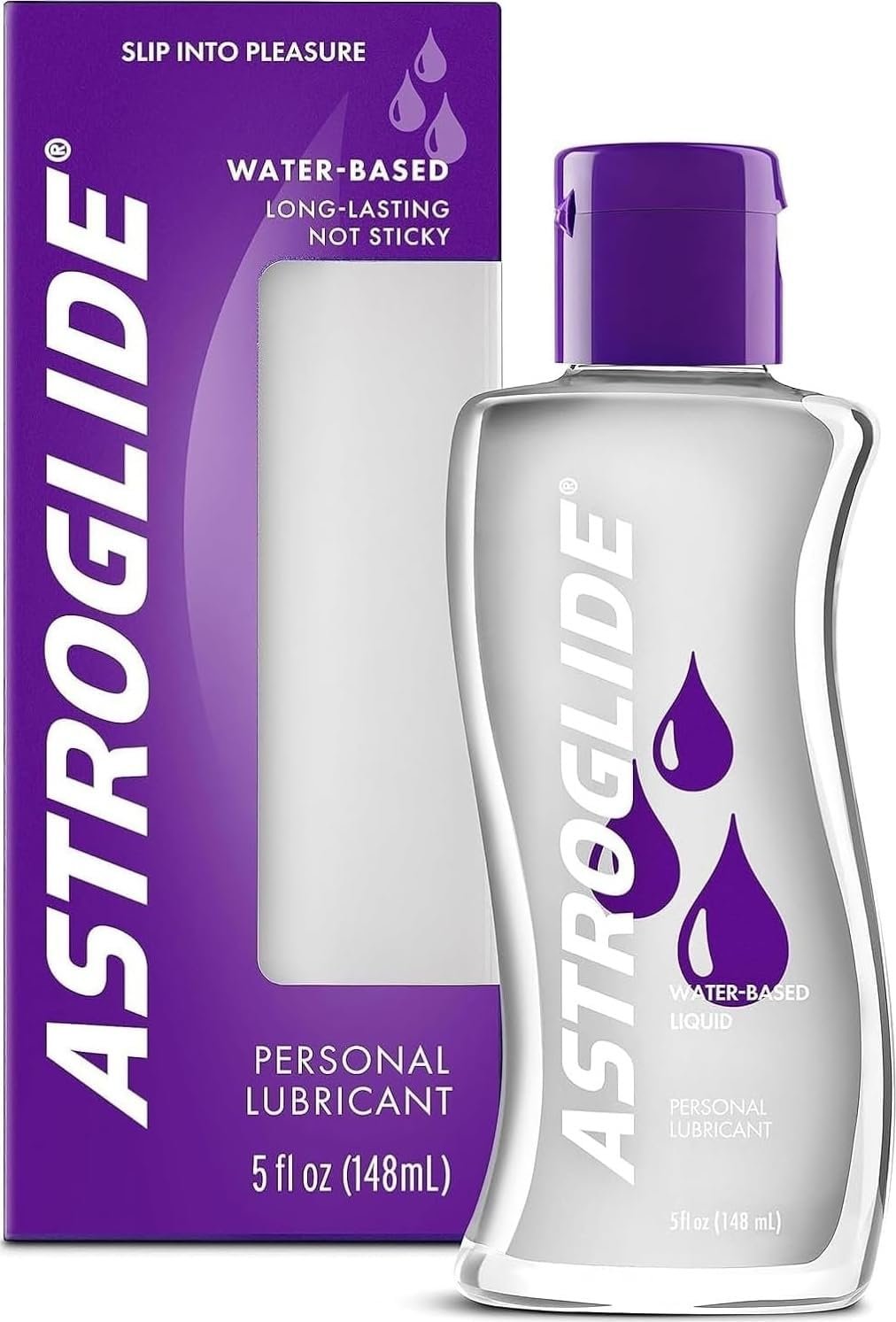
This is the bottle most people picture, and it earns the position. The liquid formula is thin and slick rather than tacky, Astroglide states it is not made with parabens, and it is designed to mimic natural body fluids, which is also the marketing line for its use in relieving vaginal dryness.
It is water-based, so it is safe with condoms and with silicone toys, and it rinses off with water rather than needing soap. If you have no particular sensitivity and want something that works, is available everywhere and costs little, this is the sensible default rather than a compromise.
What it does well
- Thin, slick liquid rather than a sticky gel.
- No parabens, and safe with condoms and toys.
- Rinses off with water alone.
- Widely available and inexpensive.
What to know before buying
- Contains glycerin, unlike the Sliquid and Ultra Gentle formulas.
- Thin formula runs, which some people dislike.
3. Astroglide Ultra Gentle Gel: The Hypoallergenic Version
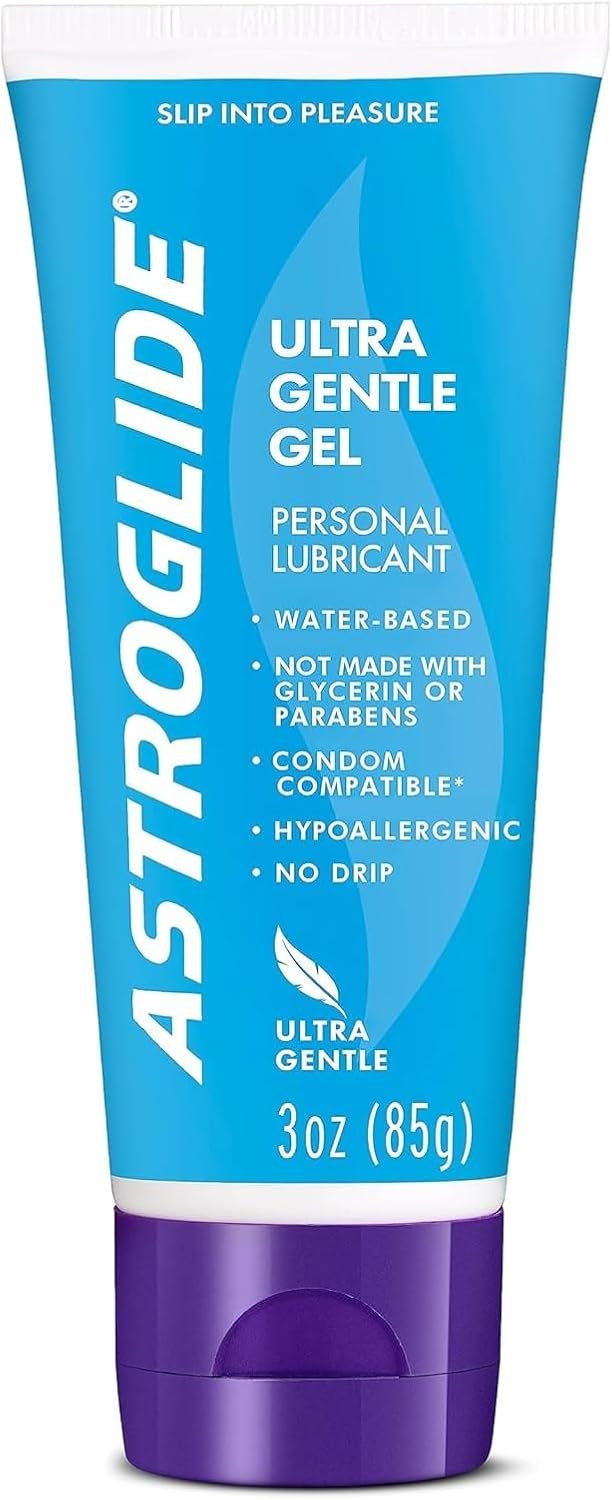
If the standard Astroglide has irritated you, this is the same company’s answer. Ultra Gentle is made without glycerin and without parabens, and is sold as a hypoallergenic formula.
It is a gel rather than a liquid, so it stays where you put it, and like everything water-based here it is toy friendly. The 3 oz travel size is the common format, which makes it a cheap way to test whether glycerin was the problem before committing to a large bottle of anything.
What it does well
- No glycerin and no parabens.
- Gel consistency stays in place.
- Small size makes it cheap to trial.
- Safe with condoms and silicone toys.
What to know before buying
- Sold mainly in small bottles, so cost per ounce is high.
- Gels can feel tacky as they dry.
4. K-Y Ultragel: The Drugstore Brand, Reformulated
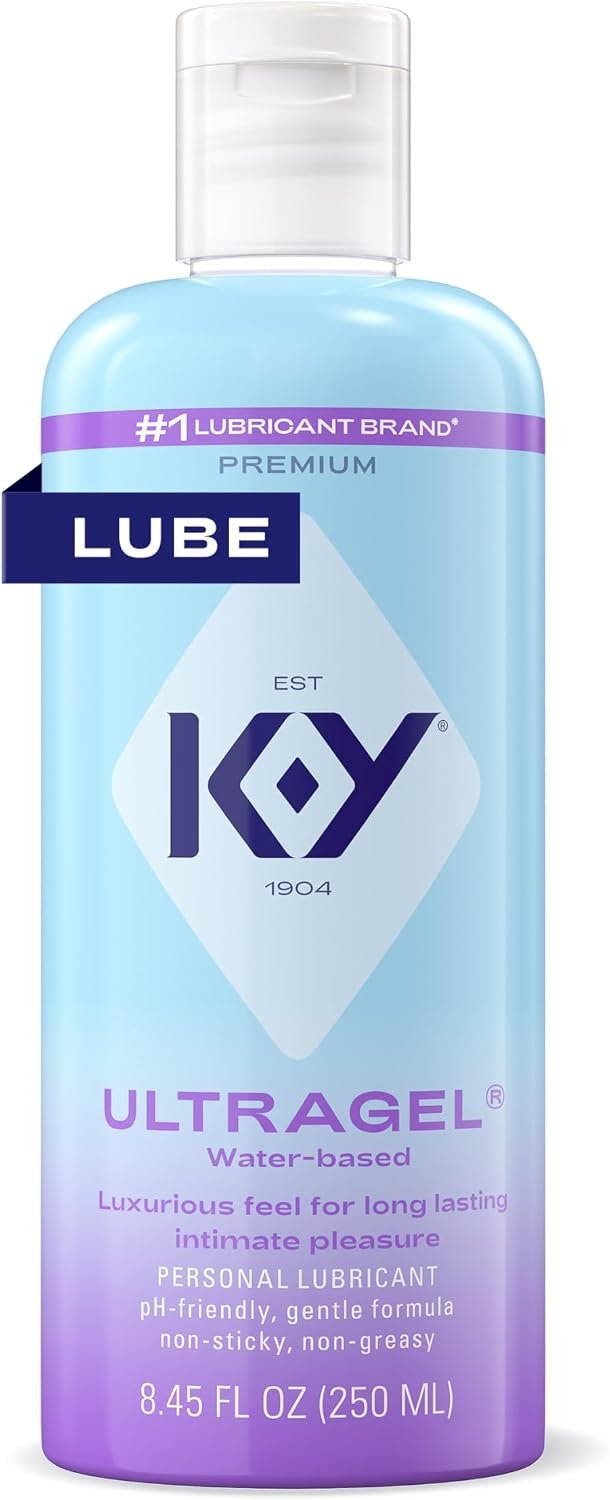
K-Y is the oldest name in this category and the formula has changed considerably. Ultragel is pH friendly and made without hormones, parabens, artificial colourants or fragrances, which is a meaningfully shorter exclusion list than the original K-Y Jelly most people remember.
One detail on the label is more precise than most and worth repeating exactly: K-Y states compatibility with natural rubber latex and polyisoprene condoms. Polyurethane condoms are a different material, and if that is what you use, check the individual condom packaging rather than assuming.
What it does well
- No hormones, parabens, artificial colours or fragrances.
- pH friendly formula.
- Explicitly states which condom materials it is tested with.
- Large 8.45 oz bottle.
What to know before buying
- Compatibility is stated for latex and polyisoprene, not all condom types.
- Gel texture is thicker than some prefer.
5. Astroglide Thicker Gel: For When Thin Formulas Run
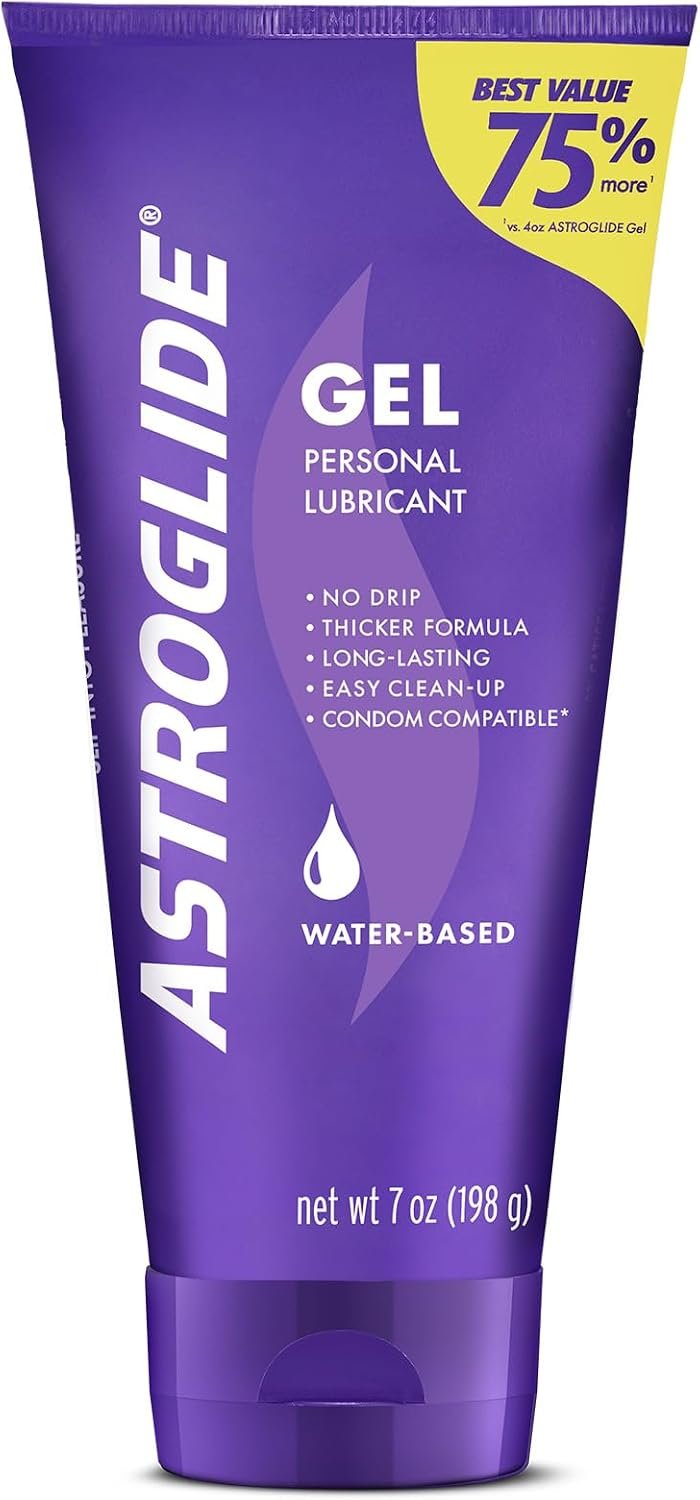
Thin water-based lubricants migrate. For some uses that is fine and for others it is the entire problem, which is what this exists to solve. Astroglide sells it as a stay-put, no-drip gel while keeping the water base.
Because it is still water-based, it remains safe with condoms and with silicone toys, and it washes off with water. The trade against the liquid version is that gels tend to feel tackier as they dry, which is the usual reason people move back to a liquid or across to silicone.
What it does well
- Thick enough to stay in place.
- Still water-based, so condom and toy safe.
- Washes off with water.
- 7 oz bottle.
What to know before buying
- Gels get tacky as they dry out.
- Needs reapplying like all water-based formulas.
6. Uberlube: Silicone, and the One That Does Not Dry Out
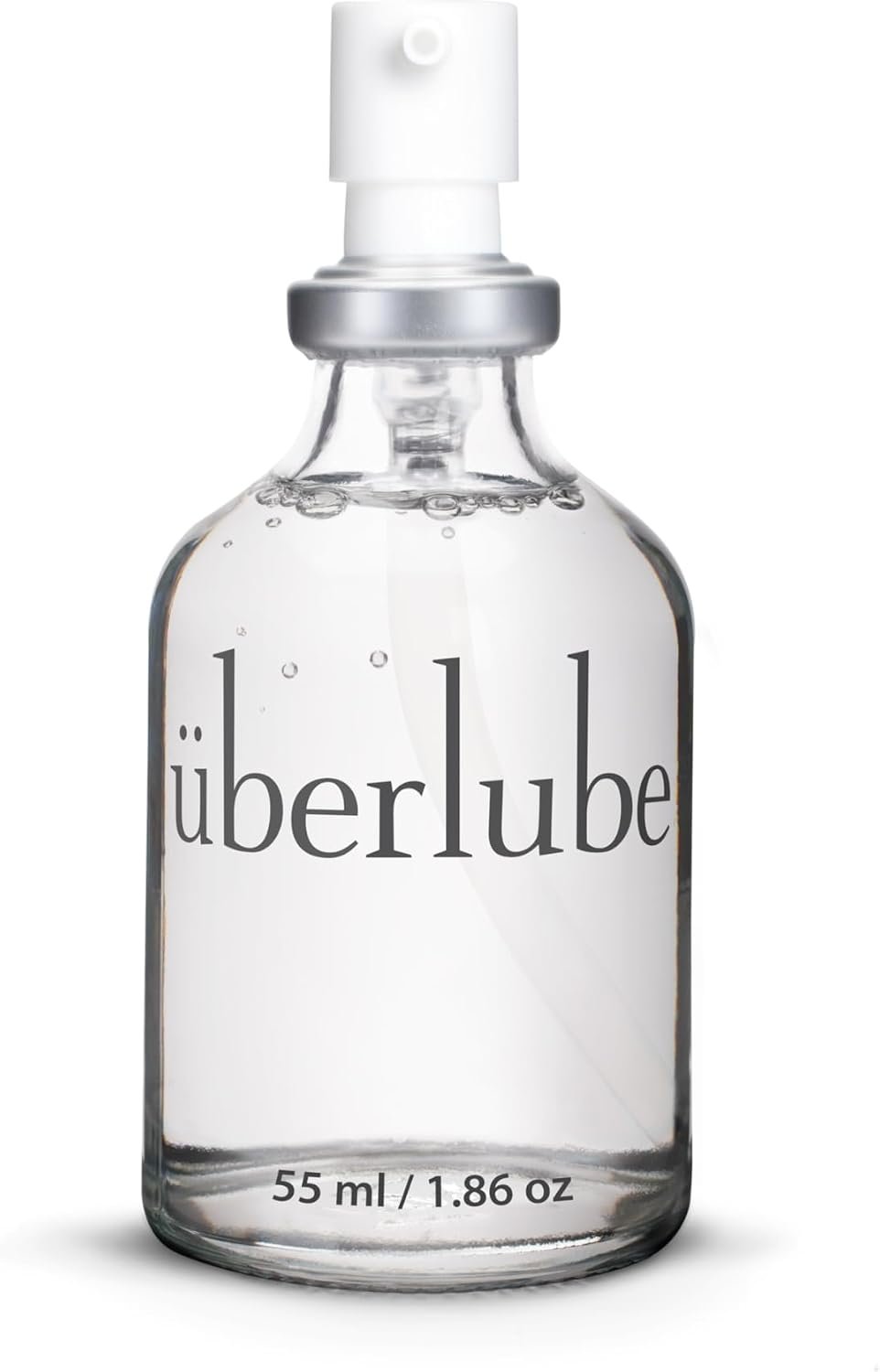
Silicone is a different proposition. It does not absorb into skin and does not evaporate, so it lasts dramatically longer than any water-based formula and does not need reapplying. It is also waterproof, which is the practical reason people buy it: water-based lubricant rinses away in a shower or bath and silicone does not.
Uberlube adds vitamin E and is unscented. Its usefulness extends past the bedroom, and the company points this out: runners and cyclists use silicone lubricant to prevent chafing, which is a genuine secondary use rather than marketing filler. The one hard rule is that silicone lubricant degrades silicone toys, so if your toys are silicone, use a water-based formula with them.
What it does well
- Lasts far longer than water-based and needs no reapplication.
- Waterproof, so it works in a shower or bath.
- Safe with latex condoms.
- Doubles as an anti-chafing product for sport.
What to know before buying
- Must not be used with silicone toys.
- Needs soap to wash off, and can stain fabric.
- More expensive per use up front.
Osmolality: The Number Nobody Prints on the Bottle
This is the specification that separates a lubricant that is comfortable from one that is not, and almost no consumer packaging mentions it.
Osmolality measures the concentration of dissolved particles in a fluid. When a lubricant is much more concentrated than the cells it touches, it draws water out of them, which can irritate the tissue and damage the surface layer. The World Health Organization, working with UNFPA and FHI360, advises that the osmolality of a personal lubricant should ideally not exceed 1200 mOsm/kg, and UNFPA applies the same 1,200 limit when procuring lubricant for distribution.
The reason this matters commercially is that many widely sold lubricants sit far above it. The WHO document notes products with osmolalities in the 2000 to 6000 mOsm/kg range, several times the recommended ceiling. Glycerin and propylene glycol are the usual reason, because both raise osmolality substantially.
Since the figure is rarely printed, the practical proxy is the ingredient list. A formula without glycerin, like Sliquid H2O or Astroglide Ultra Gentle, is far more likely to sit near the recommended range than one built on it. Silicone lubricants sidestep the question entirely, because they contain no water and no dissolved solids.
Base Compatibility, Which Is Not Optional
Oil-based lubricant destroys latex condoms. This is the one rule with a real failure consequence. Oils, including baby oil, coconut oil, petroleum jelly and lotion, weaken latex and can cause it to break. Nothing in this guide is oil-based for that reason.
Silicone lubricant destroys silicone toys. Like dissolves like: silicone lubricant degrades the surface of a silicone toy, leaving it tacky and permanently damaged. Water-based with silicone toys, always.
Water-based is the universal option. It is safe with every condom material and every toy material. The cost is longevity, because it absorbs and evaporates and needs reapplying.
Check the condom material, not just the word condom. K-Y states compatibility with natural rubber latex and polyisoprene specifically. Polyurethane behaves differently. If you use a non-latex condom, read its packaging rather than the lubricant’s.
Which One to Buy
For most people the answer is a glycerin-free water-based formula, and Sliquid H2O is the cleanest example here. It is compatible with everything, the ingredient list is short, and removing glycerin removes the most common cause of irritation. If you have never had a problem with any lubricant, standard Astroglide does the same job for less money.
Buy Uberlube if longevity is the issue, if you want something that works in water, or if reapplying is the thing that spoils it, and simply keep a water-based bottle alongside it for use with silicone toys. Buy Astroglide Ultra Gentle if a previous lubricant irritated you and you want a cheap small bottle to test the glycerin theory. Buy the Astroglide Thicker Gel if thin formulas run, and K-Y Ultragel if you want a large bottle from a mainstream brand with a clearly stated compatibility list.
Whatever you choose, buy the small size first. Skin sensitivity is individual, the useful specification is not printed on the bottle, and a 3 oz trial costs less than discovering the problem with a 12 oz one. If irritation persists across several glycerin-free formulas, that is worth raising with a doctor rather than working through the shelf, because the lubricant may not be the cause.
Frequently Asked Questions
Is water-based or silicone lubricant better?
Neither is better overall. Water-based is compatible with every condom and toy material and washes off with water, but absorbs and needs reapplying. Silicone lasts far longer and is waterproof, but cannot be used with silicone toys and needs soap to remove.
Why does glycerin matter in a lubricant?
Glycerin is a sugar alcohol that raises a formula’s osmolality, and higher osmolality can draw moisture out of tissue and cause irritation. It is also associated with yeast overgrowth in people prone to it. Glycerin-free formulas avoid both issues.
What osmolality should a lubricant have?
The World Health Organization advises that a personal lubricant should ideally not exceed 1200 mOsm/kg. Many products sold today are well above that, some in the 2000 to 6000 range. Since the figure is rarely on the label, a glycerin-free ingredient list is the practical proxy.
Can I use coconut oil or petroleum jelly instead?
Not with latex condoms. Oil-based products weaken latex and can cause condoms to fail. If no condom is involved the risk is different, but oils are also harder to wash out and are associated with irritation for some people.
Related Articles

Get the Fox Bulletin briefing
The stories that matter, in your inbox. No spam, unsubscribe anytime.
Newsletter signup will be available soon.
Related stories
Best Air Fryer: 7 Compared by Basket, Oven and Pod
Seven air fryers across single basket, dual zone, toaster oven and pod designs, compared on fan speed, temperature range and coating, plus what actually makes food crisp.
Best Home Espresso Machines for Real Cafe Drinks
Seven home espresso machines across manual, semi-automatic and bean-to-cup, plus why the bar rating on the box tells you almost nothing.
Best Pour Over Coffee Makers From the V60 to the Chemex
Seven manual pour over brewers compared on filter type, cone shape and capacity, plus the six-step method that works with any of them.