

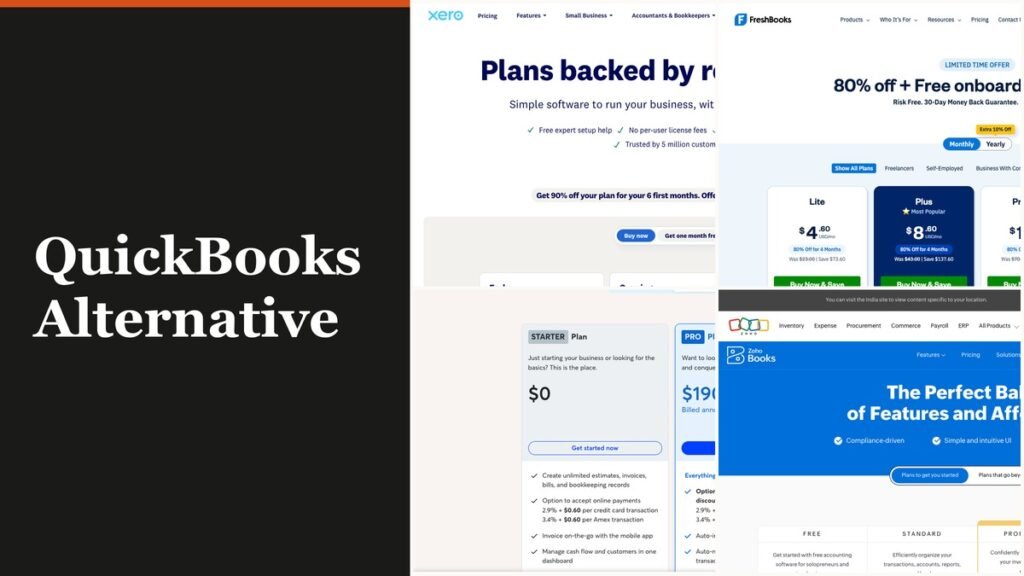
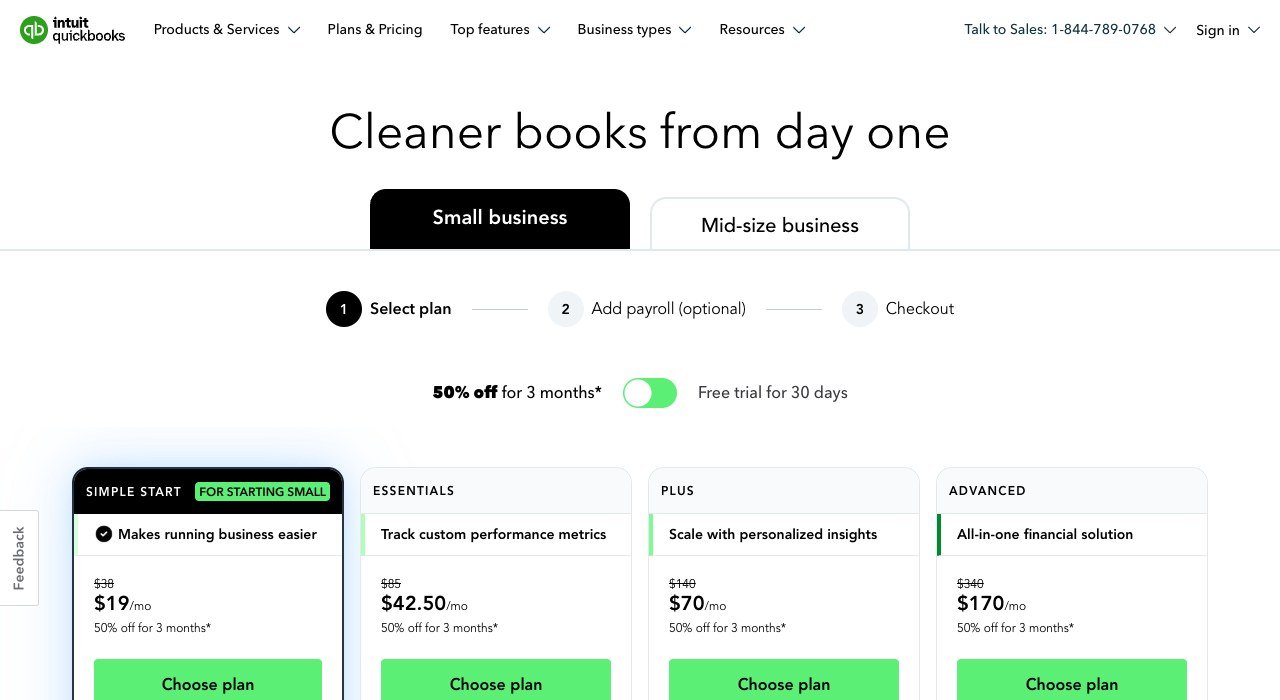
A QuickBooks alternative is worth pricing out the moment you look at what Intuit now charges. QuickBooks Online lists at $38 a month for Simple Start, $85 for Essentials, $140 for Plus and $340 for Advanced, and Simple Start carries exactly one user.
The ten platforms below are quoted at list, not at the promotional rate most of them are advertising this month. Two cost nothing at all, one describes itself as a QuickBooks replacement in its own marketing, and one is open source and runs on a server you control.
What QuickBooks Online Charges Before You Look Elsewhere
Intuit added a free tier this year. QuickBooks Free is listed at $0 a month with no card required, which changes the starting point of this whole question. It is deliberately thin, but it exists.
| Plan | List price a month | Users included |
|---|---|---|
| QuickBooks Free | $0 | 1 |
| Simple Start | $38 | 1 |
| Essentials | $85 | 3 |
| Plus | $140 | 5 |
| Advanced | $340 | 25 |
The number that drives most switching is $38 for a single seat. Add one more person and the only route is Essentials at $85, an increase of 124 percent to gain two users. Several platforms below do not meter users at all, and that is the single biggest structural difference between them and Intuit.
Every QuickBooks Alternative Compared on Entry Price and Free Tier
All ten appear here, with the cheapest paid tier each one publishes and whether a free plan exists. Where a free plan has a condition rather than a feature limit, the condition is named.
| # | Platform | Best for | Entry price | Free tier | Users |
|---|---|---|---|---|---|
| 1 | Xero | The closest like-for-like swap | $27 a month (Early) | No, 30-day trial | Unlimited on every plan |
| 2 | Wave | The genuinely free full ledger | $0 (Starter) | Yes, no expiry | 1 |
| 3 | Zoho Books | Free until the business grows | $0 under $50K revenue | Yes, revenue-capped | 1 plus an accountant |
| 4 | FreshBooks | Invoicing first, books second | $23 a month (Lite) | No, 30-day trial | 1, extra seats billed |
| 5 | Puzzle | Startups on a real chart of accounts | $30 a month (Starter) | No | Varies by plan |
| 6 | Bonsai | Agencies billing by the project | $15 per user a month | No | Per seat |
| 7 | Akaunting | Running your own books on your own server | $8 a month billed yearly | Self-hosted core | 1 plus an accountant |
| 8 | Invoice Ninja | Free invoicing that never expires | $0 (Free) | Yes, 5 clients | 1 on Free |
| 9 | TrulySmall | One-person businesses that only invoice | $89.99 a year (Invoices) | First 5 invoices | 1 to 5 by plan |
| 10 | GnuCash | Double-entry books with no subscription at all | $0, free software | Yes, permanently | Unlimited, local |
The Ten Platforms in Detail
1. Xero: The closest like-for-like swap
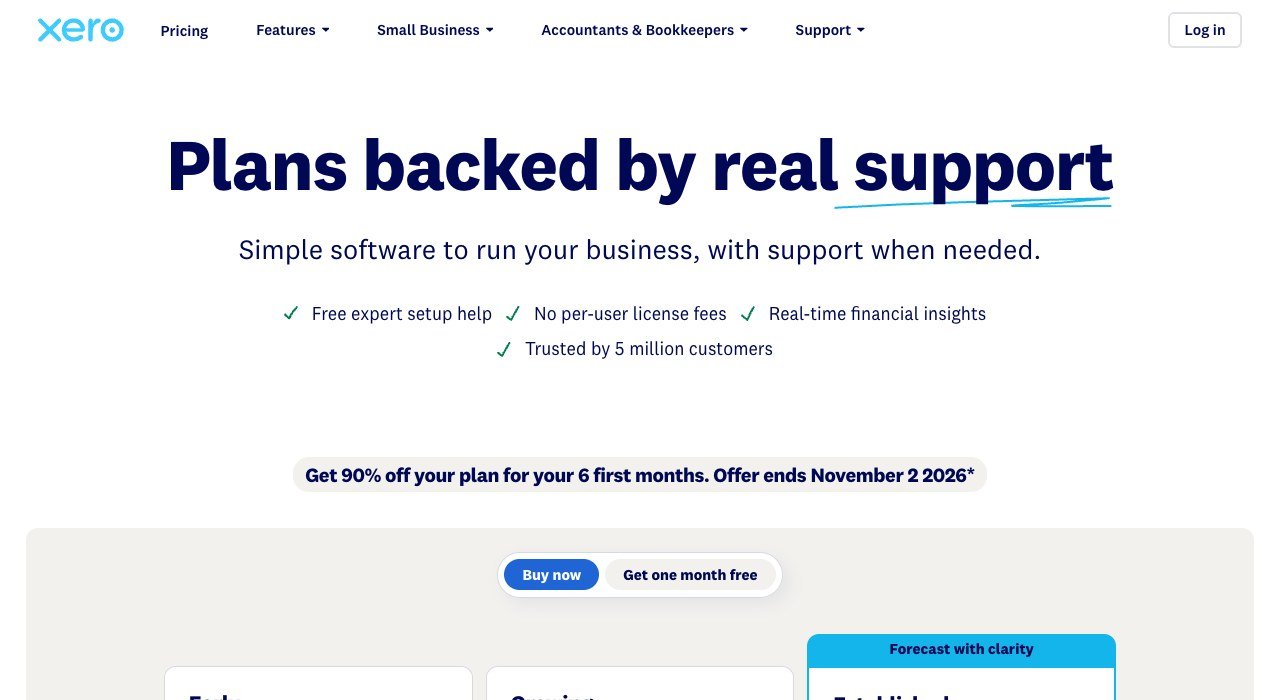
Entry price: $27 a month (Early). Free tier: No, 30-day trial. Users: Unlimited on every plan.
Xero is the swap most QuickBooks leavers actually make, because the daily rhythm is the same: bank feed, reconcile, invoice, report. Early costs $27 a month against Simple Start’s $38, and unlike Intuit it does not meter users. Every plan takes as many people as you want to add.
The catch sits in the invoice counter. Early allows 20 invoices a month, which a busy trades business clears in a fortnight. Growing at $59 lifts that limit and is the plan most switchers end up on, which makes the real comparison $59 against $85, not $27 against $38. Payroll is a Gusto add-on rather than a built-in module.
2. Wave: The genuinely free full ledger
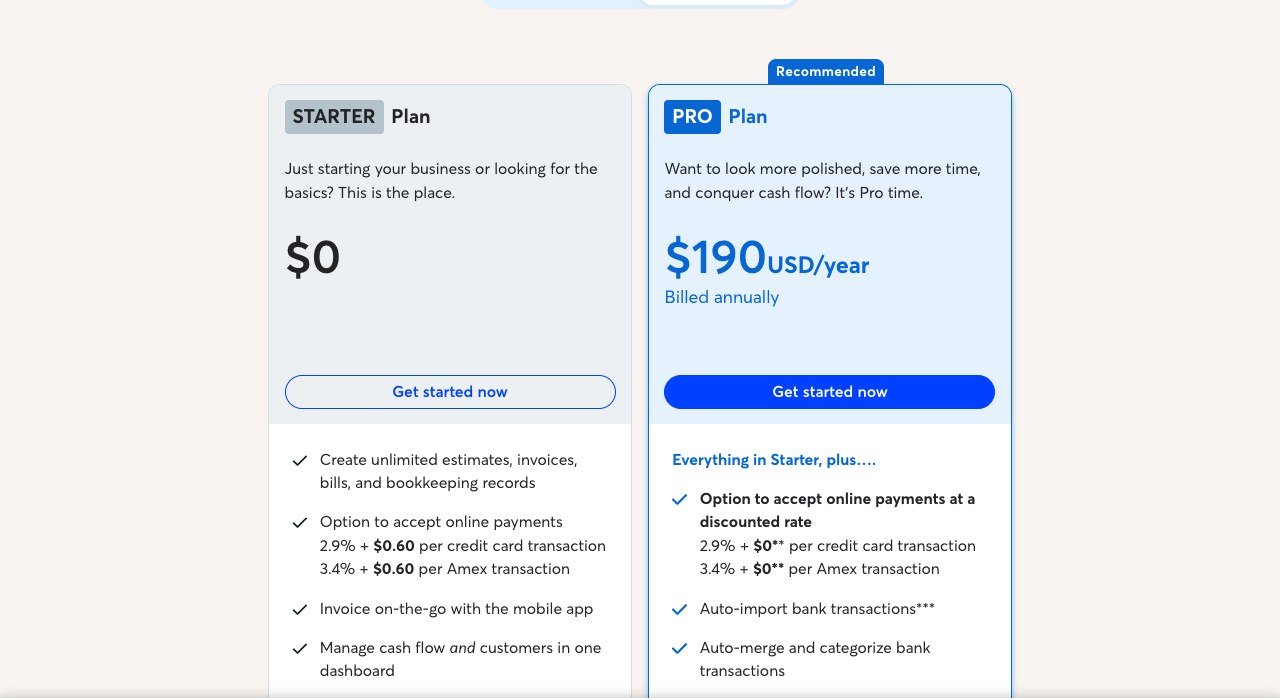
Entry price: $0 (Starter). Free tier: Yes, no expiry. Users: 1.
Wave is the only name here that gives away a complete ledger rather than a trial. The Starter plan is $0 with no expiry and carries unlimited invoices, estimates, bills and bookkeeping records. For a sole trader invoicing a handful of clients, that is the whole job done for nothing.
Wave earns its money on payments instead, at 2.9% plus 60 cents a card transaction and 3.4% plus 60 cents on Amex. The $19 Pro plan drops that 60 cents for the first ten transactions each month and adds automatic bank imports, which is the feature most people eventually pay for. Payroll starts at $25 a month on top.
3. Zoho Books: Free until the business grows
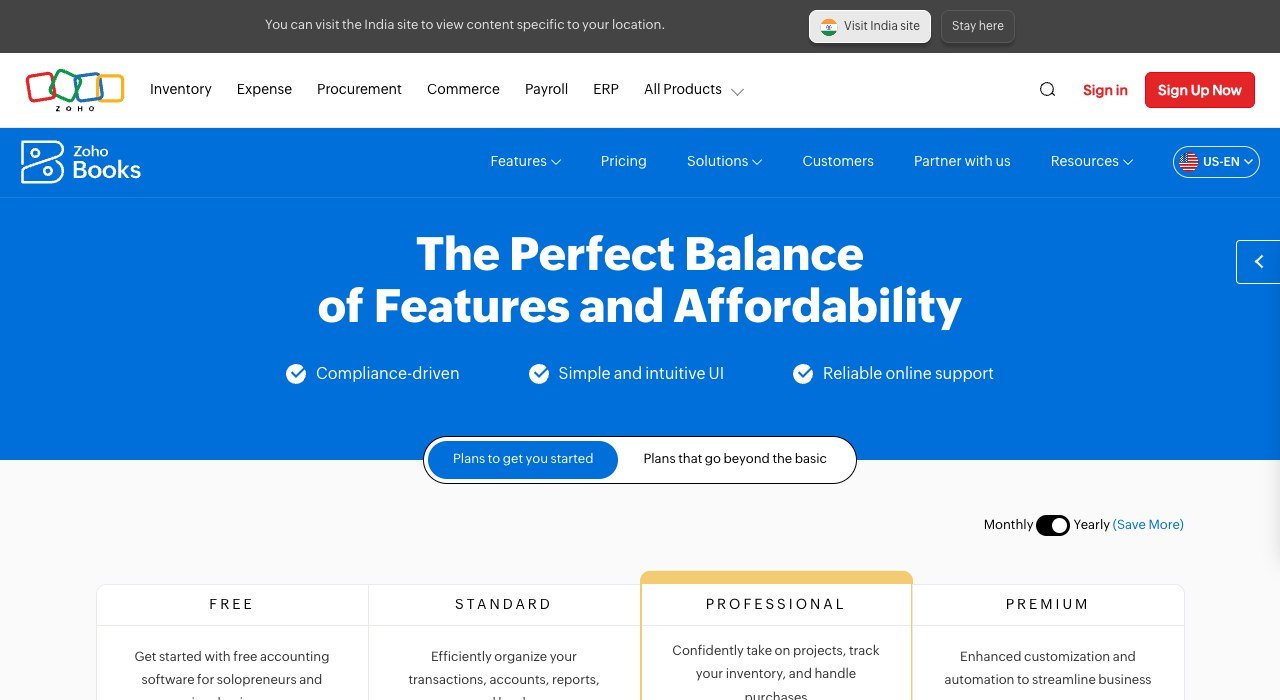
Entry price: $0 under $50K revenue. Free tier: Yes, revenue-capped. Users: 1 plus an accountant.
Zoho Books gives you a free plan with a condition attached rather than a feature wall: it stays free while annual revenue is under $50,000. Inside that ceiling you get 1,000 invoices a year, one user and an accountant seat, which covers a great many side businesses outright.
Cross the threshold and Standard is $20 an organisation a month, not per user, with extra seats at $3 each. That pricing shape rewards small teams: three people on Standard costs $26 where QuickBooks Essentials charges $85 for the same three. The free tier accepts no add-ons, so receipt scanning and bill pay need a paid plan.
4. FreshBooks: Invoicing first, books second
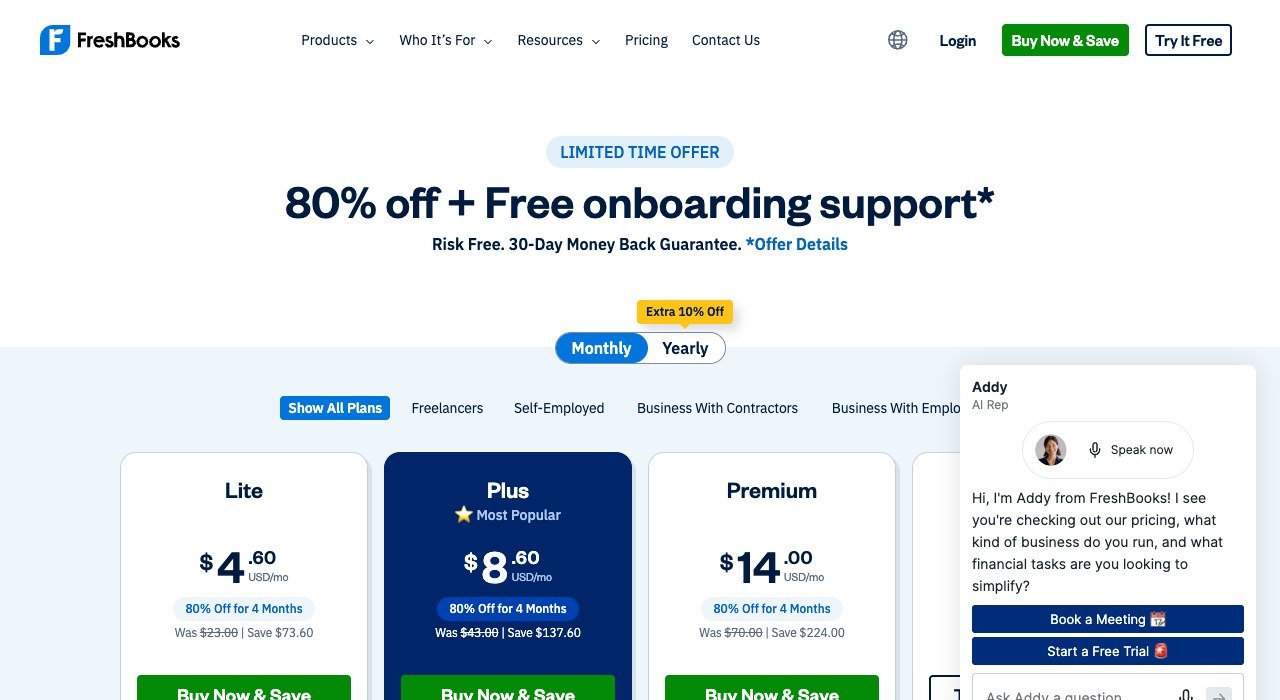
Entry price: $23 a month (Lite). Free tier: No, 30-day trial. Users: 1, extra seats billed.
FreshBooks was built around getting invoices out and chased, and it still shows. Estimates, proposals, retainers and time tracking are first-class, and the double-entry books sit behind them rather than in front. Lite is $23 a month.
Read the client limit before you commit. Lite stops at five billable clients, which is the number that pushes most users to Plus at $43 or Premium at $70. Payroll is a separate $40 a month plus $6 a user, and Advanced Payments adds $20, so a working setup lands well above the headline.
5. Puzzle: Startups on a real chart of accounts
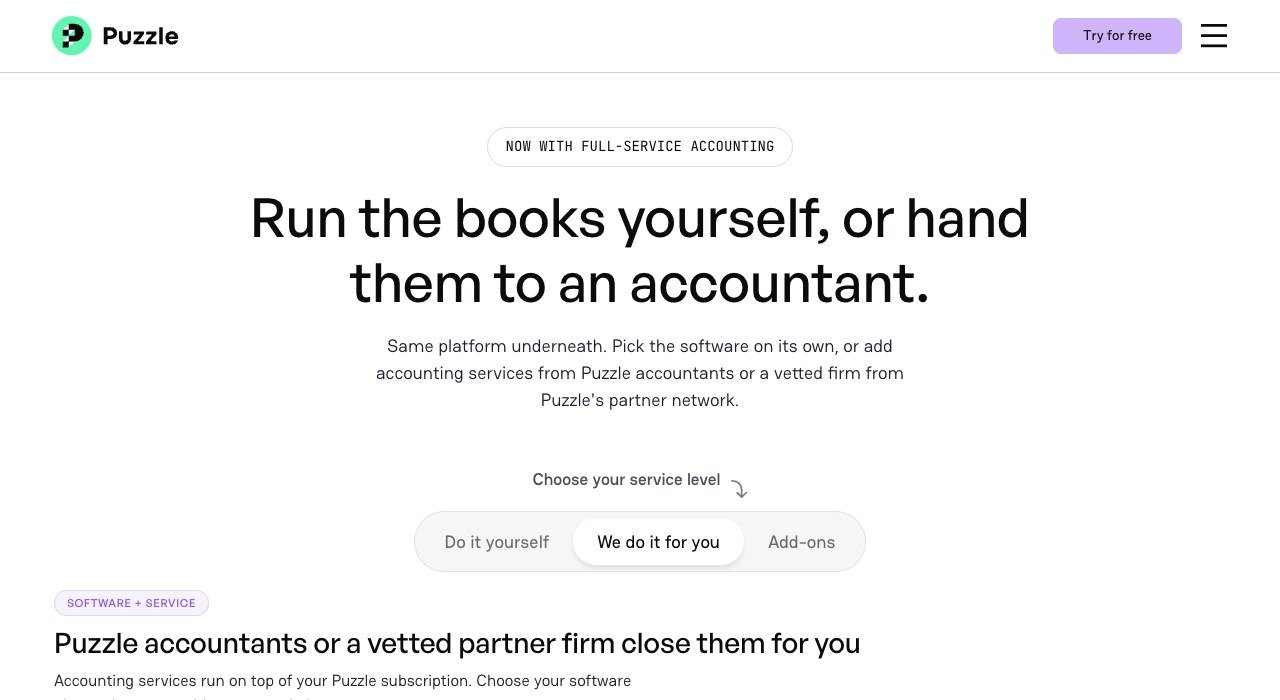
Entry price: $30 a month (Starter). Free tier: No. Users: Varies by plan.
Puzzle is unusual in saying the quiet part out loud. Its own pricing page labels the $72 Core plan “Your QuickBooks replacement”, and the product is built for venture-backed startups that need a defensible chart of accounts from month one rather than a tidy invoice.
Starter is $30 a month for first books, Complete $120 and Scale $360. Core is capped at $10,000 of monthly expenses, so the plan ladder tracks burn rather than headcount. If your reason for leaving QuickBooks is that an accountant keeps rebuilding your books, this is the one aimed squarely at that problem.
6. Bonsai: Agencies billing by the project
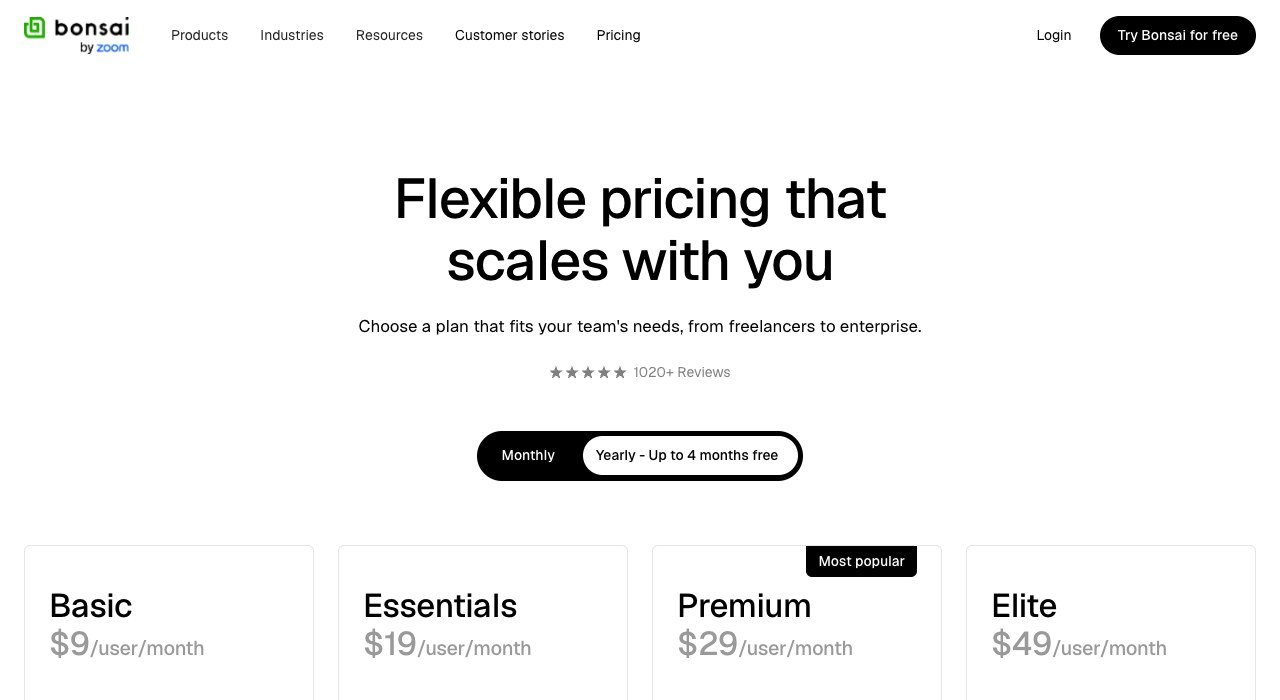
Entry price: $15 per user a month. Free tier: No. Users: Per seat.
Bonsai treats accounting as one tab inside client delivery. Contracts, proposals, scheduling, time tracking and invoicing sit alongside expense and income tracking, which suits a studio that bills by the project rather than a shop that counts stock.
Pricing is per user, and that changes the arithmetic completely. Basic is $15 a month a seat, Essentials $25, Premium $39 and Elite $59, with Elite needing three seats minimum. A five-person agency on Premium pays $195 a month, where QuickBooks Plus carries five users for $140.
7. Akaunting: Running your own books on your own server
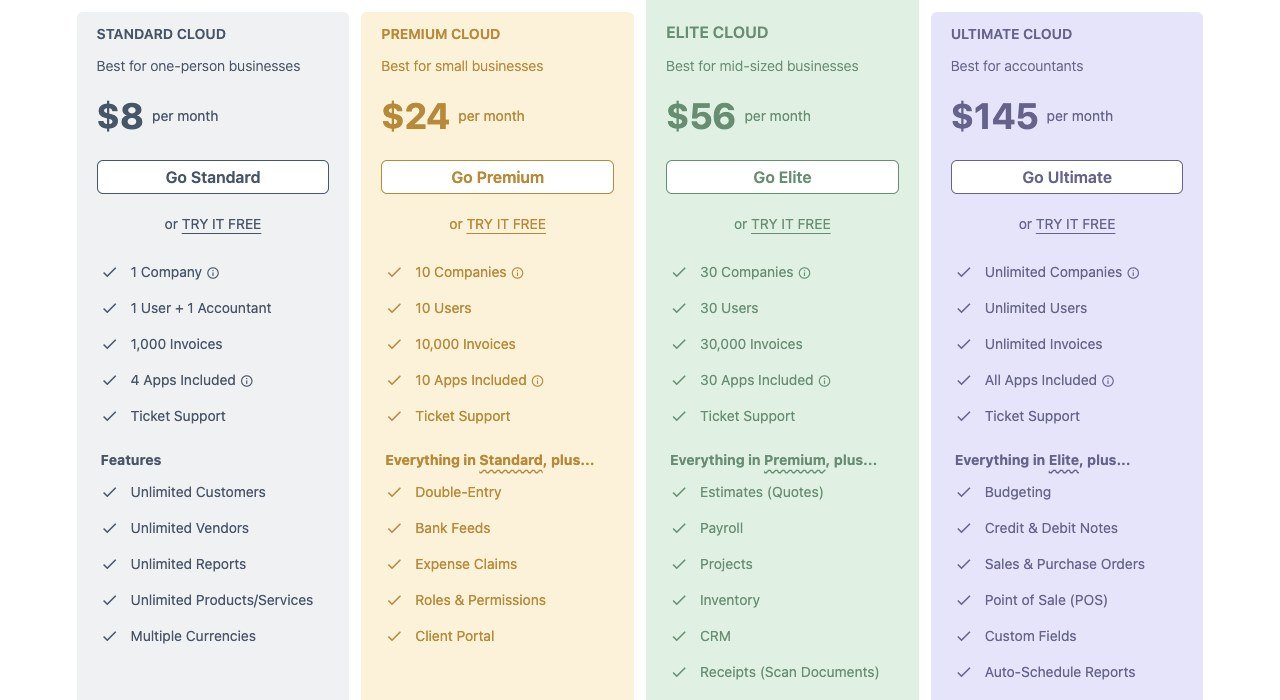
Entry price: $8 a month billed yearly. Free tier: Self-hosted core. Users: 1 plus an accountant.
Akaunting is the option for anyone whose objection to QuickBooks is the subscription itself. The core application is open source, so you can run it on your own server and pay nothing but hosting, keeping the ledger entirely inside your own infrastructure.
The hosted version starts at $8 a month billed yearly, rising through Premium at $24 and Elite at $56 to Ultimate at $145. Standard Cloud covers one company, one user plus an accountant, 1,000 invoices and four apps. Month-to-month billing costs half as much again, at $12 for the same Standard tier.
8. Invoice Ninja: Free invoicing that never expires
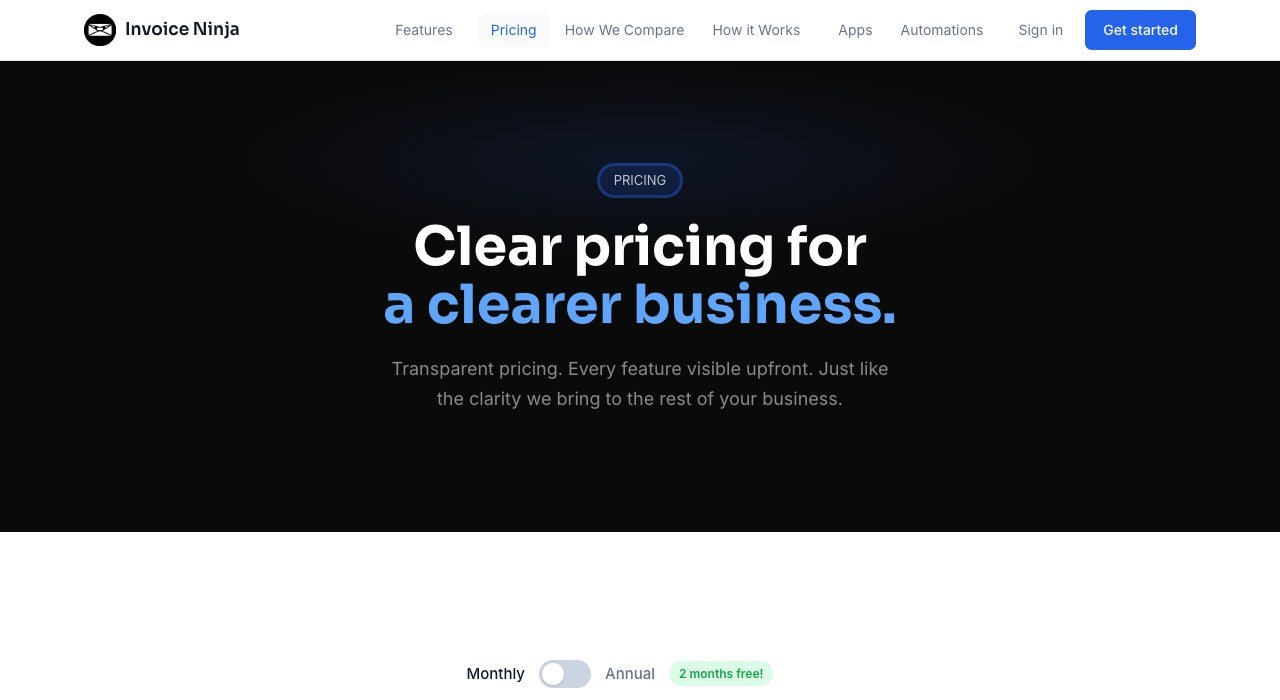
Entry price: $0 (Free). Free tier: Yes, 5 clients. Users: 1 on Free.
Invoice Ninja’s free tier is free in the way people hope a free tier will be. Five clients, unlimited invoices and eleven templates, with no trial clock and no card required. For a freelancer with a short client list it removes the billing problem permanently.
Pro at $14 a month lifts the client cap and strips the Invoice Ninja mark from your documents. Enterprise is $18 for one or two users and scales by seat above that. Like Akaunting it can be self-hosted, which is the usual reason developers pick it over Wave.
9. TrulySmall: One-person businesses that only invoice
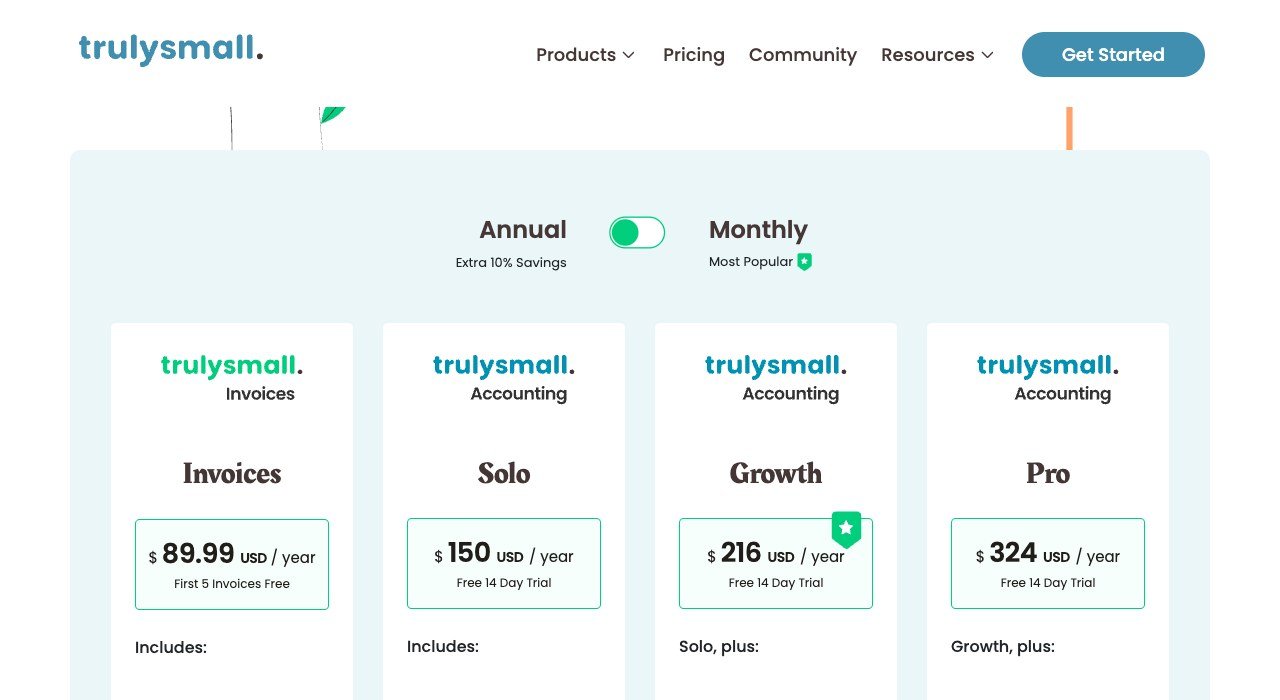
Entry price: $89.99 a year (Invoices). Free tier: First 5 invoices. Users: 1 to 5 by plan.
TrulySmall aims at the business that is one person and intends to stay that way. The Invoices plan is $89.99 a year, bills the first five invoices at nothing, and does the job a great many QuickBooks Simple Start subscribers are actually paying $456 a year for.
Above that, Solo is $150 a year and adds double-entry accounting, receipt scanning and profit and loss reporting. Growth at $216 carries up to five users with bank sync and automatic reconciliation, and Pro is $324. Every figure on the page is in US dollars, which is worth checking because several rivals quote elsewhere.
10. GnuCash: Double-entry books with no subscription at all
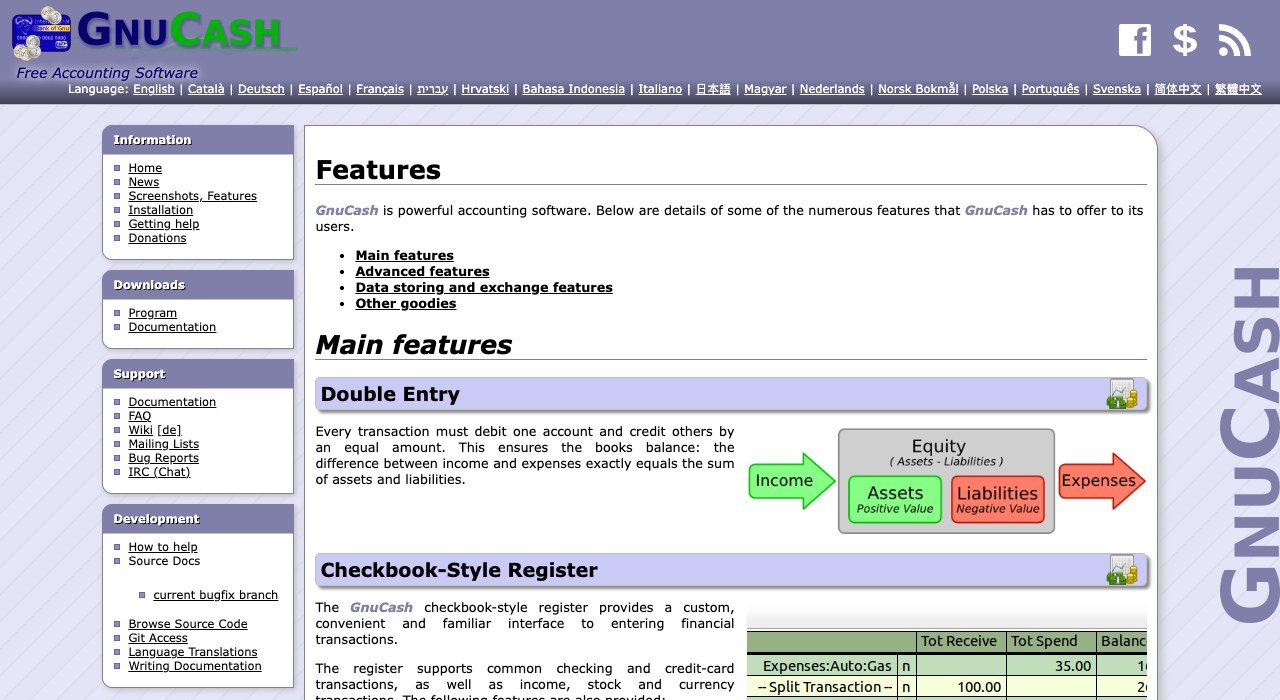
Entry price: $0, free software. Free tier: Yes, permanently. Users: Unlimited, local.
GnuCash is the answer when the requirement is proper double-entry bookkeeping and no recurring bill of any kind. It is free software, it runs on your own machine, and there is no account to create, no cloud copy of your ledger and nothing to cancel.
What you give up is everything built around convenience. No bank feed worth the name, no mobile app, no client portal, and an interface that looks its age. For a bookkeeper who wants a register and a balance sheet rather than a dashboard, that trade is the point rather than the price.
What Each Free Tier Actually Withholds
Four platforms here advertise a free plan and none of them means the same thing by it. The limit is what decides whether free lasts a month or a decade.
- Wave Starter: unlimited invoices and bookkeeping, no time limit. You pay on card processing instead, at 2.9% plus 60 cents.
- Zoho Books Free: capped by revenue, not features. Free below $50,000 a year, then $20 an organisation a month.
- Invoice Ninja Free: capped at five clients, unlimited invoices, and the documents carry an Invoice Ninja mark until you pay.
- GnuCash: free software with no tier above it, so nothing is withheld. What is missing is bank feeds and a mobile app.
- QuickBooks Free: Intuit’s own $0 plan, which rules out the assumption that leaving is the only way to stop paying.
Read a free tier by asking what the vendor sells instead. Wave sells payment processing, Zoho sells the plan above the revenue line, and Invoice Ninja sells the client cap. A free plan with no visible business model behind it is the one to be careful of.
Switching Costs Nobody Puts on the Pricing Page
Moving accounting software is not a download and an upload. Opening balances, reconciled bank history, recurring invoices and sales tax settings all have to land correctly, and a mistake in any of them surfaces at year end rather than on the day.
The IRS expects you to be able to produce the records behind a return, and its guidance on recordkeeping for small businesses is clear that the burden sits with the taxpayer rather than the software. Publication 583 sets out which books a new business is expected to keep. Export both sides before you cancel anything.
- Run and save a trial balance, balance sheet and profit and loss from QuickBooks on the cut-over date, as PDF rather than CSV.
- Export customers, vendors, chart of accounts and open invoices separately. A combined export almost always loses the account mapping.
- Pick the first day of a quarter, not a random Tuesday, so sales tax periods do not split across two systems.
- Keep the QuickBooks subscription live for one month after the move, as a reference copy rather than a working file.
- Reconcile the first full month in the new system against the old bank statement before you trust any report it produces.
If payroll runs through QuickBooks, treat it as a separate project with its own date. Mid-year payroll migrations carry year-to-date figures that have to match to the cent, and most of the platforms here either use a partner for payroll or do not offer it.
Why the Advertised Price Is Never the Price You Pay
This category runs a discount almost permanently, and the discount always expires before the subscription does. Xero currently shows 90 percent off for six months and FreshBooks 80 percent off for four. Year two is charged at list on both, and list is the only figure worth comparing.
Billing period moves the number again. Akaunting Standard is $8 a month on annual billing and $12 paid monthly, a difference of 50 percent for identical software. Zoho Books Standard swings between $15 and $20 the same way. Pricing pages open on the annual figure by default and bill most businesses the monthly one.
Currency is the third trap and the easiest to miss. FreeAgent prices in sterling for UK limited companies at £33 a month, and Odoo serves a different currency depending on where the visitor is. A business in Ohio reading a pound price is not comparing the same purchase.
Payroll is almost never included. Wave charges from $25 a month for it, FreshBooks $40 plus $6 a user, and Xero routes it to Gusto entirely. A plan that looks $15 cheaper can cost more once a single employee is paid through it. Our wider guide to accounting software for small business ranks the same category without treating QuickBooks as the thing to escape.
How to Choose a QuickBooks Alternative for Your Business
Start with the reason you are leaving, because it points at a different shortlist each time. Price alone points at Wave, Zoho Books or GnuCash. Too many seats points at Xero, which does not charge per user. An accountant who keeps fixing your books points at Puzzle.
- You invoice and little else: Invoice Ninja free, or TrulySmall Invoices at $89.99 a year.
- You want the same daily workflow for less: Xero Growing at $59, which is the honest comparison against Essentials at $85.
- You are under $50,000 of revenue: Zoho Books Free, and move to Standard when you cross it.
- You bill clients by the project: Bonsai, as long as you multiply the per-seat figure by your headcount first.
- You object to subscriptions on principle: self-hosted Akaunting, or GnuCash on the desktop.
Check how the platform takes money as well as how it charges you. Card processing is where the free tiers earn their keep, and the difference between 2.9 percent and interchange-plus is larger than the subscription on any plan here. Our guide to payment processors for small business sets those rates side by side.
One more thing worth separating out: accounting software is not tax software. If the reason you are reviewing this is the annual filing rather than the monthly bookkeeping, the alternatives to TurboTax are a different shortlist entirely.
Frequently Asked Questions
What is the best free QuickBooks alternative?
Wave, because the free Starter plan carries unlimited invoices, bills and bookkeeping records with no expiry date. Zoho Books is free too but stops being free once annual revenue passes $50,000, and Invoice Ninja’s free plan allows only five clients.
Does QuickBooks have a free plan?
Yes. Intuit now lists QuickBooks Free at $0 a month with no card required, alongside the paid Simple Start tier at $38. It is a cut-down product, but its existence means a free plan is not by itself a reason to switch.
Is Xero actually cheaper than QuickBooks?
At the entry tier yes, $27 against $38, but Xero Early caps invoices at 20 a month. Most businesses that hit that cap move to Growing at $59, which compares against QuickBooks Essentials at $85. Xero does not charge per user, so the gap widens with every person you add.
Can I move my QuickBooks data without losing history?
Opening balances, customers, vendors and the chart of accounts move reliably. Reconciled bank history and attachments usually do not, which is why the saved PDF reports matter. Keep the old subscription live for a month after the move so you can still open the original file.
Related Articles

Get the Fox Bulletin briefing
The stories that matter, in your inbox. No spam, unsubscribe anytime.
Newsletter signup will be available soon.
Related stories
DocuSign Alternatives: 10 E-Signature Tools Priced
DocuSign Personal allows five envelopes a month for $11. Ten DocuSign alternatives compared on sending limits, per-seat cost and free tiers.
HubSpot Competitors: 10 CRM Platforms Priced Per Seat
A HubSpot Professional seller costs $150 a seat once both seats are counted. Ten HubSpot competitors compared on what a five-person team actually pays.

Cross-Border Payments: How Businesses Cut Cost and Delay
The average business-to-business cross-border payment costs 1.6% of the amount sent and only 2.2% land within an hour. Where the friction comes from and how a finance team removes it.