
Espresso is the one coffee method where the machine genuinely determines the result. Drip and pour over are forgiving; espresso forces roughly nine bars of pressure through a compacted bed of fine coffee in under thirty seconds, and small failures of temperature or pressure show up immediately in the cup.
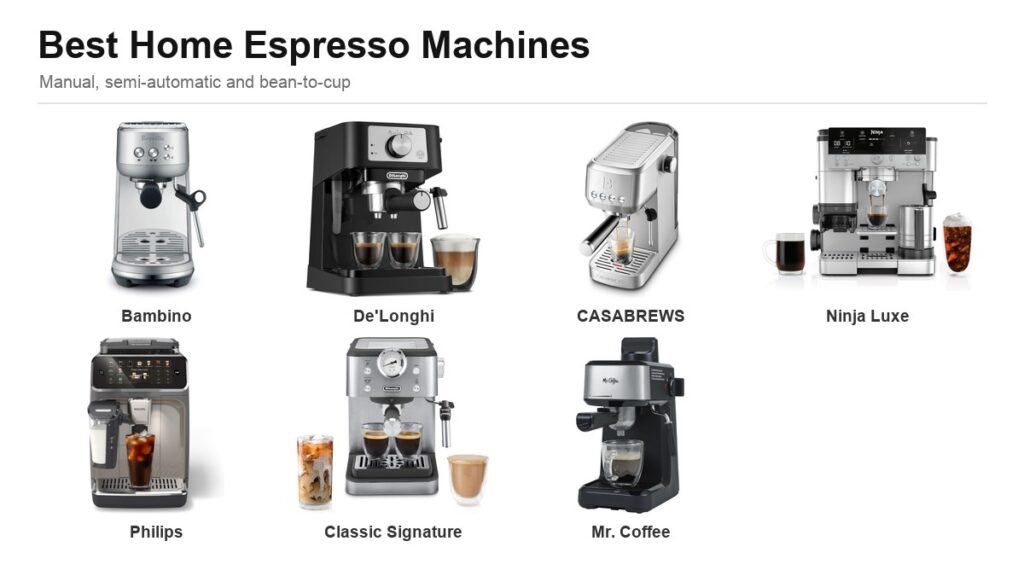
The seven machines below split into three groups that behave completely differently. Manual machines give you a portafilter and expect you to dose, tamp and time. Semi-automatic machines automate the shot but leave the milk to you. Bean-to-cup machines grind, tamp, brew and froth at the push of one button. Deciding which group you want matters far more than choosing between brands inside it.
Fox Bulletin is an Amazon Associate. We earn from qualifying purchases made through links on this page, at no extra cost to you. Prices and availability change often, so check the listing before you buy.
Three Types, Seven Machines
Bar figures describe pump pressure. Espresso is conventionally extracted at about nine bars, so a 15 or 20-bar pump is describing its maximum rather than its brewing pressure. A higher number is not a better machine.
| Machine | Type | Milk system | Built-in grinder |
|---|---|---|---|
| Breville Bambino | Semi-automatic | Automatic steam wand | No |
| De’Longhi Stilosa | Manual | Manual frother | No |
| CASABREWS 3700 | Semi-automatic | Steam wand | No |
| Ninja Luxe Cafe Premier | Semi-automatic, 3-in-1 | Hands-free dual froth | Yes, 25 settings |
| Philips 5500 LatteGo | Bean to cup | LatteGo automatic | Yes |
| De’Longhi Classic Signature | Semi-automatic | Adjustable steam wand | No |
| Mr. Coffee 4-Shot | Steam driven | Frothing wand | No |
1. Breville Bambino: Three Seconds to Temperature
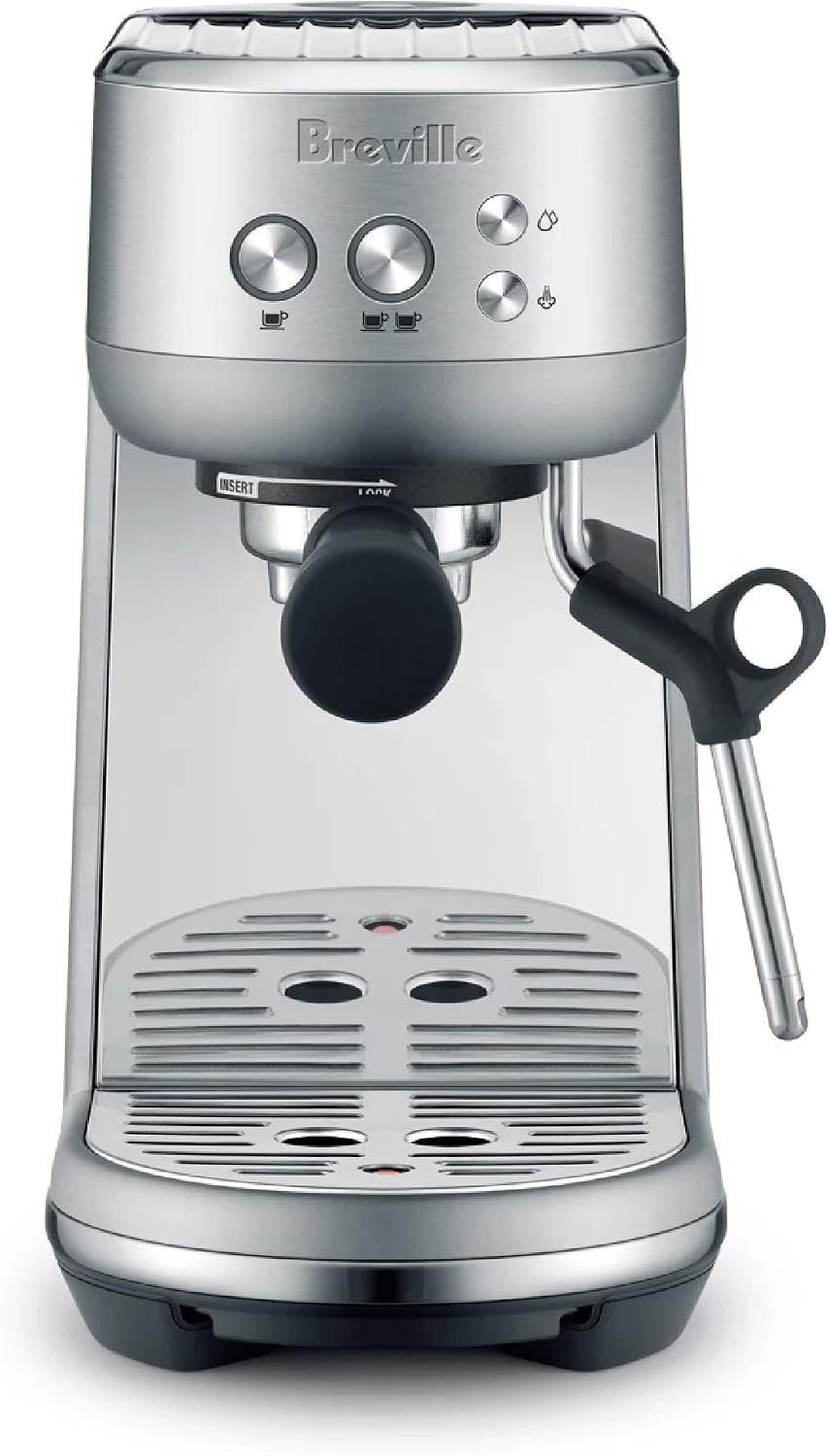
The single most common reason home espresso disappoints is temperature. A machine that has not fully heated pulls a sour shot, and most people do not wait long enough. The Bambino removes the problem with a ThermoJet heating system that reaches extraction temperature in three seconds, so there is no warm-up ritual to forget.
It also does low pressure pre-infusion, gradually ramping pressure at the start of the shot so the puck saturates evenly before full pressure arrives, which is the same principle as blooming in filter coffee. The steam wand is automatic, with adjustable milk temperature and texture, so microfoam does not depend on your wrist technique. There is no grinder, which keeps the footprint small and means you will need one separately.
What it does well
- Three-second heat-up removes the most common cause of bad home shots.
- Low pressure pre-infusion for even extraction.
- Automatic steam wand with adjustable temperature and texture.
- Small footprint for a real espresso machine.
What to know before buying
- No built-in grinder, and espresso needs a burr grinder you can dial in.
- Fewer manual controls than enthusiasts eventually want.
2. De’Longhi Stilosa: The Cheapest Honest Way In
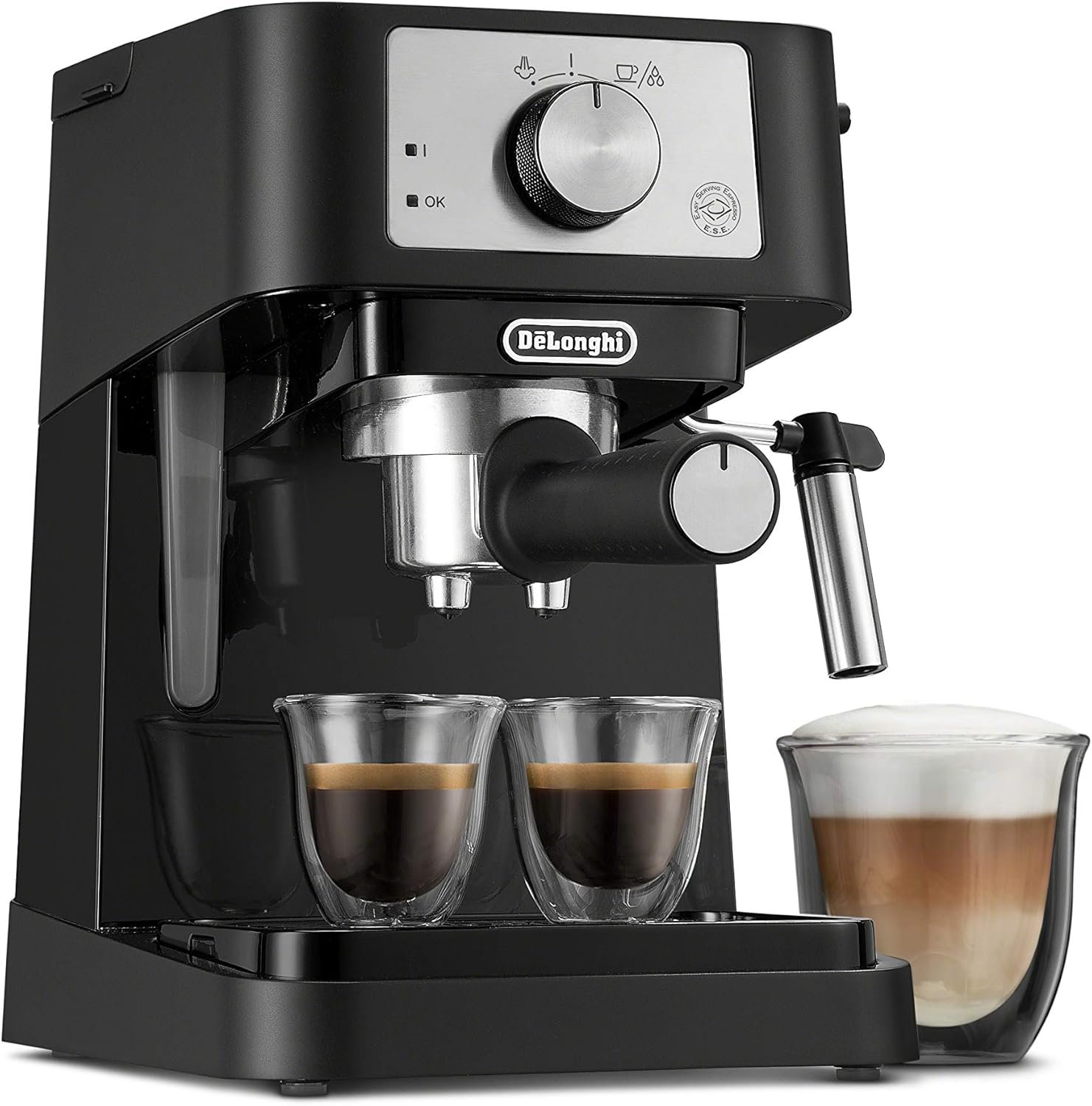
The Stilosa is a manual machine and does not pretend otherwise. You dose the portafilter, tamp it, start the pump and stop it yourself. Two filter baskets are included for single and double shots, and the frother is manual, so milk texture is entirely down to you.
That is the right way to learn, and it is the cheapest route to a machine that behaves like a real espresso maker rather than a pressurised approximation. The boiler is stainless steel, the footprint is small, and there is very little to go wrong. Expect the first fortnight to produce some undrinkable shots while you work out dose and grind, because the machine gives you no help at all.
What it does well
- Genuinely manual, which is the fastest way to learn extraction.
- Stainless steel boiler and a compact body.
- Single and double baskets included with the portafilter.
- Cheapest machine here by a wide margin.
What to know before buying
- No temperature stability aids, so results wander until you learn it.
- Manual frothing takes practice before milk resembles microfoam.
3. CASABREWS 3700: Stainless Body, Serious Steam
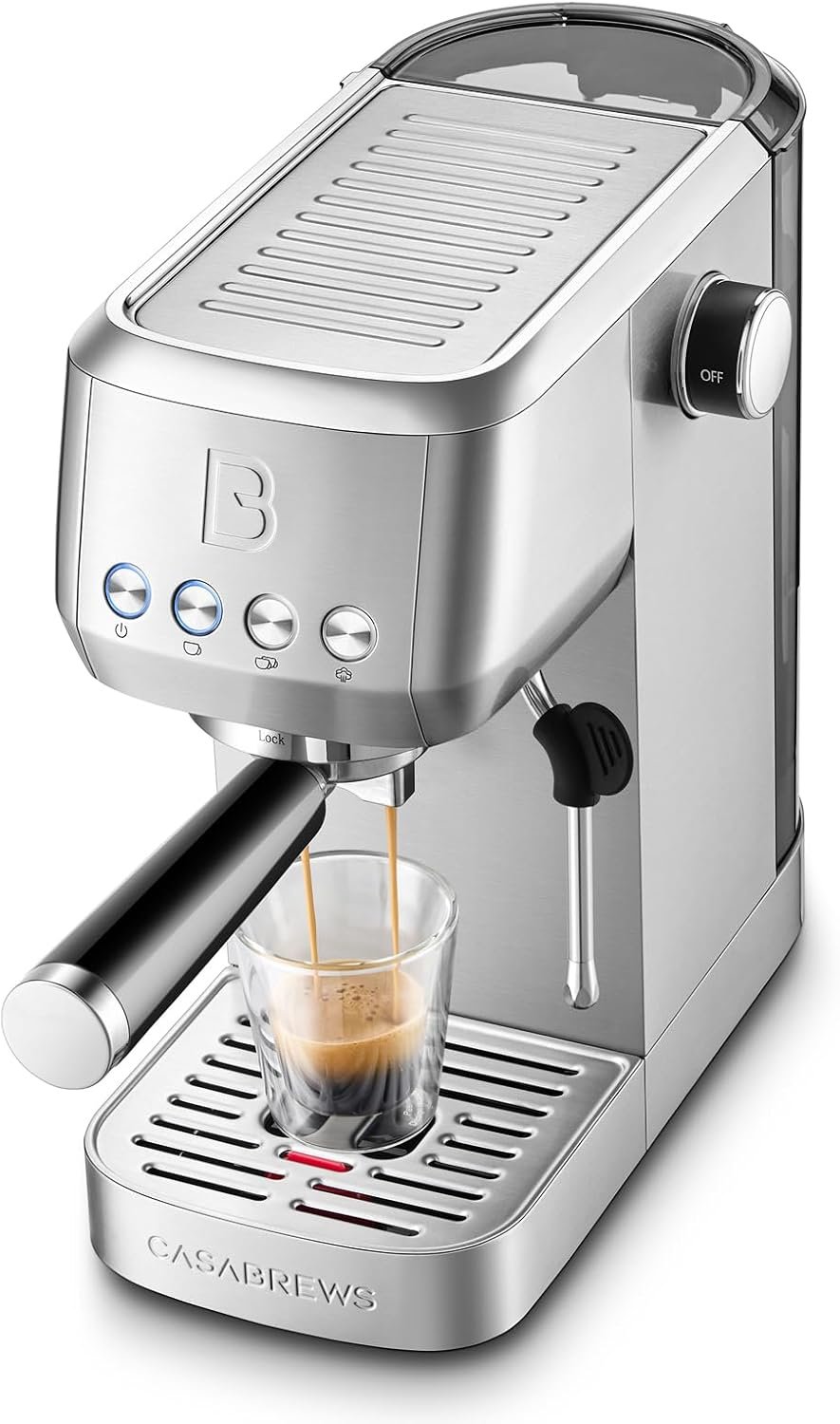
CASABREWS built the 3700 around a 20-bar Italian pump and a 1350-watt heating system in a stainless steel body, which is a specification usually found a price bracket higher. The steam wand is the notable part: at this price most machines give you a weak panarello attachment, and a wand with real steam pressure is what separates a flat white from warm milk.
It is a semi-automatic, so the shot is pumped for you but dosing, tamping and milk are yours. One setup detail from the manufacturer that people miss and then complain about: there is a rubber plug at the bottom of the water tank that must be removed, and the machine needs a first-use priming cycle before it will brew properly.
What it does well
- Stainless steel housing rather than painted plastic.
- Powerful steam wand for genuine microfoam.
- 1350-watt heating system heats quickly.
- Strong value for a machine with this build.
What to know before buying
- The 20-bar figure is maximum pump pressure, not brewing pressure.
- Requires a first-use priming cycle or it will not brew correctly.
4. Ninja Luxe Cafe Premier: Espresso, Drip and Cold Brew in One Body
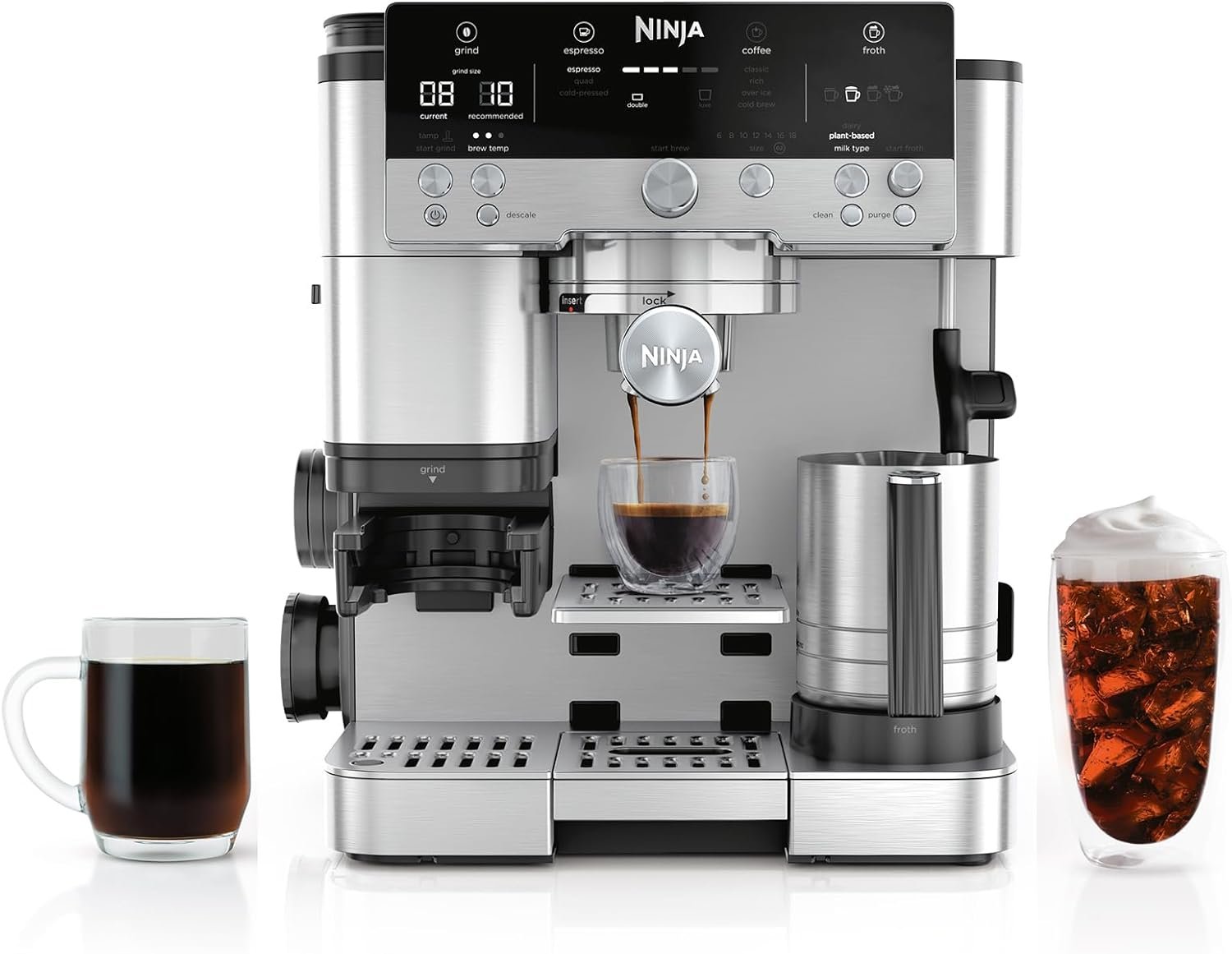
Most espresso machines make espresso and nothing else, which is a problem in a household where one person drinks lattes and another wants a mug of filter coffee. The Luxe Cafe Premier covers both plus cold brew: two espresso styles, three drip styles including over ice, and two cold brew styles.
The built-in conical burr grinder has 25 settings, which is enough range to move between espresso and drip grinds without a second machine. The milk system is the standout feature, combining a spinning whisk with an automatic steamer so you pour milk, pick a style from four presets and walk away. That removes the skill barrier that stops most people making decent lattes at home.
What it does well
- Espresso, drip coffee and cold brew from one machine.
- Conical burr grinder with 25 settings covers both grind ranges.
- Hands-free dual froth system with four presets.
- Genuinely replaces two appliances on a counter.
What to know before buying
- Large, and it dominates a counter.
- A do-everything machine is a single point of failure for every drink in the house.
5. Philips 5500 LatteGo: One Button, and a Milk System That Cleans Itself
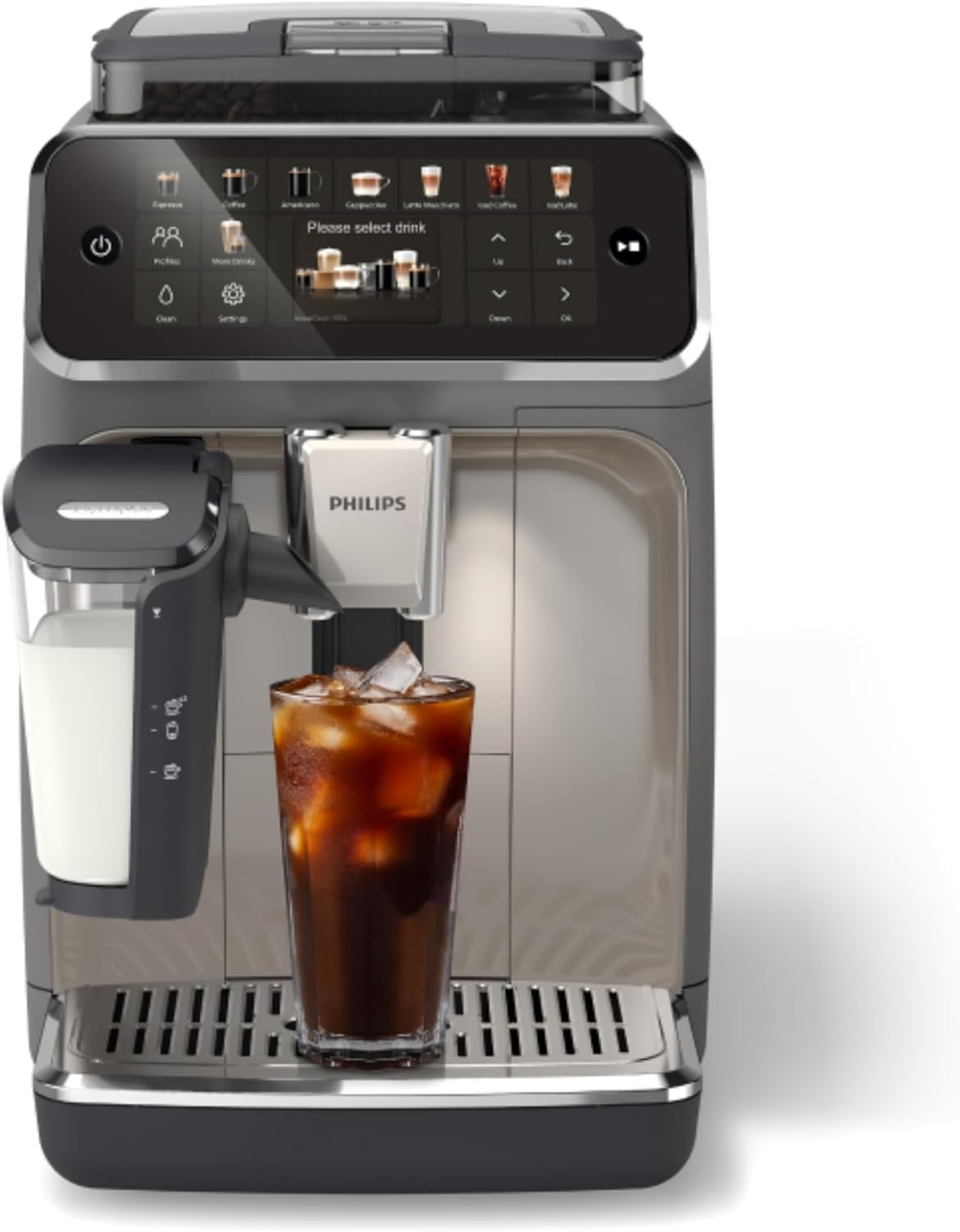
Bean-to-cup machines usually fail at the same place: the milk system. Internal tubes and hidden compartments are where milk dries, and cleaning them properly is a daily chore most owners abandon within a month. Philips designed LatteGo as three parts with no internal tubes at all, and the whole assembly is dishwasher safe.
The rest is a conventional super-automatic done well. It grinds, tamps and brews at one touch from a colour display, offers 20 hot and iced presets from espresso through lattes to plain hot water, and stores up to four user profiles. QuickStart makes it ready to brew in three seconds, and Philips has the grinding and brewing noise certified under the Quiet Mark scheme, which is a real consideration for an early riser in a shared house.
What it does well
- LatteGo milk system is three parts, no tubes, dishwasher safe.
- 20 hot and iced presets with up to four saved user profiles.
- Grinds, tamps and brews at one touch.
- Independently certified for quiet operation.
What to know before buying
- The most expensive machine on this list by some distance.
- Fully automatic means almost no control over the shot itself.
6. De’Longhi Classic Signature: Presets Without Giving Up the Wand
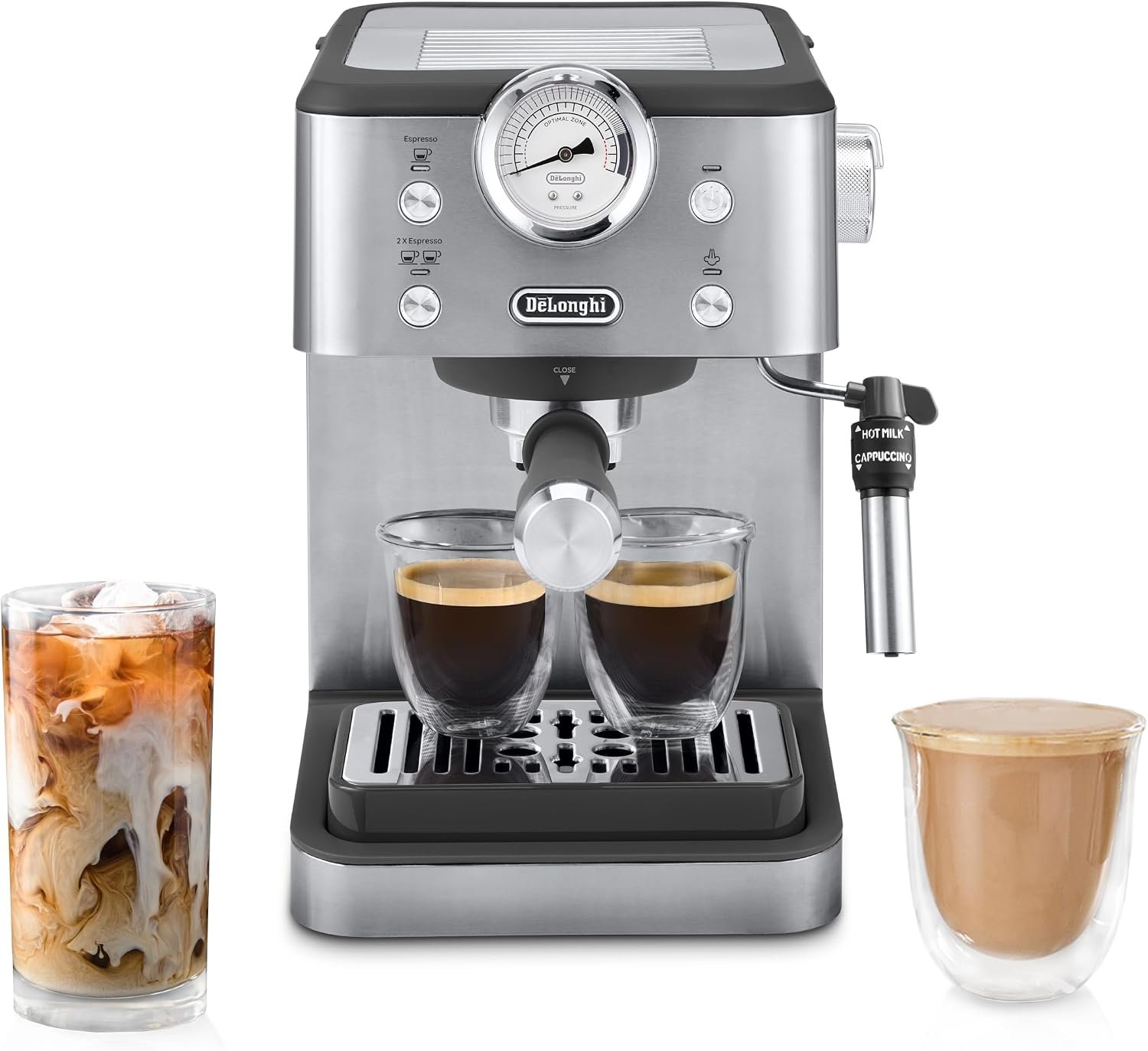
This sits between the Stilosa and a fully automatic machine, and for many people that is the correct place to be. It has customisable single and double espresso presets, so the pour stops itself at your preferred volume, while leaving the milk under your control with an adjustable two-setting steam wand that runs from steamed milk to microfoam for latte art.
The pump is a 15-bar Italian unit and heating is handled by Thermoblock, which brings water to temperature quickly and holds it stable rather than cycling around a target the way a single boiler does. Temperature stability is the least visible specification on any espresso machine and one of the most important.
What it does well
- Programmable single and double shot volumes.
- Two-setting adjustable steam wand, from steamed milk to microfoam.
- Thermoblock heating for fast, stable temperature.
- Keeps manual milk control while automating the shot.
What to know before buying
- No grinder, so budget for one separately.
- 15 bars is the pump maximum; espresso still extracts near nine.
7. Mr. Coffee 4-Shot Steam: Not Espresso, But Useful Anyway
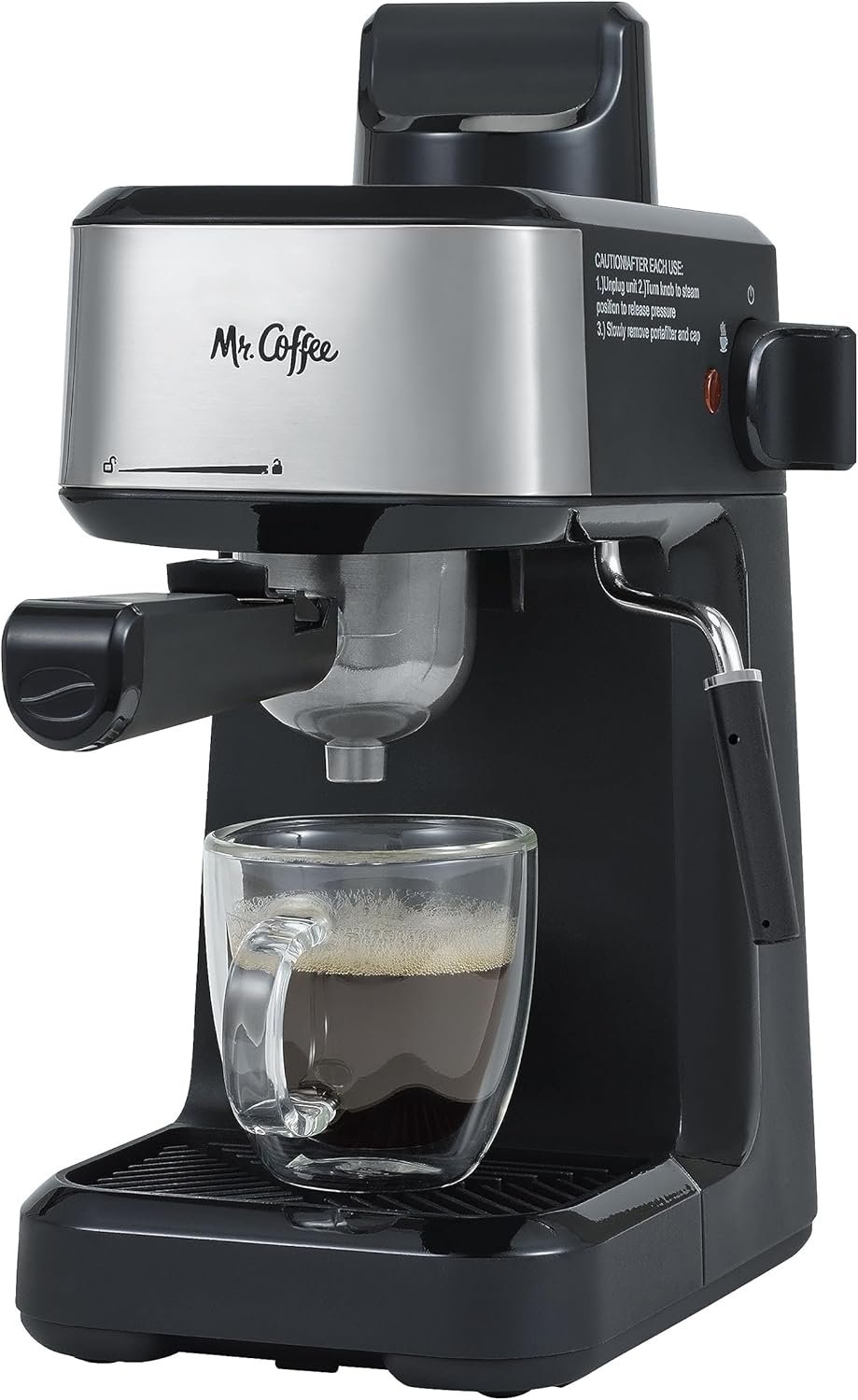
This one needs an honest label. It is a steam-driven machine, not a pump machine, which means it uses steam pressure rather than nine bars from a pump. That produces a dark, strong, concentrated coffee that is not technically espresso and will not build a proper crema.
It is still worth knowing about, because that steam-brewed concentrate is exactly what Cuban coffee and many home moka-style drinks are built on, and the extra-large portafilter pulls up to four shots at once. There is an integrated frothing wand and a stainless steel pitcher in the box. Buy it understanding what it is, and it does that job at a price no pump machine reaches.
What it does well
- Brews up to four shots at once from an extra-large portafilter.
- Integrated frothing wand and stainless pitcher included.
- Well suited to Cuban coffee and strong milk drinks.
- The lowest price of anything here.
What to know before buying
- Steam driven, not pump driven, so this is not true espresso.
- No real crema and no pressure control.
Why the Bar Number on the Box Means Less Than You Think
There is an actual published standard here. The Italian Espresso National Institute’s parameters for a certified Italian espresso specify entry water pressure of 9 plus or minus 1 bar, 7 grams of ground coffee, water leaving the group at 88C, a percolation time of 25 seconds and 25ml in the cup. Nine bars, not twenty. So when a box advertises 15 or 20 bars, it is quoting the pump’s maximum capability, not the pressure at the coffee.
A higher maximum is not a better machine, and past a point it is a warning sign. Cheap machines sometimes use a pressurised portafilter that creates artificial back pressure so that any grind produces something crema-like. It looks right in the cup and tastes thin, because the crema came from a valve rather than from extraction.
The specifications that actually predict a good shot are temperature stability, pre-infusion and the grinder. The Bambino’s three-second ThermoJet, the Classic Signature’s Thermoblock and the Luxe Cafe’s 25-setting burr grinder all address those. The bar number addresses marketing.
The Grinder Problem Nobody Mentions
Four of these seven machines have no grinder, and that is not a small omission. Espresso needs a fine, precisely adjustable grind, and pre-ground supermarket coffee is milled for drip machines. Run it through an espresso machine and the water rushes through in eight seconds, producing a sour, watery shot that no amount of fiddling with the machine will fix.
The practical consequence is budget. A machine without a grinder is not the full cost of getting into espresso, because a burr grinder capable of espresso-fine adjustment is a separate purchase of real size. Blade grinders will not do it: they produce an inconsistent mix of dust and boulders, and espresso is the method least tolerant of that. The National Coffee Association’s brewing guidance lists grind size as a primary variable for exactly this reason.
The Ninja Luxe Cafe and the Philips 5500 both include grinders, which is a genuine part of their value rather than a bullet point. If you are comparing prices across this list, compare them with a grinder added where one is missing.
Which Machine Suits Which Person
For most people buying a first real espresso machine, the Breville Bambino is the pick. It removes the temperature variable, pre-infuses properly, and the automatic steam wand means your first latte is drinkable. Pair it with a burr grinder and the total is still less than a super-automatic.
Choose the De’Longhi Stilosa if you actively want to learn, have patience for a bad fortnight, and want to spend as little as possible doing it. Choose the CASABREWS 3700 if you want a stainless machine with a strong steam wand and are comfortable with a semi-automatic. Choose the Classic Signature if you want programmed shot volumes but still want to texture your own milk.
Choose the Ninja Luxe Cafe Premier if the household drinks different things and you want one machine instead of three, and the Philips 5500 if you want coffee with no technique at all and the budget to pay for it. The Mr. Coffee 4-Shot is for strong steam-brewed coffee on a small budget, as long as you are not expecting real espresso.
If none of this appeals, the honest answer may be that espresso is not your method. Our guide to drip coffee makers covers the approach that rewards patience rather than equipment, including the two machines on Amazon with third-party brewing certification, and the coffee maker type comparison puts every method side by side.
Frequently Asked Questions
How many bars of pressure do you need for espresso?
About nine bars at the coffee. Machines advertising 15 or 20 bars are quoting the pump maximum, not brewing pressure, and a higher number does not improve the shot. Temperature stability and grind consistency matter far more.
Do I need a separate grinder for an espresso machine?
Unless the machine has one built in, yes, and it has to be a burr grinder with fine adjustment. Pre-ground coffee sold for drip machines is too coarse and will produce a fast, sour shot. Blade grinders are not suitable because the grind is too inconsistent.
What is the difference between a steam espresso machine and a pump machine?
A pump machine forces water through the coffee at around nine bars. A steam machine, such as the Mr. Coffee here, uses steam pressure instead, which is lower. The result is a strong, dark concentrate rather than true espresso, and it will not produce proper crema.
Is a bean-to-cup machine worth it over a semi-automatic?
It depends on whether you want the drink or the process. A bean-to-cup machine such as the Philips 5500 makes a consistent latte at one touch with no skill involved and costs considerably more. A semi-automatic costs less, makes a better shot in trained hands, and asks you to learn.
Related Articles

Get the Fox Bulletin briefing
The stories that matter, in your inbox. No spam, unsubscribe anytime.
Newsletter signup will be available soon.
Related stories
Best Pour Over Coffee Makers From the V60 to the Chemex
Seven manual pour over brewers compared on filter type, cone shape and capacity, plus the six-step method that works with any of them.
Best Single Serve Coffee Makers for One-Cup Brewing
Seven one-cup coffee makers compared, from Keurig pod machines to brewers that take loose grounds, with what pods really cost and whether they recycle.
Best Drip Coffee Makers, Including Two SCA-Certified Machines
Eight drip coffee makers, opening with the only two on Amazon certified by the Specialty Coffee Association, plus what actually decides how a drip machine tastes.