
A pour over brewer has no pump, no heating element and no control board. You supply the hot water, the timing and the pour, and the device only holds the filter and directs the coffee into a vessel. That is the whole appeal: nothing in the system can drift out of specification, and nothing can break.
It also means the equipment matters less than the technique, so this list is organised around what each brewer physically does differently rather than a ranking of build quality. A cone concentrates flow toward the centre. A flat bed spreads it. A metal filter passes oils that paper traps. Those three choices change the cup far more than the brand name does.
Fox Bulletin is an Amazon Associate. We earn from qualifying purchases made through links on this page, at no extra cost to you. Prices and availability change often, so check the listing before you buy.
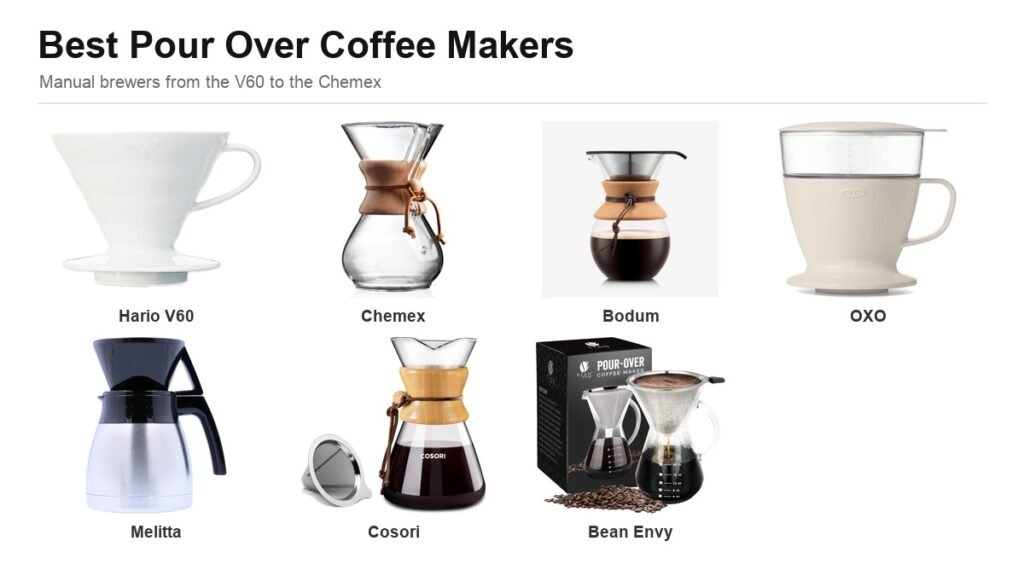
Seven Brewers and What Separates Them
Capacity is stated as the manufacturer lists it. Several of these count a cup as 4 or 5 ounces, so read the ounce figure rather than the cup figure.
| Brewer | Capacity | Filter | Shape |
|---|---|---|---|
| Hario V60 02 | 1 to 4 cups | Paper cone | Cone |
| Chemex Classic 6-Cup | 30 oz | Chemex bonded paper | Cone |
| Bodum Pour Over 34oz | 34 oz | Permanent steel mesh | Cone |
| OXO Brew Single Serve | 12 oz | #2 paper cone | Cone with water tank |
| Melitta Brewer and Carafe | 42 oz | #4 paper cone | Cone |
| Cosori Pour Over | 34 oz | Double-layer steel | Cone |
| Bean Envy Pour Over | 20 oz | Permanent steel | Cone |
1. Hario V60 02: The Cone That Set the Standard
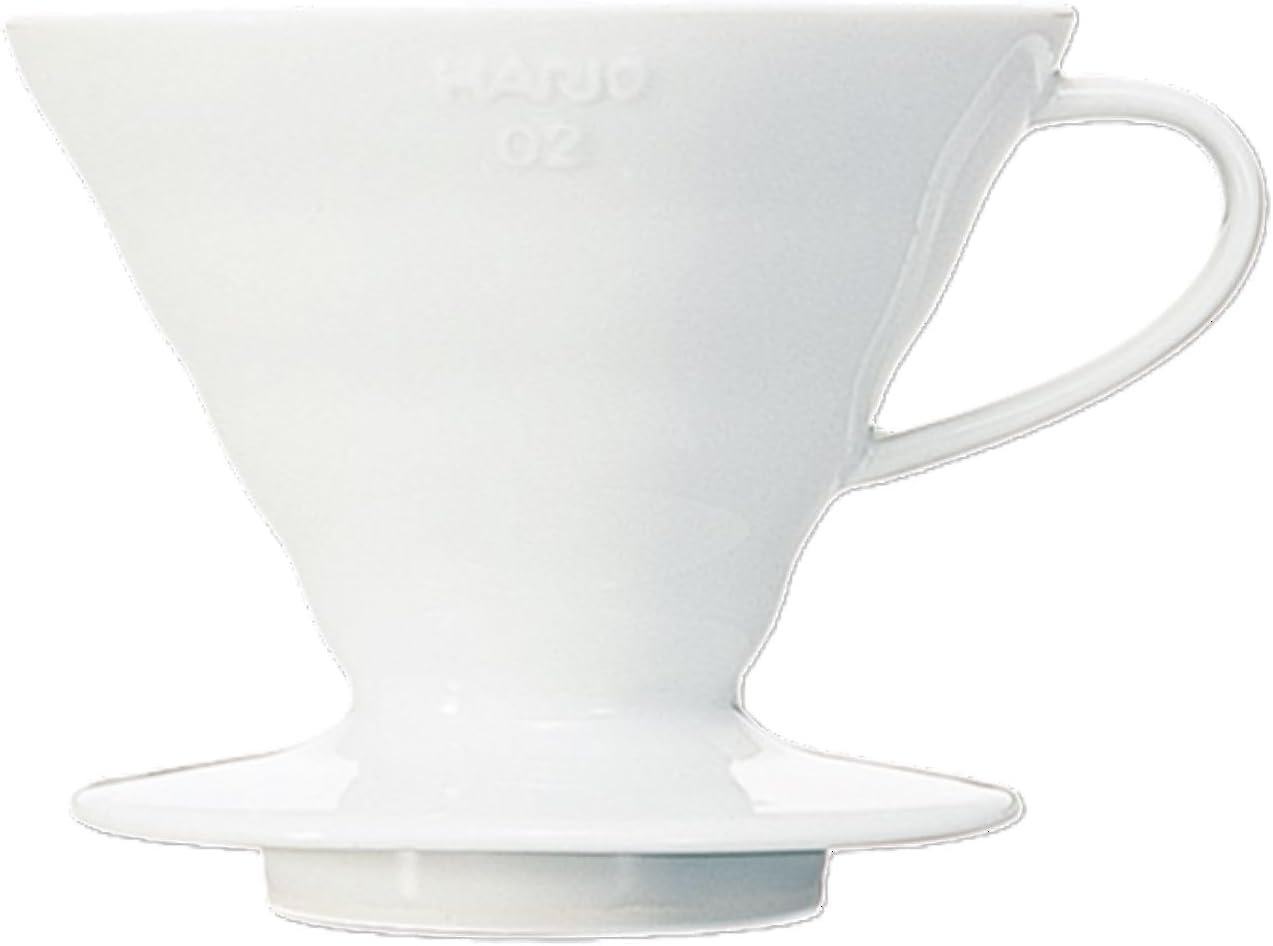
The V60 is the brewer most specialty cafes hand you when you ask what to buy for home, and the reason is geometry. Hario’s own description explains the logic plainly: the cone-shaped filter deepens the coffee bed so water flows toward the centre, extending the time it spends in contact with the grounds.
What that means in practice is control. A cone with a large single opening lets your pour rate, not the device, set the contact time. Pour fast and you get a lighter, brighter cup; pour slow in stages and you get more body. The same brewer produces genuinely different coffee in different hands, which is either the appeal or the problem depending on your patience. Size 02 covers one to four cups, which suits almost everyone.
What it does well
- The reference design for cone pour over, and filters are available everywhere.
- Ceramic holds heat better than plastic through the brew.
- Size 02 spans a single cup to a small carafe.
- Nothing to break, and it costs less than any electric brewer here.
What to know before buying
- Needs a gooseneck kettle and a scale to use properly, which is extra spend.
- Results vary with technique, so the first week involves some bad coffee.
2. Chemex Classic 6-Cup: Thicker Filters, Cleaner Cup
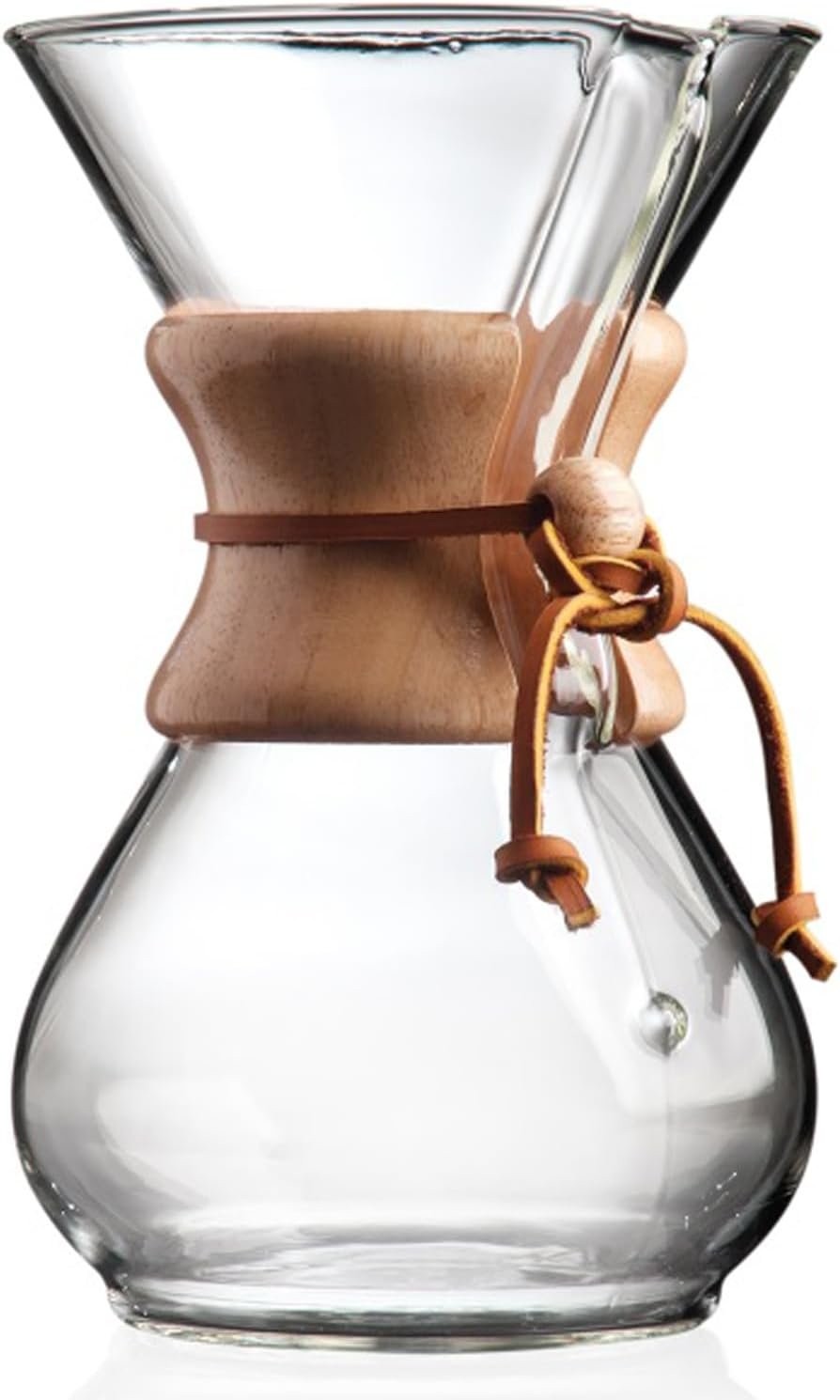
The Chemex is a single piece of non-porous borosilicate glass with a wooden collar, and it has barely changed since Peter Schlumbohm invented it in 1941. It sits in the permanent collection of the Museum of Modern Art, which is unusual company for a kitchen object. The glass will not absorb odours or chemical residue, which matters more than it sounds if you have ever inherited a plastic brewer that permanently smells of old coffee.
Its real signature is the filter. Chemex bonded filters are substantially thicker than standard cone filters, and they strip out more oils and fine particles. The result is the cleanest, most tea-like cup of anything on this list, with almost no sediment. Whether that is better is a matter of taste: you are trading body for clarity. The patented design also lets you cover and refrigerate brewed coffee in the same vessel and reheat it later without the flavour collapsing.
What it does well
- Thick bonded filters produce an exceptionally clean, sediment-free cup.
- Non-porous borosilicate glass holds no odours or residue.
- Brew, cover, refrigerate and reheat in the same vessel.
- One-piece design with nothing to assemble.
What to know before buying
- Chemex filters are proprietary, pricier than standard cones, and you must keep them stocked.
- Glass with no handle is awkward to wash and easy to break.
- Chemex counts a cup as 5 ounces, so 6 cups is 30 ounces.
3. Bodum Pour Over 34oz: No Filters to Buy, Ever
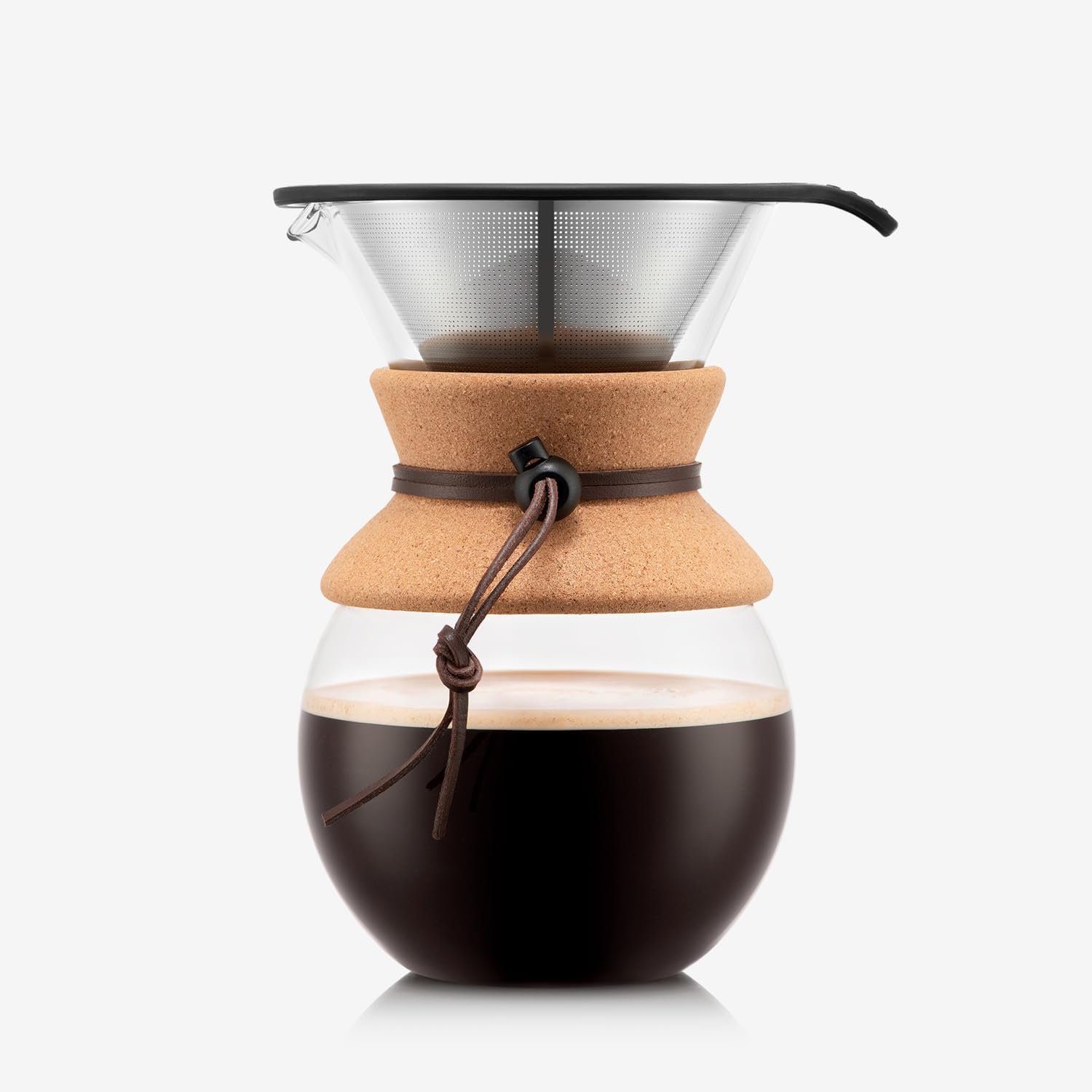
Every paper filter you use is money spent and a step added, and paper absorbs the aromatic oils that carry much of the flavour. Bodum’s permanent stainless steel mesh filter passes those oils straight into the carafe, which produces a heavier, fuller cup than any paper brewer here.
The carafe is heat-resistant borosilicate glass with a cork band that acts as insulation and a grip. Single wall, so it does not keep coffee hot for long, which suits the way most people use it: brew and pour. Usage is the standard method, coarse grounds in the filter, a small circular pour to wet the bed, then the rest of the water.
What it does well
- Permanent steel mesh filter with no ongoing paper cost.
- Passes coffee oils that paper filters absorb, for a fuller body.
- 34 ounces covers two or three mugs in one brew.
- Cork band insulates the carafe and gives a real grip.
What to know before buying
- Metal filters let fine sediment through, so grind coarse.
- Single-wall glass loses heat quickly.
- The mesh needs proper rinsing or it clogs and turns rancid.
4. OXO Brew Single Serve: Pour Over With the Pour Automated
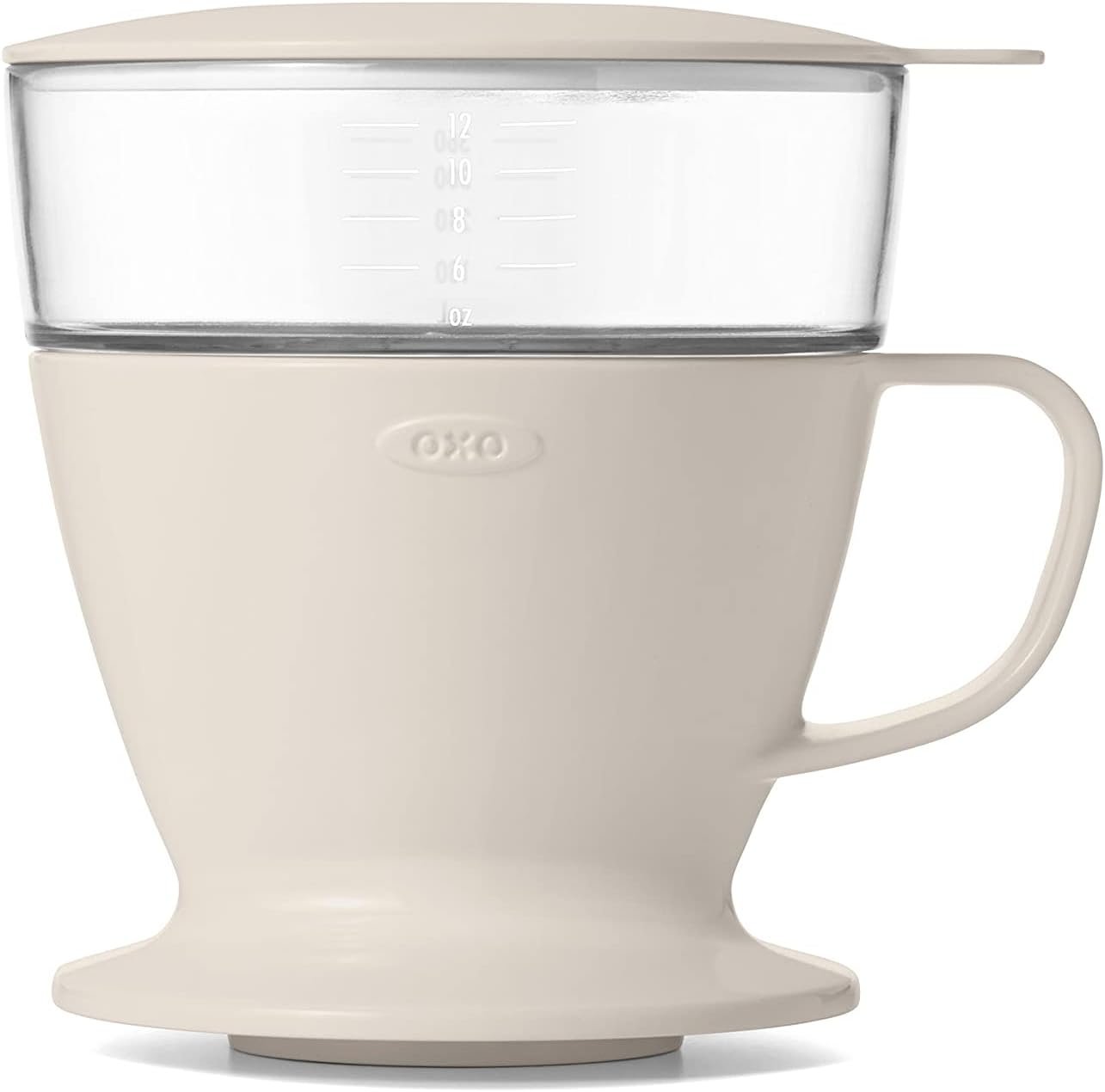
The hardest part of pour over is the pour, and the OXO removes it. You fill a tank sitting above the cone, and an auto-drip mechanism releases the water at a controlled rate through what OXO calls a Rainmaker shower head, which spreads flow across the whole bed rather than drilling into the middle.
That is a genuine trade rather than a compromise. You lose the ability to change the pour mid-brew, which is the V60’s whole point, and you gain repeatability and the ability to walk away. Measurement markings on the tank show how much water to add up to 12 ounces, so the ratio stays the same every morning without a scale. It ships with ten OXO unbleached #2 cone filters to start.
What it does well
- Auto-drip tank removes the technique variable entirely.
- Shower head spreads water across the bed instead of one central stream.
- Tank markings set the ratio without weighing anything.
- Brews directly into a mug, no carafe to wash.
What to know before buying
- 12 ounces is one cup. This does not scale to a pot.
- No control over the pour, which defeats the point for some people.
- Uses #2 cone filters as an ongoing consumable.
5. Melitta Brewer and Carafe Set: The Pour Over That Stays Hot
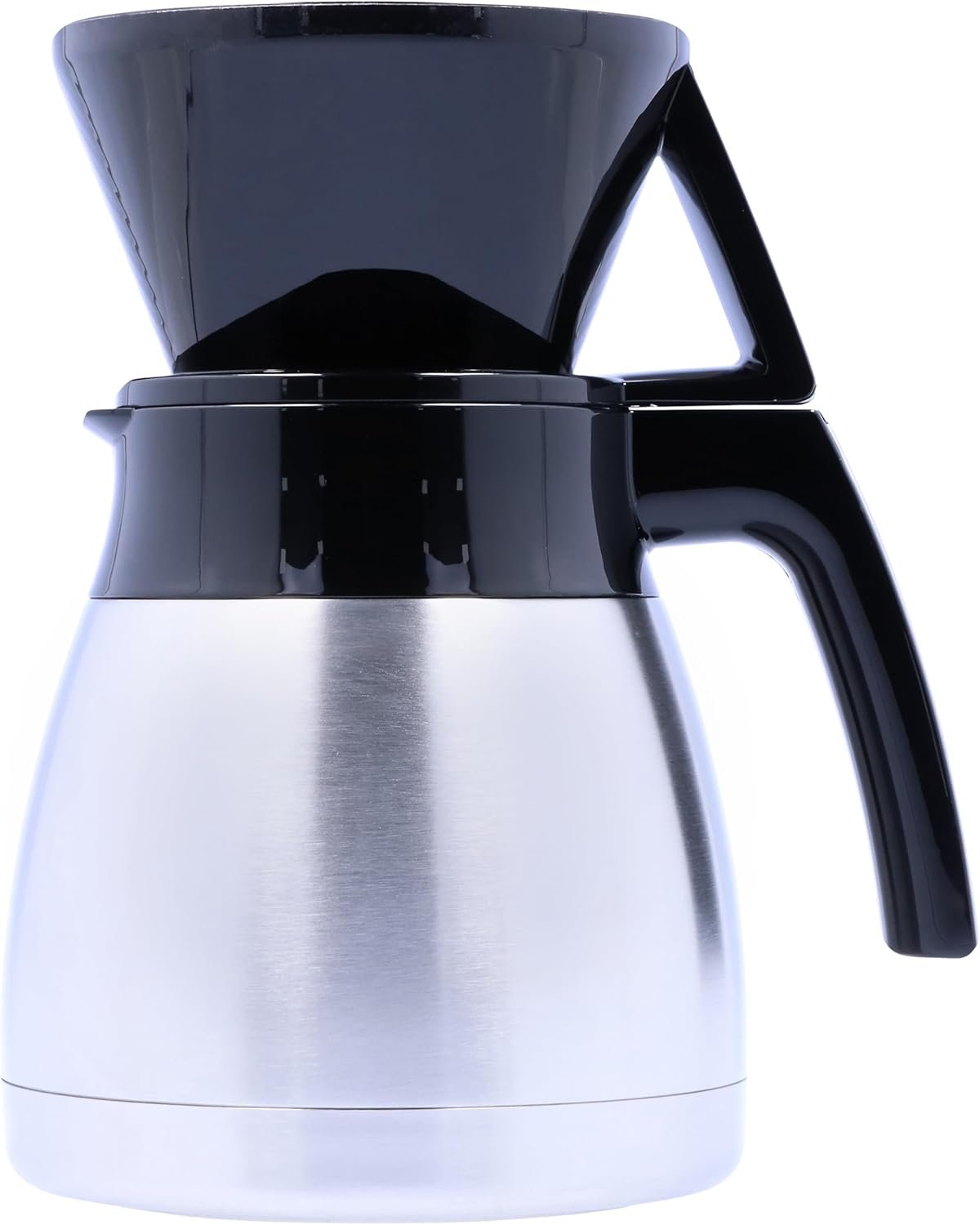
Melitta Bentz was granted the German patent for the drip brew paper coffee filter on 8 July 1908, and the cone-and-carafe set is the most direct descendant of that idea still on sale. What this version adds is the part most pour over kits lack: an insulated stainless steel carafe, so a 42-ounce batch is still hot an hour later.
That makes it the pour over for a household rather than an individual. The filter cone is BPA-free, top-rack dishwasher safe, and takes standard #4 cone filters, which are cheap and stocked in every supermarket. A starter supply is included. There is nothing clever happening here, which is why it is a reasonable first pour over for someone who does not want a project.
What it does well
- Thermal carafe keeps a full batch hot, unlike glass pour over sets.
- 42-ounce capacity serves a household rather than one cup.
- Standard #4 cone filters, cheap and available everywhere.
- Cone and lid are dishwasher safe.
What to know before buying
- No frills at all and no control over flow rate.
- Plastic cone rather than ceramic or glass.
6. Cosori Pour Over: Double Steel Filter, Stovetop-Safe Glass
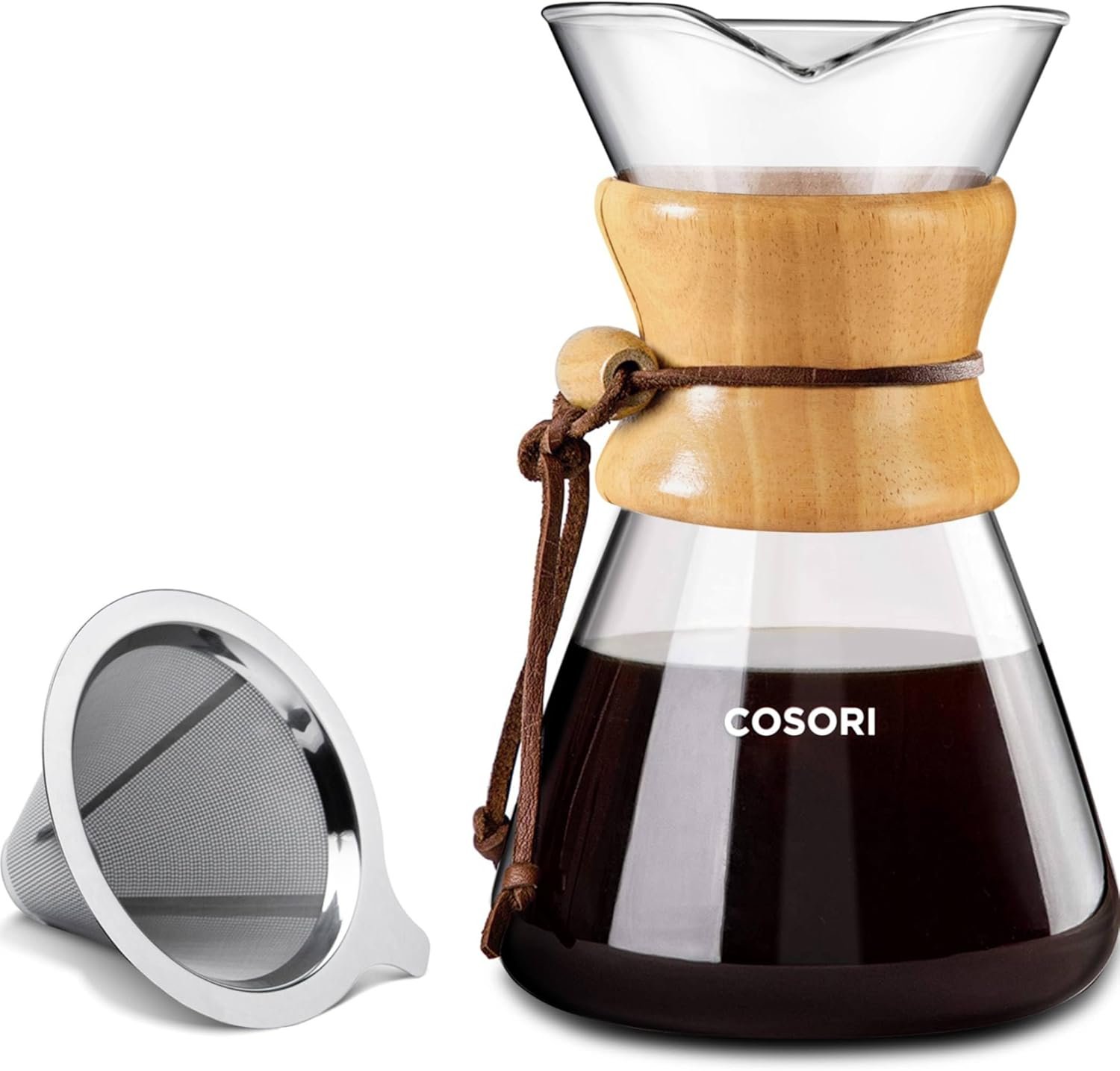
Most metal filters are a single layer of mesh, which passes oils but also passes grit. Cosori uses two layers of 304 stainless steel, letting the fine oils through while catching more of the sediment that makes the last mouthful unpleasant.
The other unusual detail is the decanter. Cosori states the borosilicate glass is thermal-resistant enough to be warmed on a stove over a low flame, which no other brewer on this list claims. The 34-ounce decanter is rated at eight 4-ounce cups. Decanter and filter are dishwasher safe; the wooden sleeve and tie are wiped clean instead.
What it does well
- Two-layer steel filter passes oils while catching more sediment.
- Glass decanter can be gently reheated on a low flame.
- 34 ounces, roughly three mugs.
- No paper filters needed at any point.
What to know before buying
- The wooden sleeve cannot go in the dishwasher.
- Reheating coffee is always a compromise, however you do it.
7. Bean Envy Pour Over: A Lifetime Warranty on a Glass Object
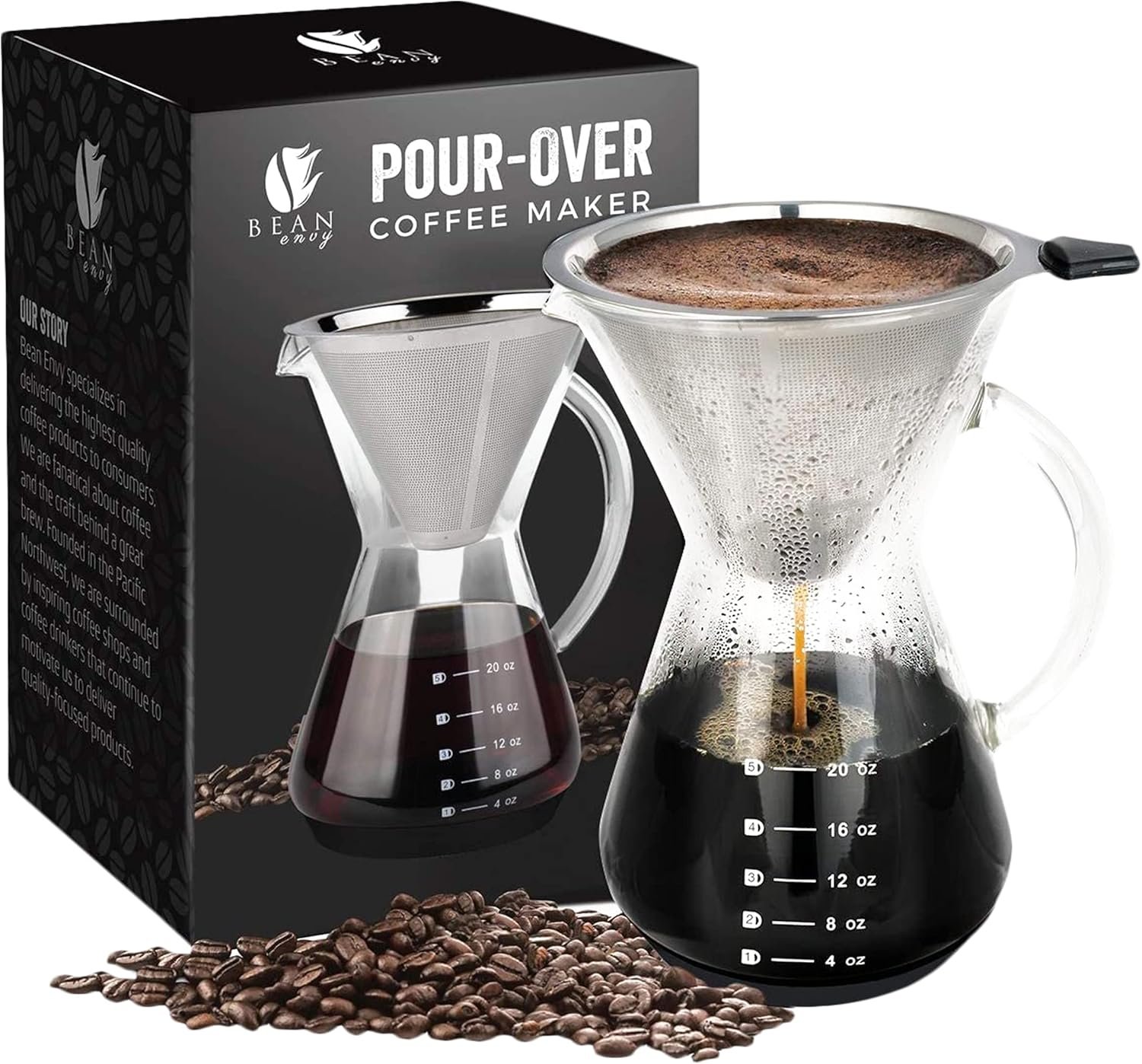
The weakness of every glass brewer here is that it is glass on a hard counter. Bean Envy addresses both halves of that: a non-slip silicone base to keep the dripper stable while you pour, and a lifetime warranty behind the whole thing.
The brewer itself is conventional and competent, a borosilicate carafe with a permanent steel filter, 20 ounces which the company rates at up to three standard cups. It is dishwasher safe. If you have already broken one pour over and want the next one to be replaceable, the warranty is the reason to pick this over the Bodum.
What it does well
- Lifetime warranty, unusual for glassware.
- Non-slip silicone base stops the dripper sliding during a pour.
- Permanent steel filter, no paper to buy.
- Dishwasher safe.
What to know before buying
- 20 ounces is the smallest carafe on this list after the OXO.
- A steel filter still needs a coarse grind to avoid sediment.
How to Actually Brew a Cup of Pour Over
The device is the easy part. The method below is the standard approach and works on any cone on this list.
- Heat water to roughly 200F. Off the boil by thirty seconds is close enough without a thermometer.
- Rinse the paper filter with hot water and discard the rinse. This removes the papery taste and preheats the brewer.
- Grind coarser than you would for drip, around the texture of sea salt, and level the bed.
- Pour just enough water to wet all the grounds and wait 30 to 45 seconds. This is the bloom, and it lets trapped carbon dioxide escape so water can reach the coffee.
- Pour the rest in slow circles from the centre outward, keeping the bed submerged but never flooding the filter.
- Aim for the whole brew to finish in two and a half to three and a half minutes. Faster means grind finer; slower means grind coarser.
The National Coffee Association’s brewing guidance covers the same fundamentals across methods, and the variables it flags, grind size, water quality and ratio, are exactly the ones a pour over exposes.
Paper or Metal, Cone or Flat
Paper absorbs oils; metal passes them. A paper-filtered cup is cleaner and lighter. A metal-filtered cup has more body and a heavier mouthfeel, with some fine sediment at the bottom. Neither is correct. Chemex sits at one extreme with its thick bonded filters, Bodum and Cosori at the other.
Thicker paper slows the flow. Chemex filters brew noticeably longer than standard #2 or #4 cones, which is part of why the cup tastes different. If you switch filter brands and your coffee suddenly tastes over-extracted, that is why.
Cone shape concentrates, and the opening size sets your ceiling. A large single opening like the V60’s lets the pour dictate contact time. A small or restricted opening does more of the work for you, which is what the OXO is doing deliberately.
Ceramic and glass hold heat; plastic does not. Over a three-minute brew this is measurable. It is one reason a rinse with hot water before brewing is worth the ten seconds.
Which One to Start With
Buy the Hario V60 if you are willing to learn. It is the cheapest brewer here, it is the one every guide and video is written about, and it has the highest ceiling. Add a gooseneck kettle and a scale when you are ready, not before.
Buy the OXO Brew instead if you want pour over coffee without the ritual, because it removes the single hardest variable and still beats a cheap drip machine. Buy the Chemex if you like a clean, tea-like cup and do not mind proprietary filters. Buy the Bodum or the Cosori if you are tired of buying paper and want more body, with the Cosori’s double layer catching more grit. Buy the Melitta set if you need a hot batch for a household rather than one cup at a time, and the Bean Envy if you want a warranty behind the glass.
If this is starting to sound like more work than you want on a weekday morning, that is a fair conclusion. Our guide to drip coffee makers covers machines that automate this, including the two on Amazon with third-party brewing certification, and the overview of every coffee maker type sets pour over against pods and espresso.
Frequently Asked Questions
Is pour over coffee actually better than drip?
It is more controllable, which is not the same thing. A good pour over beats a cheap drip machine because you control temperature and contact time directly. A certified drip machine brewing in the correct temperature window can match it, and it does so at 7am without your attention.
Do I need a gooseneck kettle for pour over?
For a V60 or a Chemex it makes a real difference, because a gooseneck spout lets you place water precisely and pour slowly enough to keep the bed even. For the OXO Brew, which has its own water tank, you do not need one at all.
What grind size should I use for pour over?
Coarser than drip, roughly the texture of sea salt, and adjust from there using brew time. If the brew drains in under two minutes the grind is too coarse; if it takes more than four the grind is too fine.
Are metal pour over filters better than paper?
They are different. Metal passes the coffee oils that paper traps, giving a fuller body and some sediment. Paper gives a cleaner, lighter cup and is easier to clean up. Metal saves money over time but has to be rinsed properly every use or it clogs.
Related Articles

Get the Fox Bulletin briefing
The stories that matter, in your inbox. No spam, unsubscribe anytime.
Newsletter signup will be available soon.
Related stories
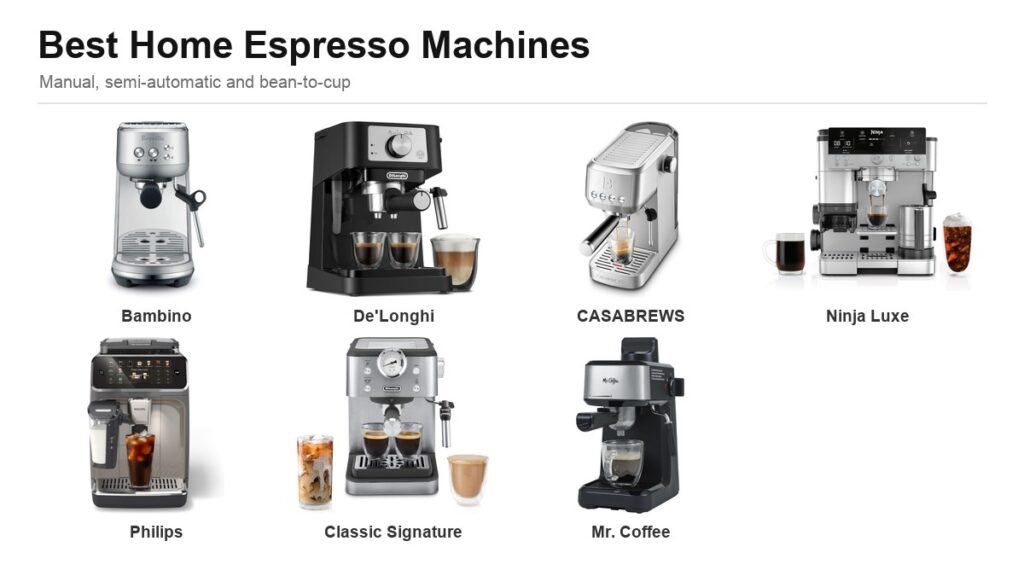
Best Home Espresso Machines for Real Cafe Drinks
Seven home espresso machines across manual, semi-automatic and bean-to-cup, plus why the bar rating on the box tells you almost nothing.
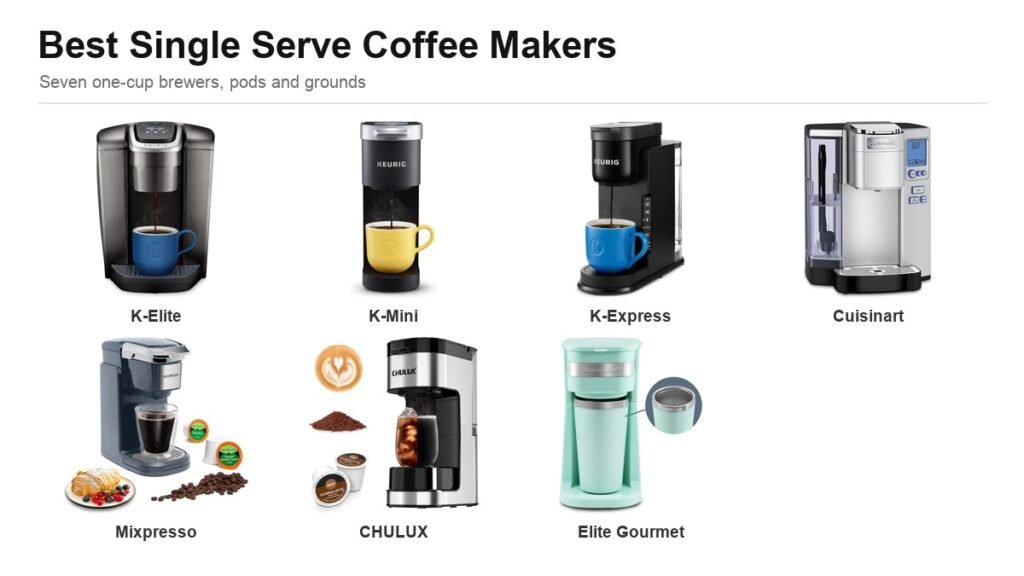
Best Single Serve Coffee Makers for One-Cup Brewing
Seven one-cup coffee makers compared, from Keurig pod machines to brewers that take loose grounds, with what pods really cost and whether they recycle.
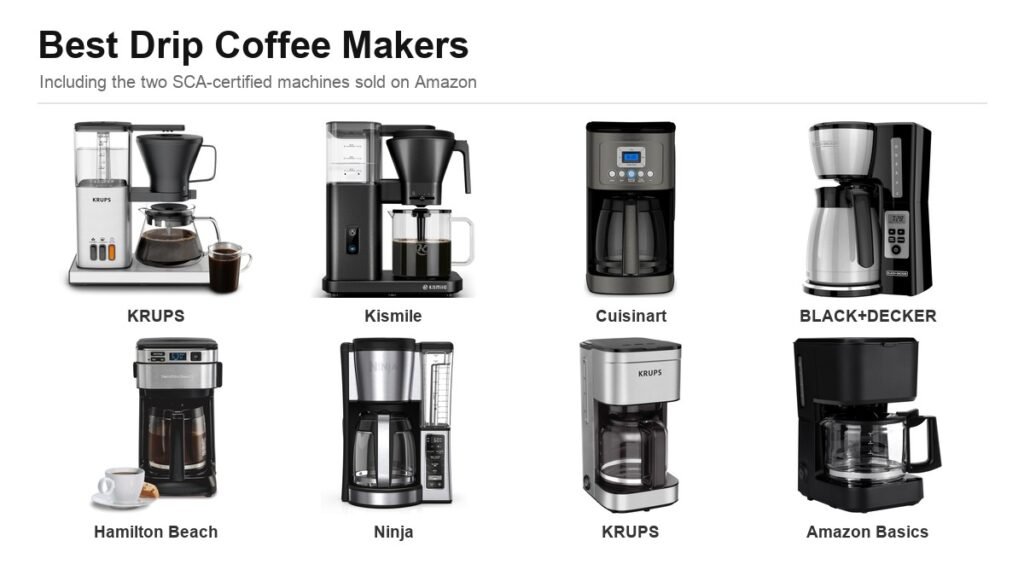
Best Drip Coffee Makers, Including Two SCA-Certified Machines
Eight drip coffee makers, opening with the only two on Amazon certified by the Specialty Coffee Association, plus what actually decides how a drip machine tastes.