
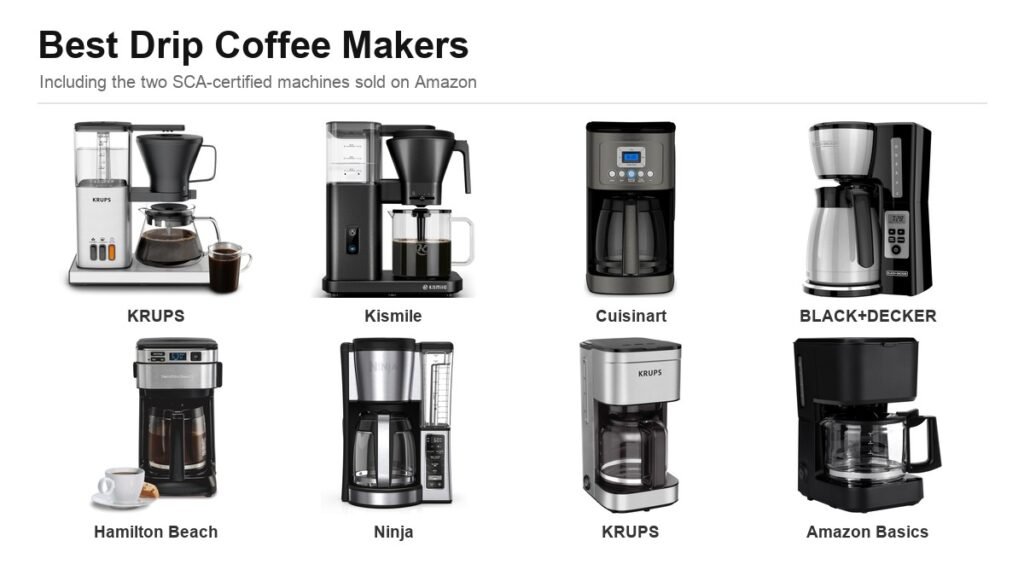
Almost every drip coffee maker sold today claims to brew better coffee. Only a handful have ever proved it to anyone outside their own marketing department. The Specialty Coffee Association runs a third-party certification programme for home brewers, and machines that pass it have been tested against measured standards for brew temperature, contact time and extraction rather than judged on a spec sheet.
Two of those certified machines are sold on Amazon right now, and they open this list. The other six are the best-selling machines people actually buy, judged on the things that separate a good drip brewer from a bad one: how evenly the showerhead wets the grounds, whether the carafe holds heat, and how much of the machine you can get into a dishwasher.
Fox Bulletin is an Amazon Associate. We earn from qualifying purchases made through links on this page, at no extra cost to you. Prices and availability change often, so check the listing before you buy.
The Eight Machines Side by Side
Capacity figures come from each manufacturer. Note that coffee makers measure a “cup” as roughly 5 ounces, not 8, so a 12-cup carafe holds about 60 ounces rather than 96.
| Machine | Capacity | Carafe | SCA certified |
|---|---|---|---|
| KRUPS Essential Brewer | 8 cups | Glass | Yes |
| Kismile Precision Drip | 8 cups | Glass | Yes |
| Cuisinart PerfecTemp 14-Cup | 14 cups | Glass | No |
| BLACK+DECKER CM2046S | 12 cups | Thermal | No |
| Hamilton Beach FrontFill | 12 cups | Glass | No |
| Ninja Fresh Brew CE251 | 12 cups | Glass | No |
| KRUPS Simply Brew | 10 cups | Glass | No |
| Amazon Basics 5-Cup | 5 cups | Glass | No |
1. KRUPS Essential Brewer: One of the Few SCA-Certified Machines on Amazon
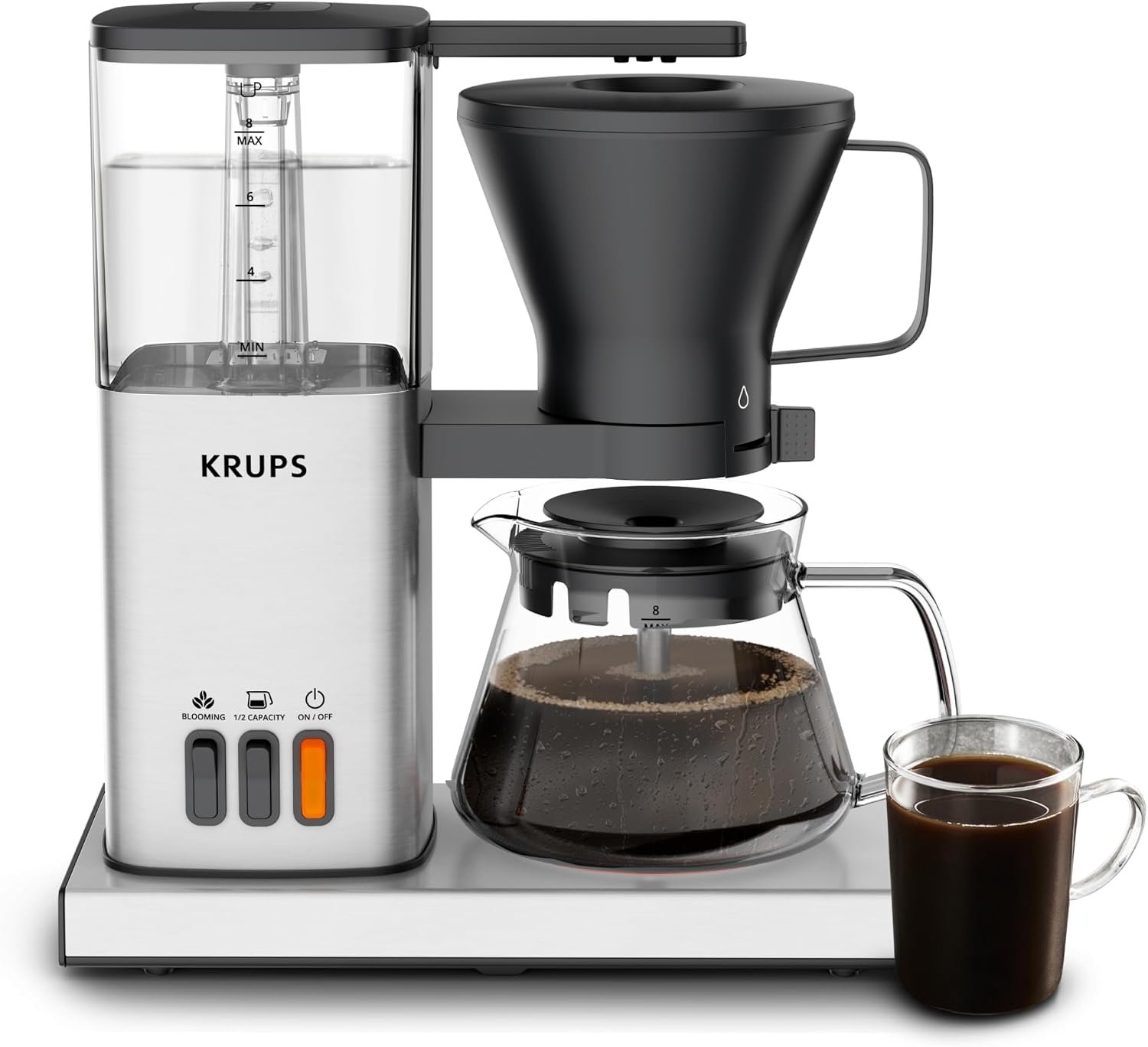
KRUPS puts the certification in the product name, and it holds up. The Essential Brewer appears on the Specialty Coffee Association’s own list of certified home brewing equipment, which means a third-party lab confirmed it brews inside the association’s temperature and extraction window rather than simply claiming to.
The mechanism behind that is a five-hole shower head that wets the bed evenly and a blooming step that pre-soaks the grounds before the main pour, releasing the carbon dioxide that otherwise repels water and causes channelling. A stainless steel aroma tube keeps heat in the brew path. Controls stay simple: a sweetness setting, a half-drip setting for a richer cup, and a keep-warm adjustment sized to the batch.
What it does well
- Genuinely SCA-certified, which almost nothing at this price is.
- Blooming pre-infusion, the step that separates good drip from average drip.
- Every part is removable and dishwasher safe.
- Stainless steel aroma tube holds brew temperature through the cycle.
What to know before buying
- Uses #4 cone paper filters, sold separately. No permanent filter is included.
- 8 cups is smaller than the 12 and 14-cup machines most households default to.
2. Kismile Precision Drip: Certified, and It Publishes the Temperature
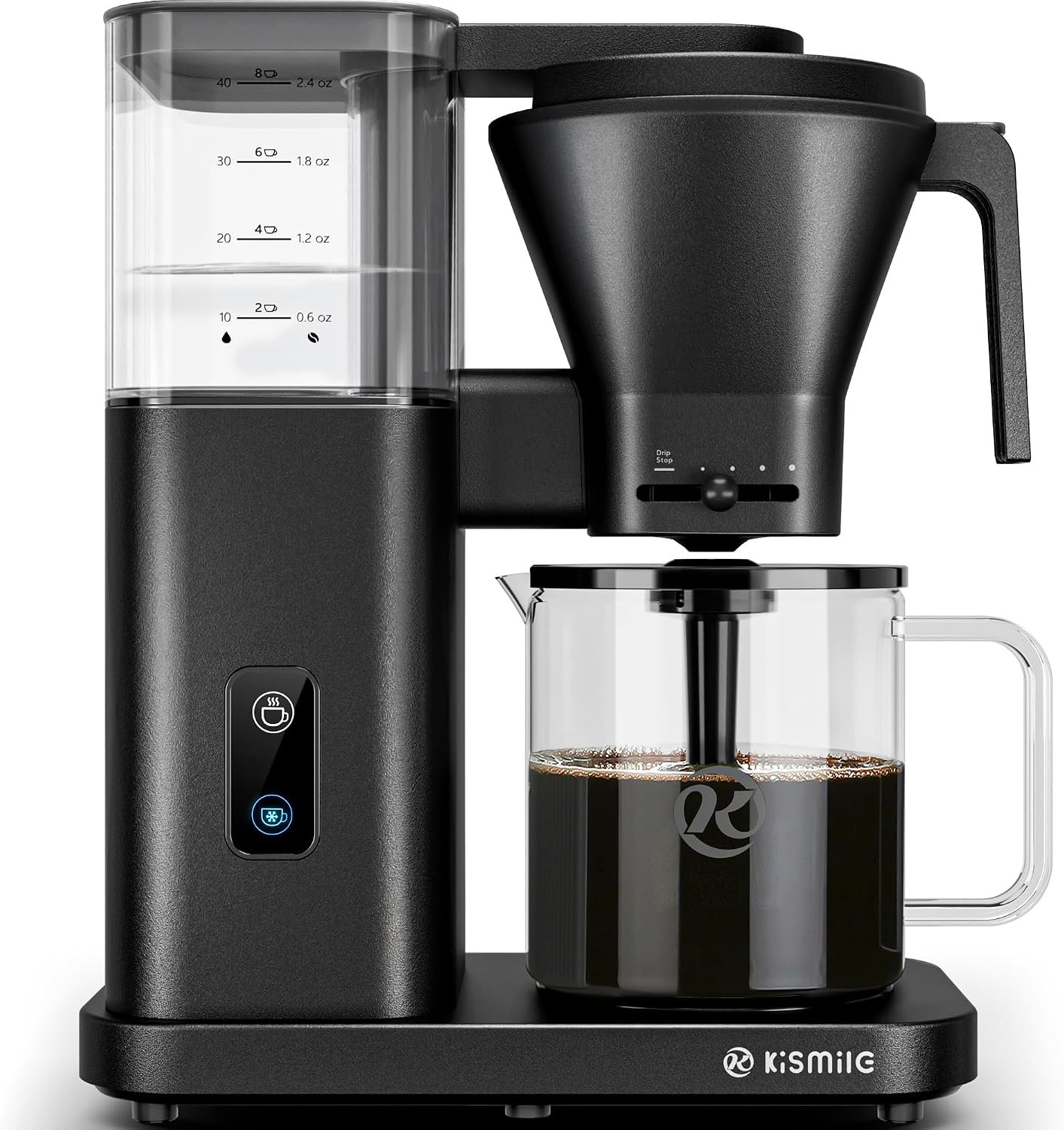
The Kismile is the other SCA-certified machine on this list, and its listing states the number the certification is built around: it brews between 197 and 205 degrees Fahrenheit. That band is not marketing. Below it, extraction stalls and coffee tastes thin and sour. Above it, you start pulling bitter compounds out of the grounds. Most cheap machines never reach the bottom of that range at all.
It gets there in three seconds using instant heating rather than a warm-up cycle, and it adds something unusual at this price: a manual flow-control lever. Slowing the flow lets you pre-infuse and run a multi-stage extraction, which is pour-over technique executed by a machine. There is also a 20-minute cold brew infusion, a detachable 1250ml tank, and a 70g basket that takes either metal or paper filters.
What it does well
- SCA certified with the 197 to 205F brewing window stated openly.
- Flow-control lever allows pour-over style pre-infusion.
- Three-second heat-up, no waiting for a boiler.
- Basket accepts metal or paper filters, in V-shape or basket form.
What to know before buying
- The flow lever rewards attention. Set and forget it and you are just using a normal drip machine.
- A newer brand than the household names elsewhere on this list.
3. Cuisinart PerfecTemp 14-Cup: The Big-Batch Default
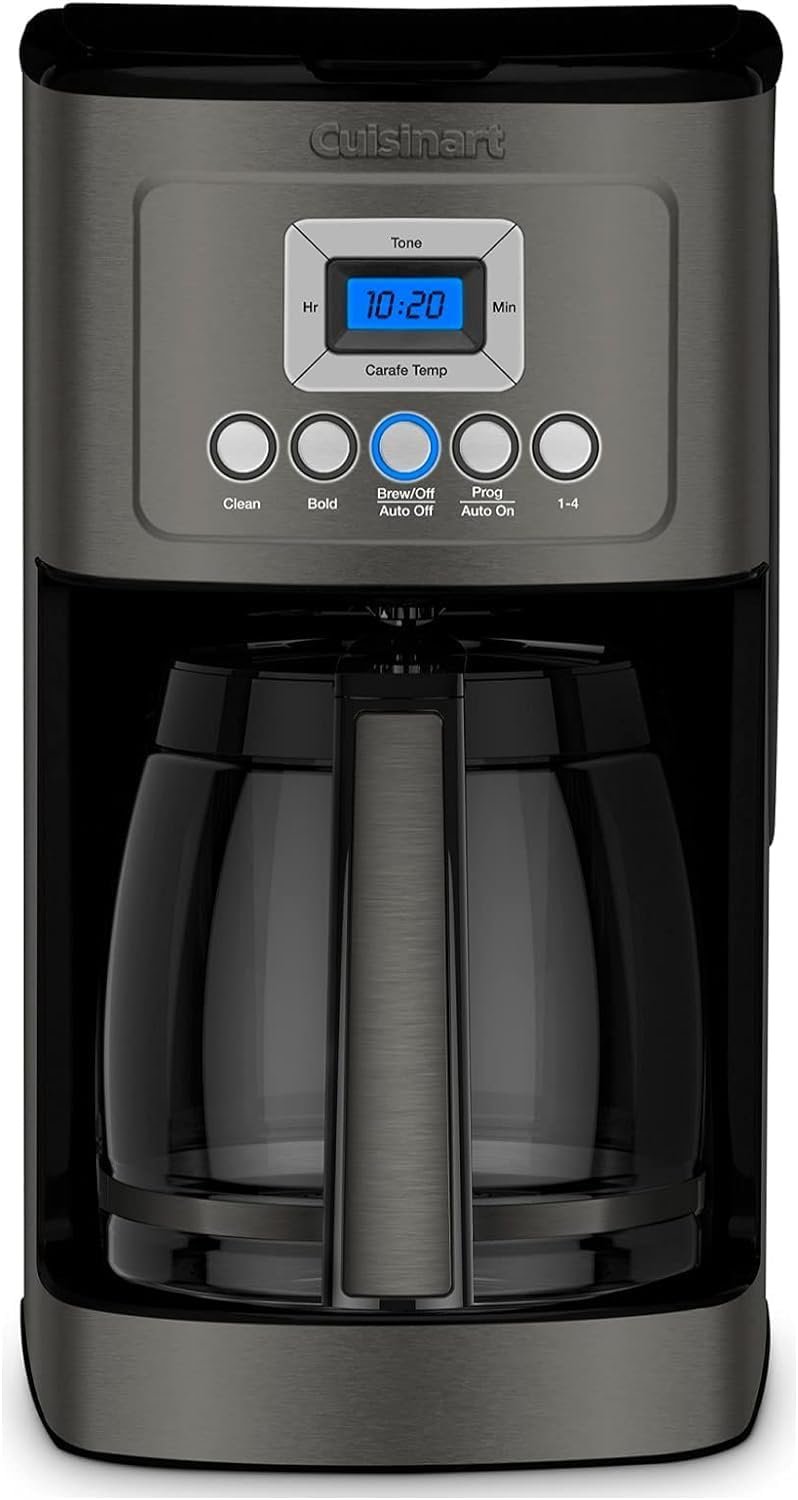
When a household drinks coffee all morning rather than in one sitting, capacity stops being a vanity number. The PerfecTemp holds 14 cups, roughly 70 ounces, and Cuisinart built it around keeping that volume hot without stewing it. Brew strength switches between regular and bold, and a 1-to-4-cup setting adjusts the cycle so a small batch is not weak and watery.
It is the machine to buy if your requirement is volume and programmability rather than extraction theory. Cuisinart has been refining this chassis for years, and the practical details show it: a water window you can actually read while filling, 24-hour programming, and a brew-pause that lets you steal a cup mid-cycle.
What it does well
- 14 cups covers a household or a small office.
- Brew strength control and a dedicated small-batch setting.
- 24-hour programmability with auto-off.
- Brew pause for a cup before the cycle ends.
What to know before buying
- A glass carafe on a warming plate will cook coffee if you leave it there for an hour.
- Not SCA certified, and Cuisinart does not publish a brew temperature.
4. BLACK+DECKER CM2046S: A Thermal Carafe Instead of a Hot Plate
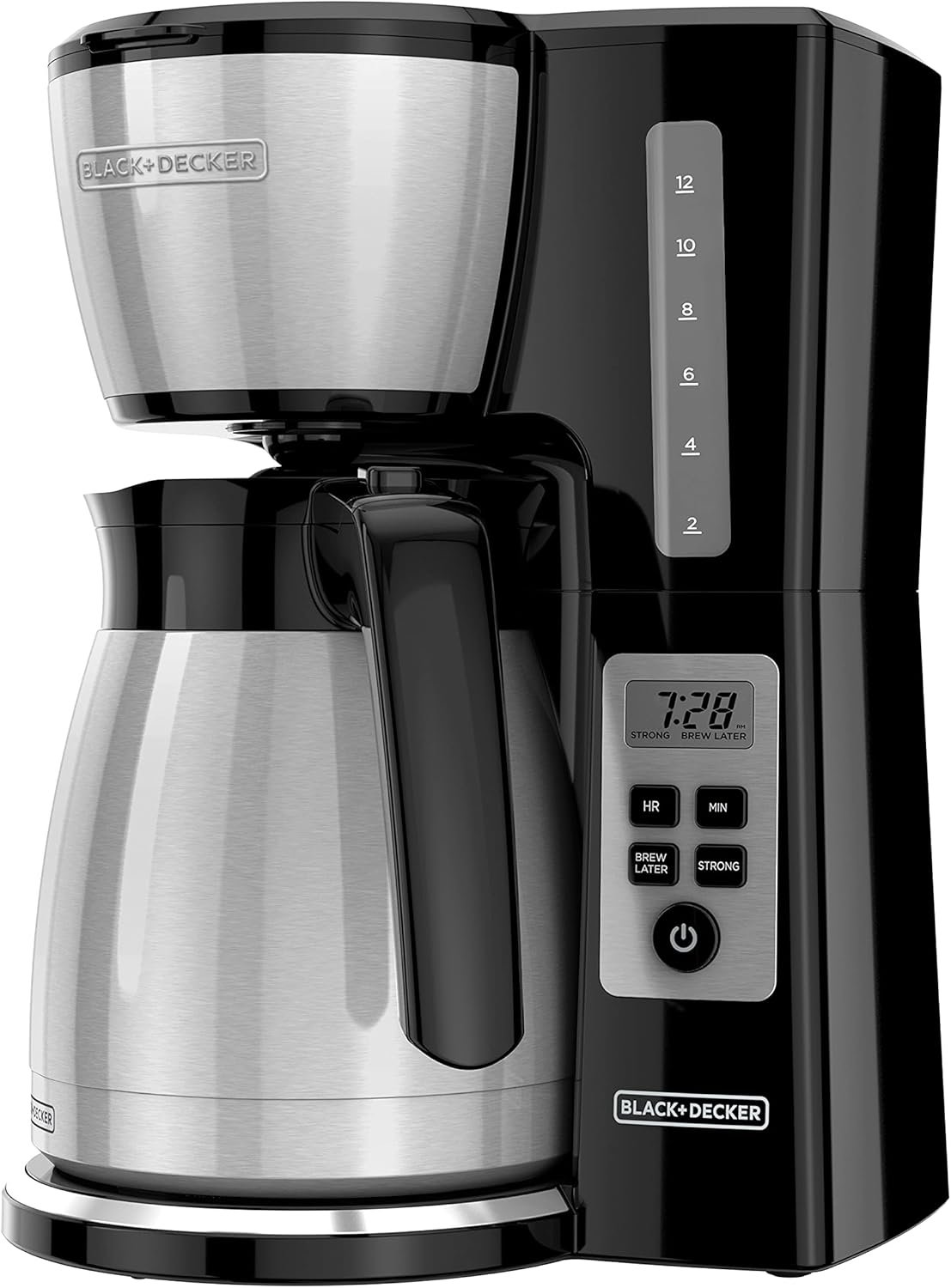
The warming plate is the single worst thing about a standard drip machine. It keeps applying heat to coffee that has finished brewing, and after thirty minutes the result tastes burnt. A vacuum-sealed thermal carafe solves the problem by removing the heat source entirely.
This one is four-layer, double-walled, and BLACK+DECKER rates it to hold coffee hot for up to two hours with no plate at all. The brewer uses a showerhead design the company calls VORTEX to saturate the bed evenly, and a STRONG button that slows the brew for a longer contact time. One practical tip from the manufacturer worth following: rinse the carafe with hot water before brewing, because a cold thermal carafe pulls heat out of the first cup.
What it does well
- Four-layer vacuum carafe holds heat for up to two hours with no warming plate.
- Showerhead design aimed at even saturation of the grounds.
- Strong setting slows the brew rather than just adding grounds.
- 24-hour programming with automatic shutoff after brewing.
What to know before buying
- Thermal carafes are harder to clean than glass and you cannot see the level.
- Preheating the carafe is an extra step, and skipping it costs you heat.
5. Hamilton Beach FrontFill: Designed for a Cabinet Above It
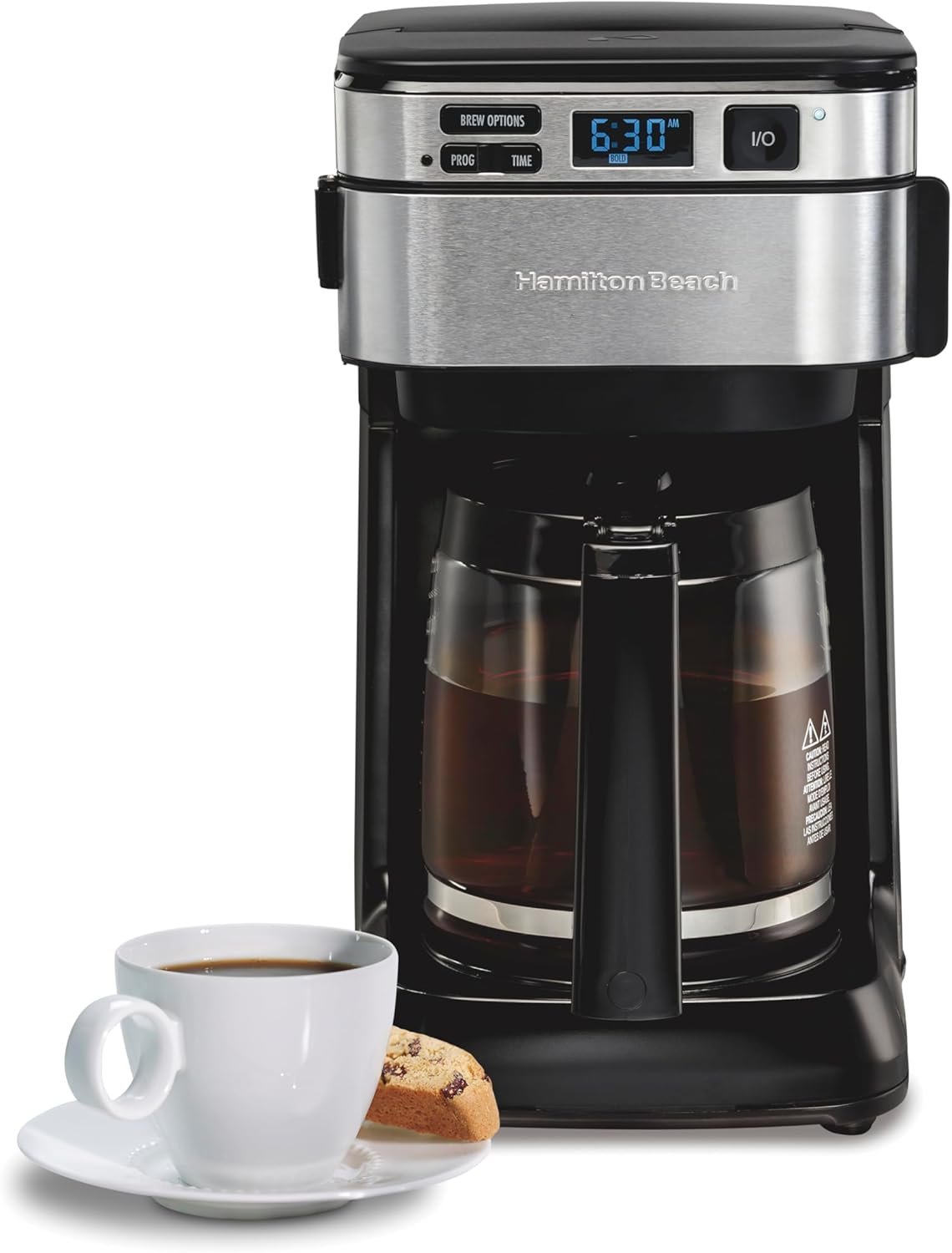
Most coffee makers are filled from a lid at the back, which is a problem if the machine lives under a wall cabinet. The FrontFill moves the reservoir opening to the front and swings the brew basket out the same way, so the machine never has to be pulled forward and tilted to be used.
Everything else is the standard Hamilton Beach package done competently: 24-hour programming, a Select-a-Brew strength selector with regular, bold and 1-to-4-cup modes, auto pause and pour, and a readable water window. It also tracks its own descaling schedule and puts CLEAN on the display when the cycle is due, which is the maintenance job most people skip until the machine slows down.
What it does well
- Front filling works under a wall cabinet with no repositioning.
- Cleaning reminder appears on the display when descaling is due.
- Regular, bold and small-batch brew settings.
- Auto pause and pour for a cup mid-brew.
What to know before buying
- Glass carafe on a hot plate, with the usual consequences after half an hour.
- Plastic construction feels less solid than the stainless machines here.
6. Ninja Fresh Brew CE251: Small Batches Without the Dilution
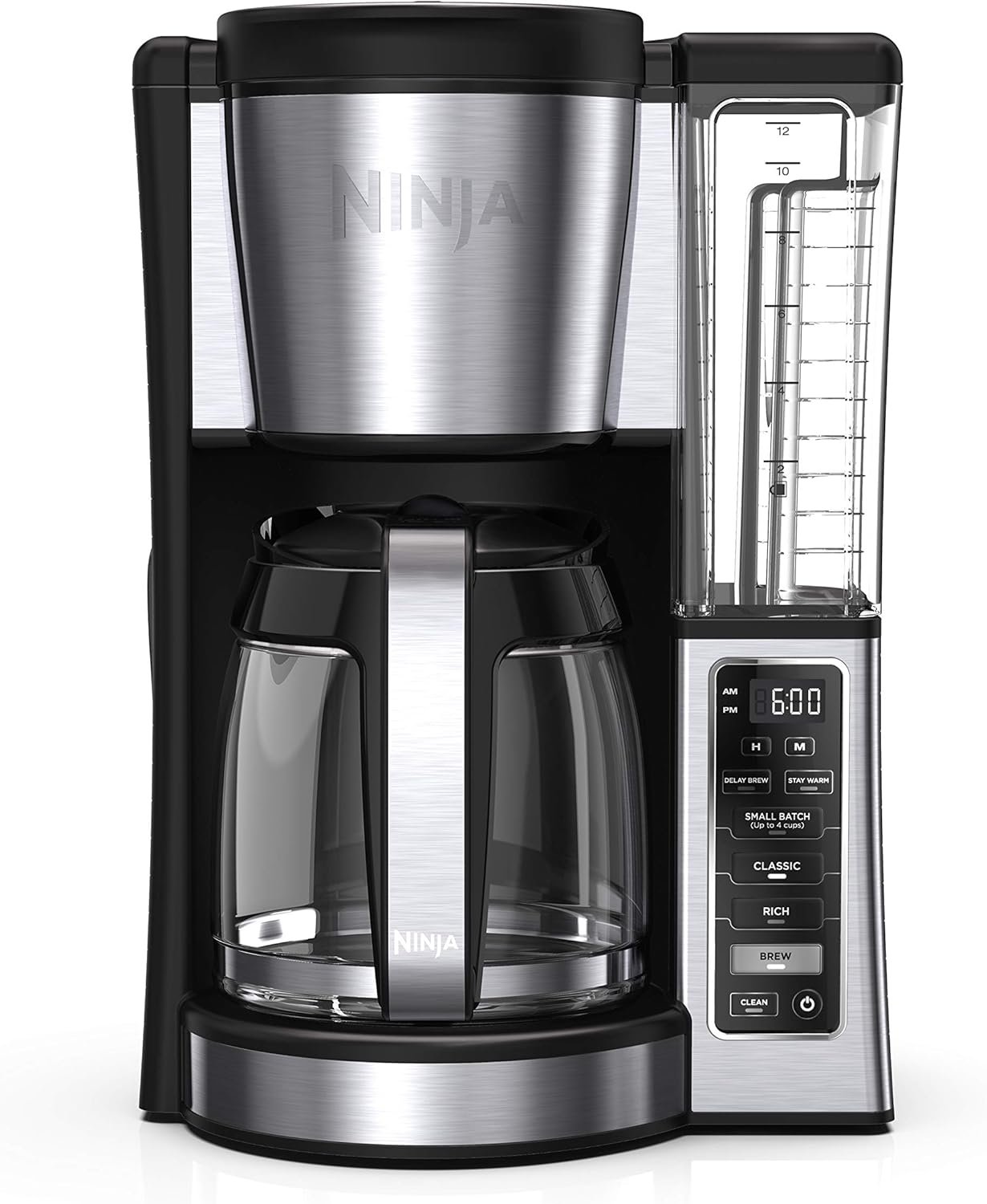
Brewing four cups in a twelve-cup machine usually produces weak coffee, because the machine runs the same cycle over a smaller bed of grounds and over-extracts nothing while under-saturating everything. Ninja addresses this directly with a small batch function that changes the cycle for one to four cups rather than simply using less water.
Beyond that it keeps the choices narrow, which is a virtue: Classic or Rich, with the strength adjusted inside each. Ninja calls the heating system Hotter Brewing Technology and pairs it with even saturation across the bed. Delay brew runs 24 hours ahead.
What it does well
- Small batch function genuinely changes the brew cycle, not just the volume.
- Two clear brew strengths rather than a menu of overlapping options.
- 12-cup glass carafe for larger batches when needed.
- 24-hour delay brew.
What to know before buying
- No thermal carafe option in this model.
- Fewer adjustments than the Cuisinart if you like tinkering.
7. KRUPS Simply Brew: Stainless Steel Without the Electronics
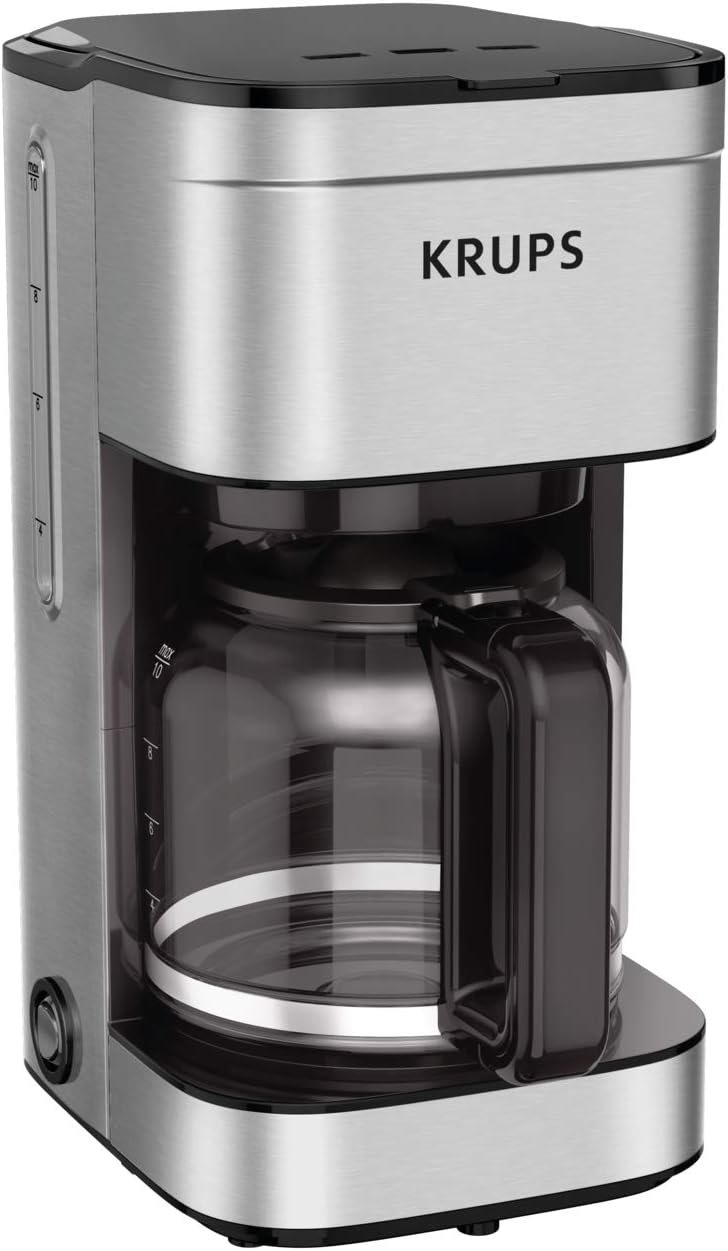
Programmable machines fail at the control board more often than at the boiler. The Simply Brew removes that failure mode by removing the board: it is a single on-off switch, a 900-watt element, and a 1.5 litre stainless steel body holding ten cups.
The trade is obvious and worth making for some people. You cannot set it the night before. In exchange you get a machine with almost nothing to go wrong, a reusable filter and measuring spoon in the box, a no-drip carafe, and a keep-warm function that runs until you switch it off rather than on a timer you have to remember to configure.
What it does well
- One switch. No control board to fail and no menu to learn.
- Stainless steel body rather than the usual painted plastic.
- Reusable filter and measuring spoon included.
- Dishwasher-safe glass carafe.
What to know before buying
- No programming at all, so no coffee waiting when you wake up.
- Keep-warm runs until you turn it off manually.
8. Amazon Basics 5-Cup: The One That Fits Where Others Do Not
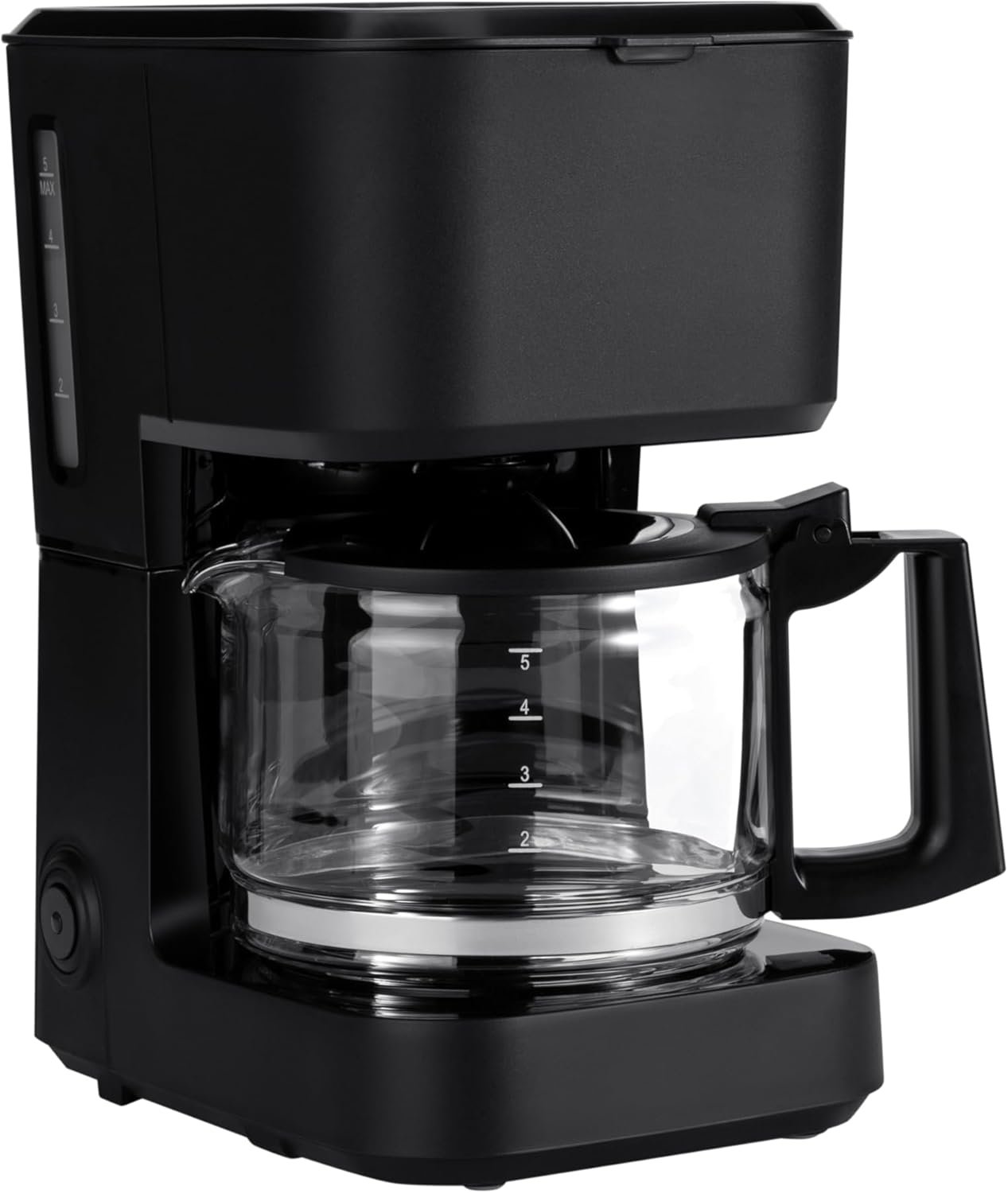
Five cups is about 25 ounces, which is two decent mugs. For one person, a dorm room, an office desk or a caravan, a 12-cup machine is mostly wasted counter space and wasted coffee.
This does the basics correctly: a two-hour automatic shutoff, an auto-pause so you can pour mid-brew, a removable filter basket that empties without a fight, and a Duralife glass carafe with a handle shaped for pouring rather than for the photograph. There is no programming, no strength control and no thermal carafe, and at this size none of those absences matter much.
What it does well
- Genuinely compact, sized for one or two people.
- Two-hour auto shutoff as standard.
- Removable basket makes emptying grounds quick.
- Cheapest way onto this list by a wide margin.
What to know before buying
- No programmability and no brew strength control.
- A 25-ounce batch means brewing twice if anyone visits.
Why So Few Machines Carry the SCA Badge
Certification is not a mark of exclusivity so much as a mark of who paid. The Specialty Coffee Association charges a USD $5,000 annual licensing fee over a three-year term, on top of submitting hardware to an independent test centre. Plenty of decent machines never enter, because the badge does not sell enough extra units to cover the cost.
So read the absence carefully. An uncertified machine is not automatically bad, and the certified list is not a ranking. What certification does tell you is that somebody outside the manufacturer measured the water temperature and the extraction and found them inside a defined window. That is a stronger claim than any phrase on a box.
The testing itself is not done by the association. Submissions go to the European Coffee Brewing Centre, an independent testing authority set up by the Norwegian Coffee Association in 1971 that measures equipment against the Gold Cup Standard. The full certified list runs to fifteen or so models, most of them from GE, OXO, Braun, Zwilling, Fellow and Breville, and most sold well above the price of everything here. The KRUPS and the Kismile are the two that land in normal drip-machine territory.
The Four Things That Decide How a Drip Machine Tastes
Brew temperature. The target is roughly 197 to 205F. A machine that never reaches it produces sour, thin coffee no matter how good the beans are, and price is a poor guide to whether it gets there. The Kismile states its range; most brands say nothing at all.
How the water lands on the grounds. A single central spout drills a hole through the middle of the bed and leaves the edges dry, which is why showerhead design gets its own branded name from nearly every manufacturer. Multi-hole shower heads and a blooming step both exist to wet the bed evenly.
Carafe type. Glass on a warming plate is fine for coffee drunk within twenty minutes and steadily worse after that. Thermal costs more, hides the level and is harder to clean, and it is the right answer for anyone who drinks a pot slowly.
Grind and freshness, which the machine cannot fix. Pre-ground coffee that has been open for a month will taste flat in an SCA-certified brewer. The National Coffee Association’s brewing guidance puts grind size and water quality alongside the equipment itself. If the budget is tight, a burr grinder and fresher beans improve the cup more than upgrading from a $40 machine to a $90 one.
Which of These Eight to Buy
For most people the KRUPS Essential Brewer is the pick. It is the cheapest way to own a machine that a third party has actually tested, the blooming step is the single most useful feature on any drip brewer, and it all comes apart for the dishwasher. Budget for a box of #4 cone filters alongside it.
Choose the Kismile instead if you want to control the brew rather than press a button, because the flow lever and the published temperature range put it closer to manual brewing than anything else here. Choose the Cuisinart PerfecTemp if 14 cups is the requirement and everything else is secondary, or the BLACK+DECKER if you drink a pot over two hours and are tired of the hot plate ruining the last cup. The Hamilton Beach earns its place on one detail alone, which is filling from the front under a cabinet. The Ninja suits households that usually brew small. The KRUPS Simply Brew is for anyone who has had a control board die. The Amazon Basics is for one person and a small counter.
If you would rather skip the machine entirely and brew by hand, our guide to pour over coffee makers covers the manual route, and the full comparison of coffee maker types explains where drip sits against pods, capsules and espresso.
Frequently Asked Questions
What temperature should a drip coffee maker brew at?
Between roughly 197 and 205 degrees Fahrenheit, which is the window the Specialty Coffee Association certifies against. Machines that brew cooler under-extract and taste sour. Very few manufacturers publish the figure, which is why third-party certification is worth looking for.
Is an SCA-certified coffee maker worth the money?
It is worth seeking out, but it is not the only thing that matters. Certification proves an independent lab measured the brew and found it within standard. It does not measure build quality, capacity or how easy the machine is to clean, and many good machines never apply because the licence costs $5,000 a year.
How many cups does a 12-cup coffee maker actually make?
About 60 ounces. Coffee makers count a cup as roughly 5 ounces, not the 8 ounces used in recipes, so a 12-cup carafe fills around five standard mugs rather than twelve.
Is a thermal carafe better than a glass one?
For coffee you drink slowly, yes. A glass carafe sits on a heating plate that keeps cooking the coffee, and the taste degrades noticeably after about half an hour. A thermal carafe removes the heat source. Preheat it with hot water first, or the carafe itself will cool your first cup.
Related Articles

Get the Fox Bulletin briefing
The stories that matter, in your inbox. No spam, unsubscribe anytime.
Newsletter signup will be available soon.
Related stories
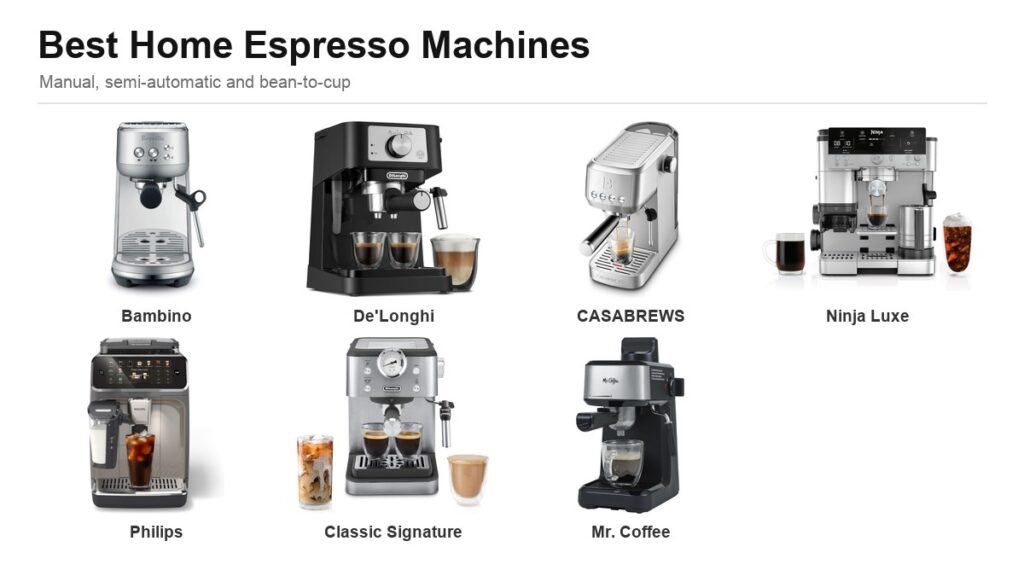
Best Home Espresso Machines for Real Cafe Drinks
Seven home espresso machines across manual, semi-automatic and bean-to-cup, plus why the bar rating on the box tells you almost nothing.
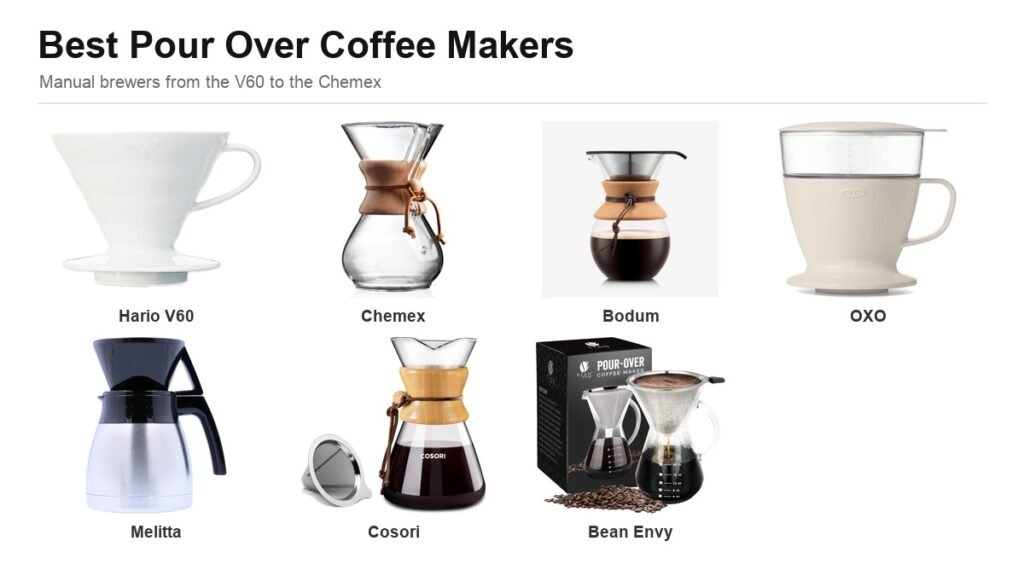
Best Pour Over Coffee Makers From the V60 to the Chemex
Seven manual pour over brewers compared on filter type, cone shape and capacity, plus the six-step method that works with any of them.
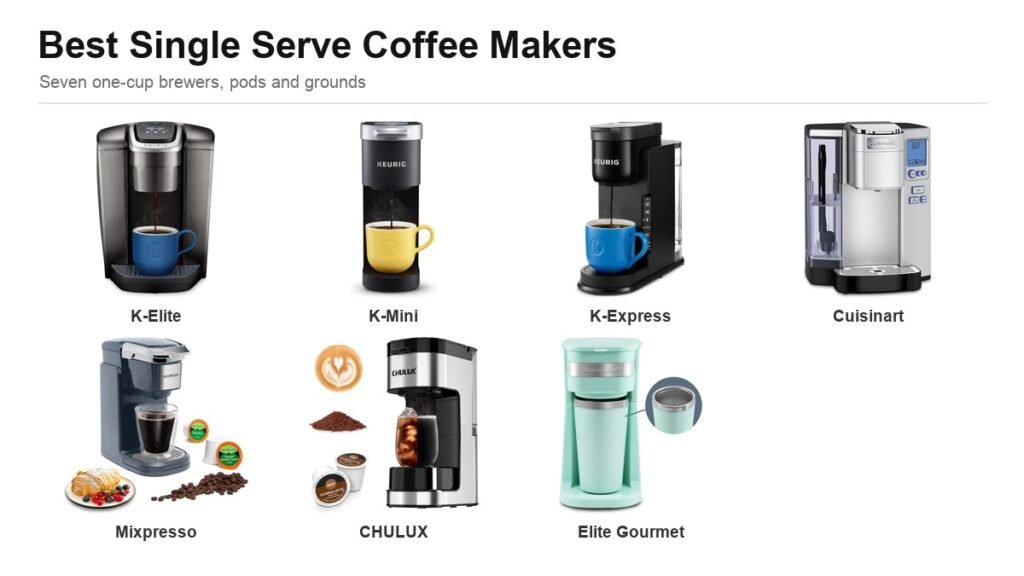
Best Single Serve Coffee Makers for One-Cup Brewing
Seven one-cup coffee makers compared, from Keurig pod machines to brewers that take loose grounds, with what pods really cost and whether they recycle.