

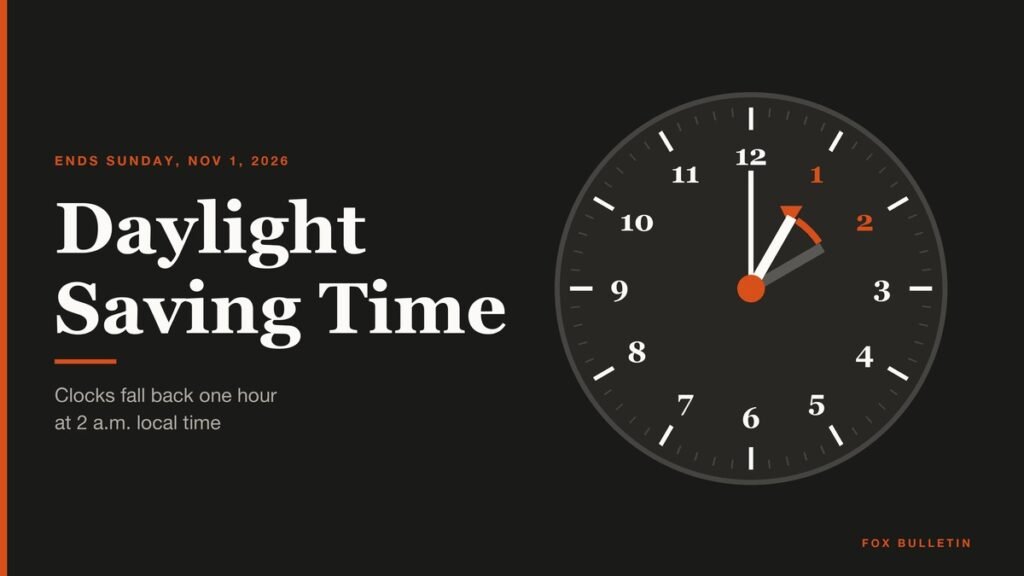
Daylight saving time ends at 2 a.m. on Sunday, November 1, 2026, when clocks in most of the United States fall back one hour to 1 a.m. That gives everyone an extra hour of sleep that night, brighter mornings and sunsets about an hour earlier until clocks spring forward again on March 14, 2027.
The switch happens twice a year everywhere in the country except Hawaii, most of Arizona and the U.S. territories, and this fall one Canadian province is dropping out for good. Below are the exact dates through 2030, what happens on the night itself, where the time change does not apply, how to prepare your body and your devices, and where the push to stop changing clocks stands in Congress.
When Does Daylight Saving Time End in 2026?
Daylight saving time ends on Sunday, November 1, 2026, at 2:00 a.m. local time. At that moment clocks go back to 1:00 a.m., so the hour from 1 a.m. to 2 a.m. happens twice and the day lasts 25 hours. Standard time then runs until 2:00 a.m. on Sunday, March 14, 2027.
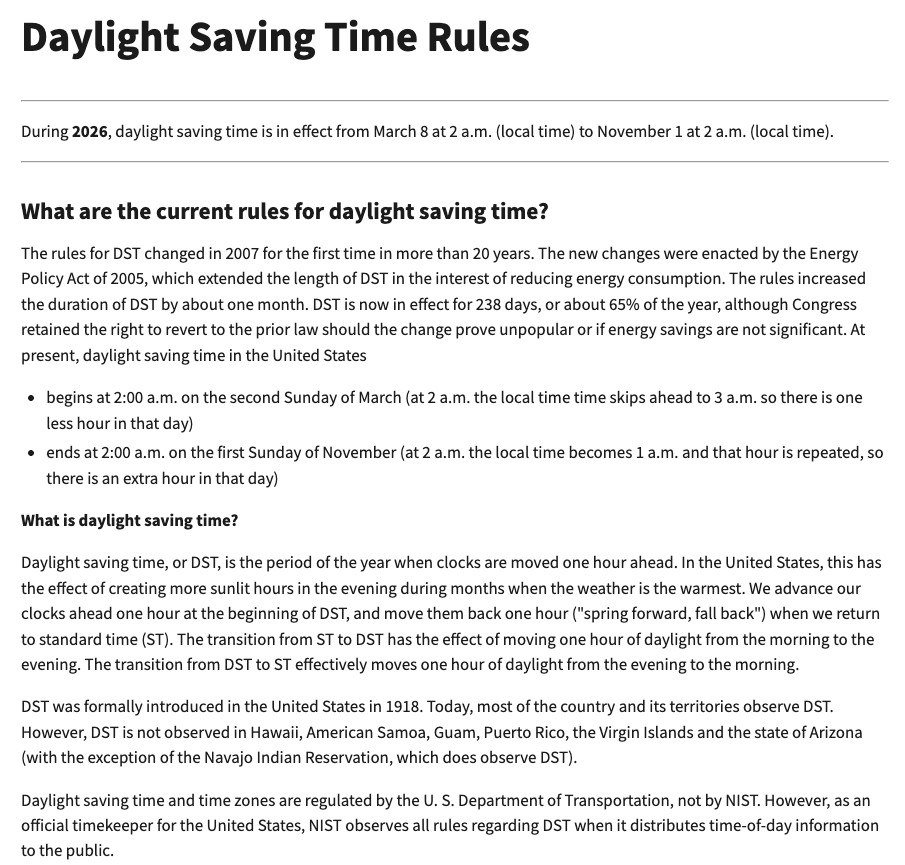
This year’s season began on March 8, 2026, which means daylight saving time lasts 238 days, about 65% of the year. The National Institute of Standards and Technology, the official U.S. timekeeper, follows these dates when it broadcasts time, but the rules themselves belong to the U.S. Department of Transportation.
Daylight Saving Time Dates for 2026 Through 2030
Every date comes from one rule: clocks spring forward at 2 a.m. on the second Sunday in March and fall back at 2 a.m. on the first Sunday in November. That makes each season exactly 238 days long.
| Year | Clocks spring forward (2 a.m.) | Clocks fall back (2 a.m.) |
|---|---|---|
| 2026 | Sunday, March 8 | Sunday, November 1 |
| 2027 | Sunday, March 14 | Sunday, November 7 |
| 2028 | Sunday, March 12 | Sunday, November 5 |
| 2029 | Sunday, March 11 | Sunday, November 4 |
| 2030 | Sunday, March 10 | Sunday, November 3 |
The schedule is written into the federal statute, 15 U.S.C. 260a. It dates from the Energy Policy Act of 2005, which took effect in 2007 and added about a month to the season. Before that, daylight saving time started on the first Sunday in April and ended on the last Sunday in October.
What Happens When the Clocks Fall Back on November 1
Each U.S. time zone changes at its own local 2 a.m., so New York switches an hour before Chicago and three hours before Los Angeles. Here is how the night plays out in any one place:
- At 1:59:59 a.m. daylight time, clocks jump back to 1:00 a.m. standard time.
- The 1 a.m. hour repeats, so a 1:30 a.m. timestamp happens twice that night.
- Phones and computers change on their own if their software is current; clocks with no time signal need a manual reset.
- On Sunday, sunrise and sunset both arrive about an hour earlier by the clock than they did on Saturday.
In 2026 the change lands on the night after Halloween, since October 31 falls on a Saturday. Trick-or-treaters get their usual evening, covered in our guide to when Halloween is and trick-or-treat hours, and late Halloween parties get a bonus hour, since 1 a.m. comes around twice.
The extra hour moves daylight from the evening to the morning, and it stays that way for 133 days. Every date from November 1 to March 13, including Thanksgiving and the December holidays, falls on standard time.
Who Does Not Change the Clocks
Federal law lets a state stay on standard time all year, but it does not let a state stay on daylight time. These places skip the switch entirely:
- Hawaii, which exempted itself in 1967.
- Arizona, which exempted itself in 1968. The Navajo Nation, whose land spans parts of Arizona, Utah and New Mexico, does observe daylight saving time.
- American Samoa, Guam, the Northern Mariana Islands, Puerto Rico and the U.S. Virgin Islands.
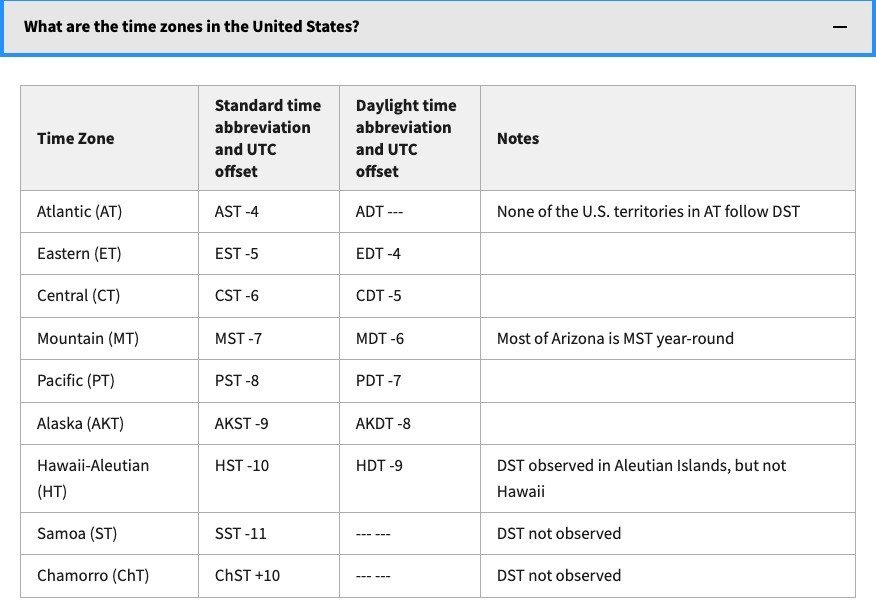
The result is a moving map. Arizona stays on Mountain Standard Time (UTC-7) year round, so it matches California in summer and Denver in winter. After November 1, a 9 a.m. call in Phoenix is 8 a.m. in Los Angeles.
Fourteen states are split between two time zones, including Florida, Indiana, Kentucky, Tennessee, Texas and Oregon. They still change clocks on the same night; only the local 2 a.m. differs.
The Time Change Outside the United States
Roughly one-third of the world’s countries use daylight saving time, mostly in Europe and North America. China, India and Russia keep the same clock all year, and countries south of the equator change at the opposite time of year, since their summer falls in our winter.
Europe falls back a week earlier than the U.S. The European Union ends summer time at 1 a.m. GMT on the last Sunday in October, which falls on October 25, 2026. For that one week, London is four hours ahead of New York instead of five, so any call across the Atlantic moves by an hour. The mismatch returns in spring: the U.S. springs forward on March 14, 2027, two weeks before Britain does on March 28.
Closer to home, British Columbia’s switch to year-round Pacific time takes effect this fall. B.C. sprang forward on March 8, 2026 for the last time and will not turn clocks back on November 1, so Vancouver will be one hour ahead of Seattle all winter, matching Alberta. Mexico dropped daylight saving time for most of the country in 2022 but kept it along the U.S. border.
How to Get Ready for the Time Change
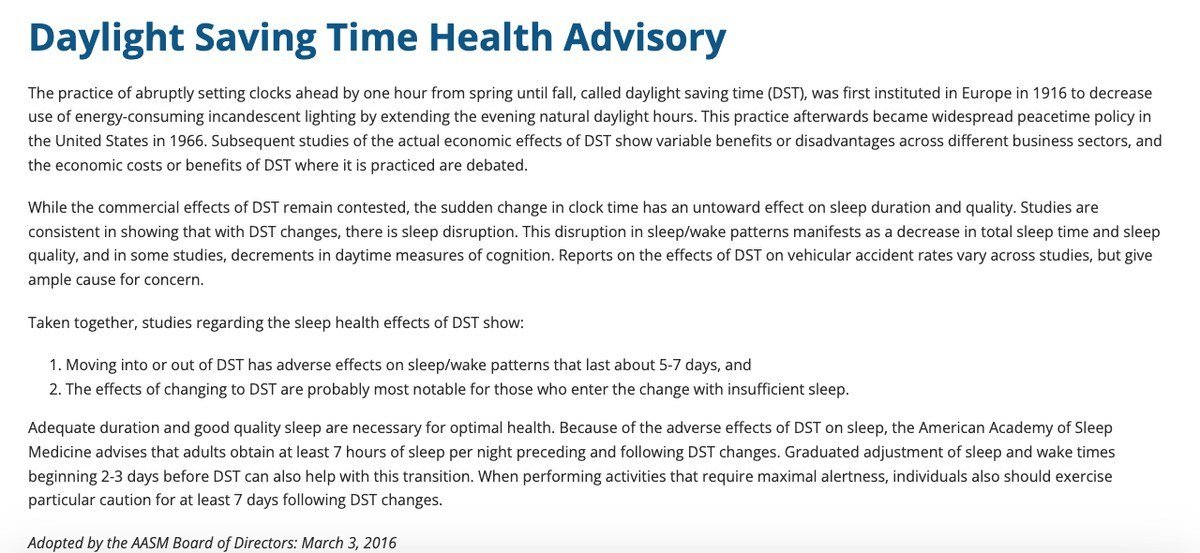
The American Academy of Sleep Medicine says the shift disrupts sleep for about five to seven days and hits hardest for people who are already short on sleep. Its advice works for both the spring and fall changes:
- Get at least seven hours of sleep on the nights before and after the change.
- Shift bedtime and wake time gradually, starting two or three days ahead.
- Take extra care when driving or doing anything that needs full alertness for at least seven days.
Devices need a quick check too. Radio-controlled clocks pick up a daylight saving time flag from NIST’s WWVB broadcast and should switch on their own; in Arizona, that automatic feature has to be turned off. Older “auto set” clocks built before 2007 may still follow the old rule and fall back on the last Sunday in October, a week early in 2026, so they need a manual fix.
The clock change is also a handy reminder for home safety. The U.S. Fire Administration’s smoke alarm guidance says to test alarms monthly, replace 9-volt and backup batteries at least once a year and replace the whole alarm every 10 years. With darker evenings ahead, a good lamp for the living room or desk does more work from November on.
Why Daylight Saving Time Exists
Benjamin Franklin often gets the credit, but his 1784 essay in the Journal de Paris was satire: he suggested Parisians rise with the sun to save candles, with cannon fired at dawn to wake them. The real proposals came later. New Zealand entomologist George Hudson pitched a two-hour shift in 1895, and in 1907 the Briton William Willett published “The Waste of Daylight.”
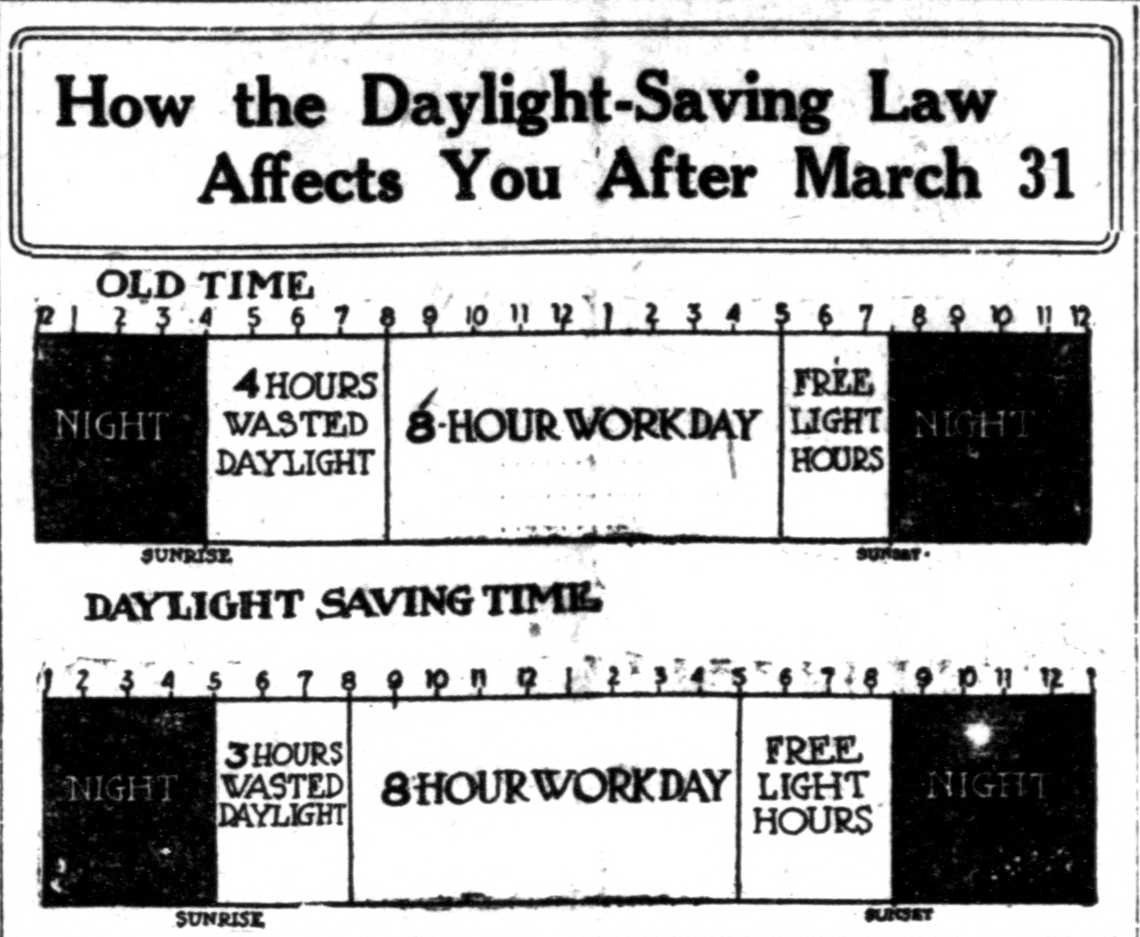
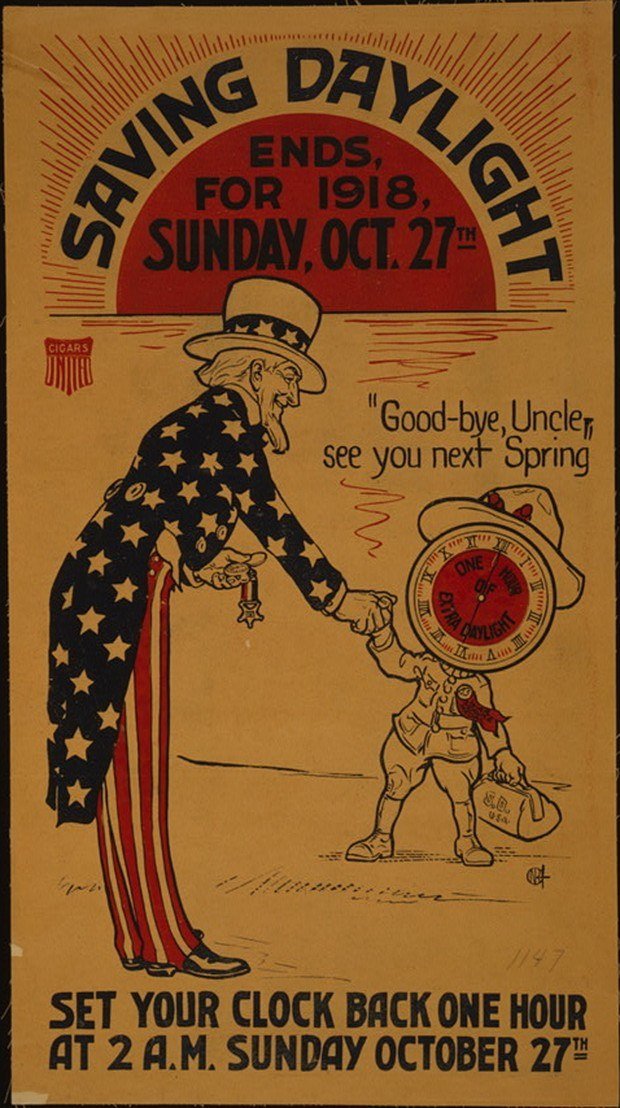
Germany adopted it first, from May 1, 1916, to save fuel during World War I, and Britain followed weeks later. The United States first changed clocks on March 31, 1918, under the Standard Time Act, then repealed daylight saving time in 1919. Year-round “War Time” ran from 1942 to September 30, 1945.
Today’s system rests on the Uniform Time Act of 1966, which set common start and end dates and let states opt out. Congress tried year-round daylight time once more from January 1974, during the oil embargo, but restored winter standard time that October. The start moved from late April to early April in 1986 and to March in 2007.
Will the Clocks Stop Changing?
Not yet. On July 14, 2026, the House passed the Sunshine Protection Act (H.R. 139) by 308 to 117, which would make daylight saving time permanent. The Senate received it the next day and sent it to the Commerce Committee, where it remains, so the November 1 change goes ahead as scheduled.
Nineteen states, from Florida in 2018 to Texas in 2025, have passed laws to stay on daylight time all year if Congress allows it. The other permanent option, standard time all year, is already legal, and Hawaii and Arizona use it.
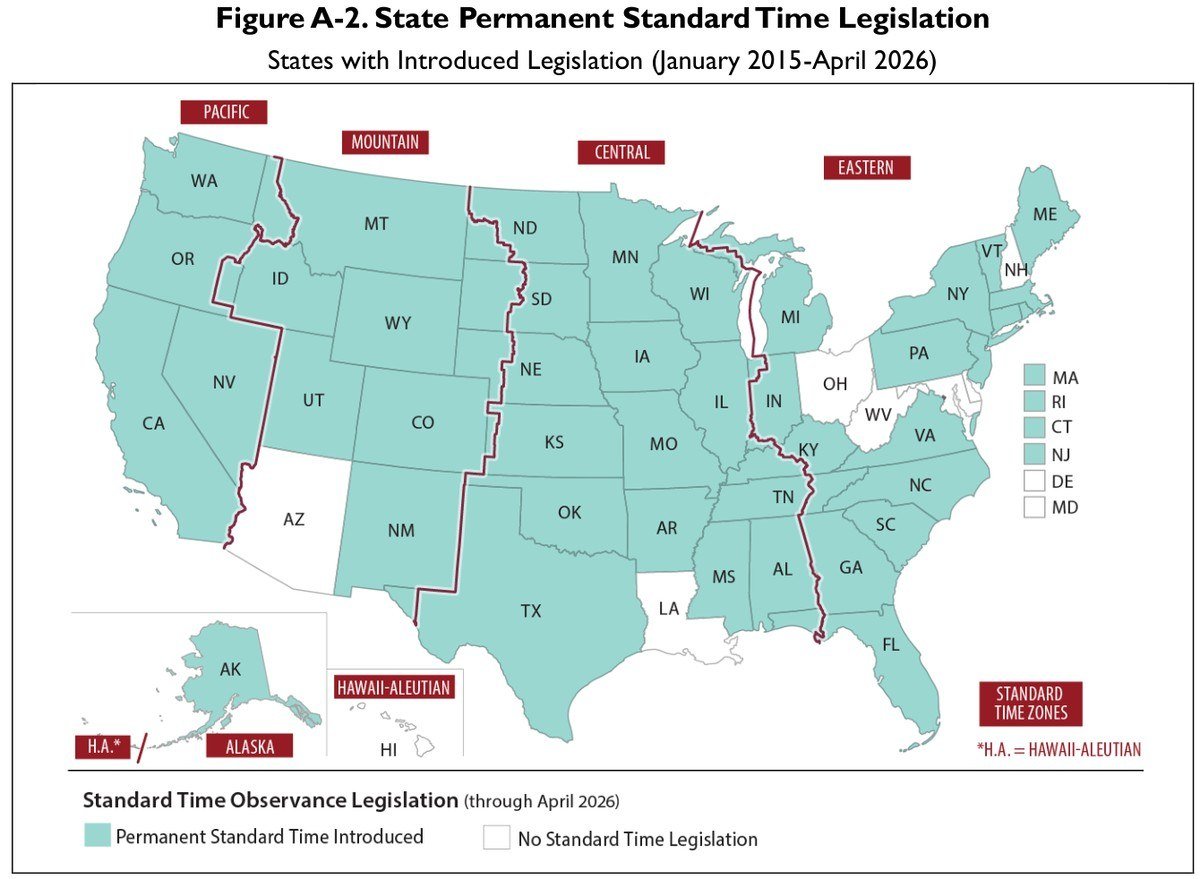
Sleep scientists favor that second path. The American Academy of Sleep Medicine’s 2024 position statement calls permanent standard time the best fit for human circadian biology, and lawmakers in more than 40 states have filed bills to adopt it, though no state has enacted one.
Frequently Asked Questions
Is it daylight saving time or daylight savings time?
The legal name is daylight saving time, singular, as written in the federal statute and used by NIST. “Daylight savings time” is the more common spoken form; even the long title of the House-passed Sunshine Protection Act uses it.
Do we gain or lose an hour in November?
You gain an hour. At 2 a.m. on November 1, 2026, clocks go back to 1 a.m., so that night has 25 hours. You lose the hour again on March 14, 2027, when clocks jump from 2 a.m. to 3 a.m.
When does daylight saving time start in 2027?
It starts at 2 a.m. on Sunday, March 14, 2027, the second Sunday in March. It then ends at 2 a.m. on Sunday, November 7, 2027.
Does Arizona change its clocks?
No. Most of Arizona stays on Mountain Standard Time all year, the Navajo Nation excepted. That puts Phoenix on the same clock as Los Angeles in summer and as Denver in winter.
Related Articles

Get the Fox Bulletin briefing
The stories that matter, in your inbox. No spam, unsubscribe anytime.
Newsletter signup will be available soon.
Related stories

Best Stocking Stuffers for Adults 2026: 12 Small, Useful Gadgets
The best stocking stuffers for adults are small gadgets that fix an everyday annoyance, like lost keys or a dying phone. Our top pick is the Chipolo POP, a bright Bluetooth tracker…
Self Care Gifts for Women 2026: 10 Relaxing Gift Ideas for Her
The best self care gift for a woman is one that makes an ordinary part of her day calmer, like the Himalayan Glow Salt Lamp for a soft amber glow at bedtime…

Gifts for Coffee Lovers 2026: 10 Ideas From Pour Over to Espresso
The best gift for a coffee lover is the piece of gear that fixes the step they find hardest, whether that is a warm-up wait, an uneven pour or a crowded counter.…