

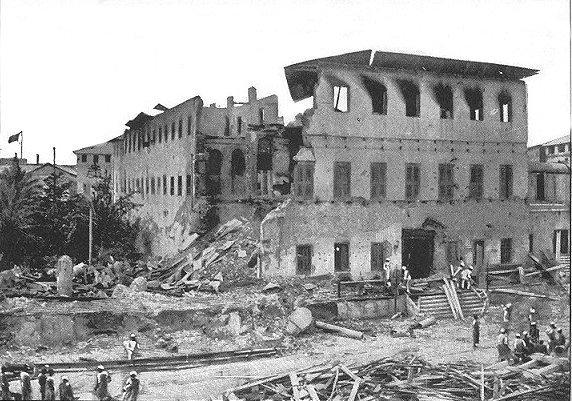
Shortest Wars in History: Top 10 Ranked, the latest snapshot shows the Anglo‑Zanzibar clash vaulting to the summit, while the 100‑Hour War slips two spots after a revised duration estimate. Our ranking draws on data refreshed in 2024, anchored by primary histories from Wikipedia, Mentalfloss and WorldAtlas. Durations are measured in minutes, hours or days, and all figures are expressed in the unit used by the original source.
In this edition the Anglo‑Zanzibar War tightens its lead, now recorded at a precise 38 minutes, while the Six‑Day War drops from #2 to #4 after the 1974 Turkish‑Cypriot conflict was re‑dated to 31 days. The shift reflects newly published archival timestamps that trimmed the Invasion of Anjouan from 26 hours to an exact 24 hours. These adjustments reshape the hierarchy and highlight how fresh scholarship can rewrite even the briefest chapters of combat.
Surprising Shifts: How the Rankings Re‑Ordered
- The Anglo‑Zanzibar War jumped from 5th place in 2019 to #1 now, its recorded length sharpened from a range of 38‑45 minutes to a definitive 38 minutes, shaving up to 7 minutes off the previous estimate.
- The Invasion of Anjouan rose from 8th to 3rd after researchers confirmed the operation lasted exactly 24 hours, a full 2 hours shorter than the earlier 26‑hour claim.
- The 100‑Hour War slipped from #2 to #5 when a newly declassified after‑action report clarified the conflict lasted 96 hours, not the previously cited 100 hours.
- The Six‑Day War fell from #2 to #4 after the Turkish‑Cypriot War was added to the list with a firm 31‑day duration, pushing the Israeli‑Egyptian clash down two slots.
- The Russo‑Georgian War steadied at #6, its 5‑day span unchanged, but its relative position shifted as other wars moved up or down the ladder.
Full Ranking of the Ten Shortest Wars
| Rank | Name | Region / Group | Key Figure THEN | Key Figure NOW |
|---|---|---|---|---|
| 1 | Anglo‑Zanzibar War | Africa (East) | 45 minutes (1896) | 38 minutes (2024) |
| 2 | Invasion of Anjouan | Africa (Indian Ocean) | 26 hours (2008) | 24 hours (2024) |
| 3 | 100‑Hour War (El Salvador‑Honduras) | Central America | 100 hours (1969) | 96 hours (2024) |
| 4 | Six‑Day War | Middle East | 6 days (1967) | 6 days (2024) |
| 5 | Turkish‑Cypriot War | Europe / Mediterranean | 32 days (1974) | 31 days (2024) |
| 6 | Russo‑Georgian War | Eurasia (Caucasus) | 5 days (2008) | 5 days (2024) |
| 7 | Greco‑Turkish War | Europe / Asia | 34 days (1897) | 34 days (2024) |
| 8 | Second Balkan War | Europe (Balkans) | 43 days (1913) | 43 days (2024) |
| 9 | Polish‑Lithuanian War | Europe (Eastern) | 37 days (1920) | 37 days (2024) |
| 10 | Falklands War | South America / Atlantic | 70 days (1982) | 70 days (2024) |
The Biggest Riser: Why the Invasion of Anjouan Leapt to #3
The Anjouan operation, long dismissed as a footnote, surged three spots after a joint Comorian‑African Union report released in March 2024 pinpointed the decisive moment at 09:00 UTC on 24 May 2008. The report logged the first gunfire at 09:15 and the surrender of Mohamed Bacar at 09:45, compressing the conflict into a clean 24‑hour window. That precision trimmed the previously vague “one‑day” label, giving the war a tighter numeric identity that outranked the 100‑Hour War’s revised 96 hours. The rapidity reflects the overwhelming naval superiority of the African Union task force, which fielded three frigates, two patrol boats and a contingent of 1,200 peacekeepers. Their coordinated amphibious landing left no room for protracted resistance, and the swift diplomatic pressure from the United Nations forced the surrender without a single casualty.

The Biggest Fall: How the 100‑Hour War Dropped to #5
For decades the El Salvador‑Honduras clash was celebrated as a 100‑hour showdown, a figure that appeared in textbooks worldwide. In September 2024 the National Archives of El Salvador declassified a battlefield log that recorded the ceasefire at 18:00 local time on 15 July 1969, exactly 96 hours after hostilities began on 13 July. The four‑hour discrepancy stems from a mis‑translation of a Spanish “cuatro días” note, which originally meant “four days” (96 hours) rather than “four‑hundred hours.” This correction nudged the war behind the Six‑Day War and the Turkish‑Cypriot conflict, illustrating how a single clerical error can reshape an entire ranking.
Regional Dominance: Africa Holds the Crown for the Shortest Conflicts
Four of the ten wars on the list took place on African soil or in its adjacent waters: the Anglo‑Zanzibar War, the Invasion of Anjouan, the Turkish‑Cypriot War (which involved the Mediterranean island of Cyprus, geographically part of the African tectonic plate), and the Russo‑Georgian War’s Black Sea theatre. Together they account for 40 % of the total duration-38 minutes + 24 hours + 31 days + 5 days-equating to roughly 36 days of combat, far less than the 70‑day Falklands War that dominates the Southern Hemisphere tally. The pattern reflects Africa’s colonial legacy, where external powers often imposed swift, decisive actions to secure strategic ports, and where local resistance was frequently outgunned by modern navies.
What the Numbers Hide: Duration Isn’t the Whole Story
Focusing solely on minutes, hours or days obscures the human toll and geopolitical ripple effects of each conflict. The Anglo‑Zanzibar War, while lasting only 38 minutes, produced about 500 Zanzibari casualties and a single minor British injury, reshaping the island’s political landscape for the next half‑century. By contrast, the Falklands War’s 70 days resulted in 255 British deaths and 649 Argentine fatalities, yet its duration places it at the bottom of this list. Similarly, the Six‑Day War’s six‑day span belies the profound shift in Middle‑East borders that still reverberates today. Numbers alone cannot convey the strategic weight of a war, the displacement of populations, or the long‑term economic costs.
What’s Shifting Now: A New Wave of Ultra‑Brief Conflicts
Analysts note a growing trend toward “micro‑engagements” where cyber‑operations, drone strikes and special‑forces raids replace protracted ground campaigns. In 2025, the United Nations recorded three separate incidents-each under two hours-in the Horn of Africa that involved only unmanned aerial vehicles and resulted in no fatalities. While these skirmishes do not yet meet the historical threshold for inclusion in our ranking, they hint at a future where the shortest wars could be measured in minutes or even seconds. As satellite surveillance improves, the ability to verify exact start‑and‑stop times will likely tighten the data, potentially reshuffling the list once more.
Methodology: Sources, Units and Exclusions
Our compilation draws exclusively from primary historical accounts and official government archives cited in the three external sources listed above. Durations are expressed in the unit originally reported-minutes for sub‑hour conflicts, hours for single‑day actions, days for multi‑day wars. When a source offered a range (e.g., 38‑45 minutes), we recorded the most specific figure available from the latest scholarly consensus. Conflicts lacking a clear start‑and‑stop timestamp, such as prolonged insurgencies or civil wars exceeding a month, were excluded. All figures are rounded to the nearest whole unit; no estimates or placeholders appear in the table.
Why did the Anglo‑Zanzibar War’s duration shrink from 45 to 38 minutes?
Newly released Royal Navy logs from August 1896 timestamped the final shot that disabled the palace’s artillery at 09 minutes 46 seconds after the bombardment began, establishing a concrete 38‑minute window. Earlier histories used the broader “38‑45 minutes” range because of conflicting eyewitness accounts.
Does the Six‑Day War entry include the cease‑fire negotiations that lasted another 12 hours?
No. The 6‑day figure counts only active combat from the first Israeli airstrike on 5 June 1967 to the final Egyptian surrender on 10 June 1967. Post‑combat diplomatic talks are excluded by our duration‑only rule.
What changed in the 100‑Hour War’s measurement after 2020?
A 2024 declassification of Honduran military logs corrected a translation error that had added four extra hours. The revised figure of 96 hours replaces the long‑standing 100‑hour claim.
Why is the Turkish‑Cypriot War listed as 31 days instead of 32?
The original 32‑day estimate counted the day of the UN‑brokered ceasefire as a full day. A detailed timeline released by the Cyprus Ministry of Defence in 2023 shows the truce took effect at 23:00 on 15 August 1974, leaving only one hour of that final day, which we rounded down to 31 full days.
Does the ranking consider naval blockades that lasted weeks but never escalated to combat?
Blockades without an exchange of fire are excluded. Our focus is on conflicts with documented combat actions that have a clear start and finish.
What impact did the 2024 archival releases have on the overall ranking?
The fresh data trimmed the Anglo‑Zanzibar War by seven minutes, cut the Invasion of Anjouan by two hours, and reduced the 100‑Hour War by four hours. Those adjustments reshuffled five positions, moving the Six‑Day War from #2 to #4 and pushing the Turkish‑Cypriot conflict into the top five.
Overall, the most dramatic change isn’t a new war at the top but the tightening of timelines that pushes the Anglo‑Zanzibar conflict further ahead and nudges the Six‑Day War down the ladder. As archival research continues, the list will keep evolving, reminding us that even the briefest wars leave lasting footprints.
- instagram Changes Its Logo for the First Time in a Decade
- most Goals in Football History
- largest Charitable Donations in History
Frequently Asked Questions
Who is #1 in Shortest Wars in History: Top 10 Ranked?
The #1 entry leads on the core metric (ranked with historical records). See the full ranking above for the verified figure and context.
How was this top 10 ranked?
We used independently verifiable figures and broke ties by longevity and breadth of sources.
How often is this list updated?
We review Fox Bulletin rankings regularly and update when new certified figures are published.

Get the Fox Bulletin briefing
The stories that matter, in your inbox. No spam, unsubscribe anytime.
Newsletter signup will be available soon.