

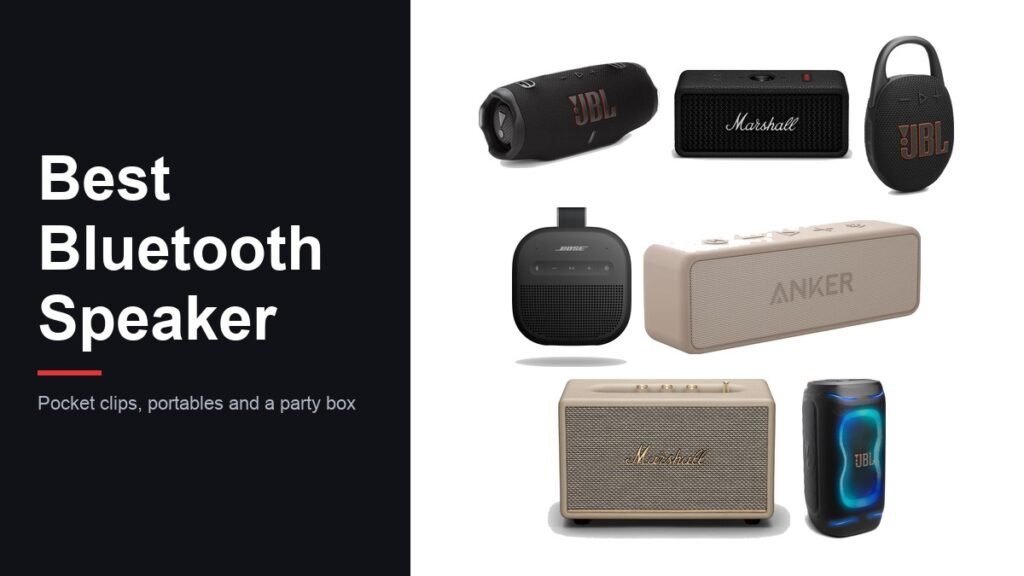
Choosing the best bluetooth speaker is less about sound quality than about honestly answering where it will play. A speaker that clips to a backpack, one that survives a pool deck and one that fills a living room are three different products, and buying the wrong category is how people end up with something too quiet outdoors or too bulky to take anywhere.
The seven below span that whole range, from a 0.6-pound clip-on to a 200-watt party speaker on wheels. Battery figures, IP ratings and power outputs are the ones each manufacturer publishes for that model.
Best Bluetooth Speaker Picks Compared by Battery, Rating and Size
Battery figures from several brands combine a base runtime with a boost mode, so read both numbers before comparing them.
| # | Speaker | Battery | Protection | Suits |
|---|---|---|---|---|
| 1 | JBL Charge 6 | 24 hours, 28 with boost | Waterproof, dustproof, drop-proof | The all-round portable |
| 2 | Marshall Emberton III | 32+ hours | IP67 | Longest battery and best design |
| 3 | JBL Clip 5 | 12 hours, 15 with boost | IP67 | Clipping to a bag or belt |
| 4 | Bose SoundLink Micro 2nd Gen | Up to 12 hours | Dust and water resistant | Pocketable sound with real bass |
| 5 | Anker soundcore 2 | 24 hours | IPX7 | The budget choice |
| 6 | Marshall Acton III | Mains powered | Not water resistant | A home speaker that stays put |
| 7 | JBL PartyBox 130 | Rechargeable party speaker | Splash-resistant party design | Outdoor gatherings and volume |
1. JBL Charge 6: The Portable That Covers the Most Situations
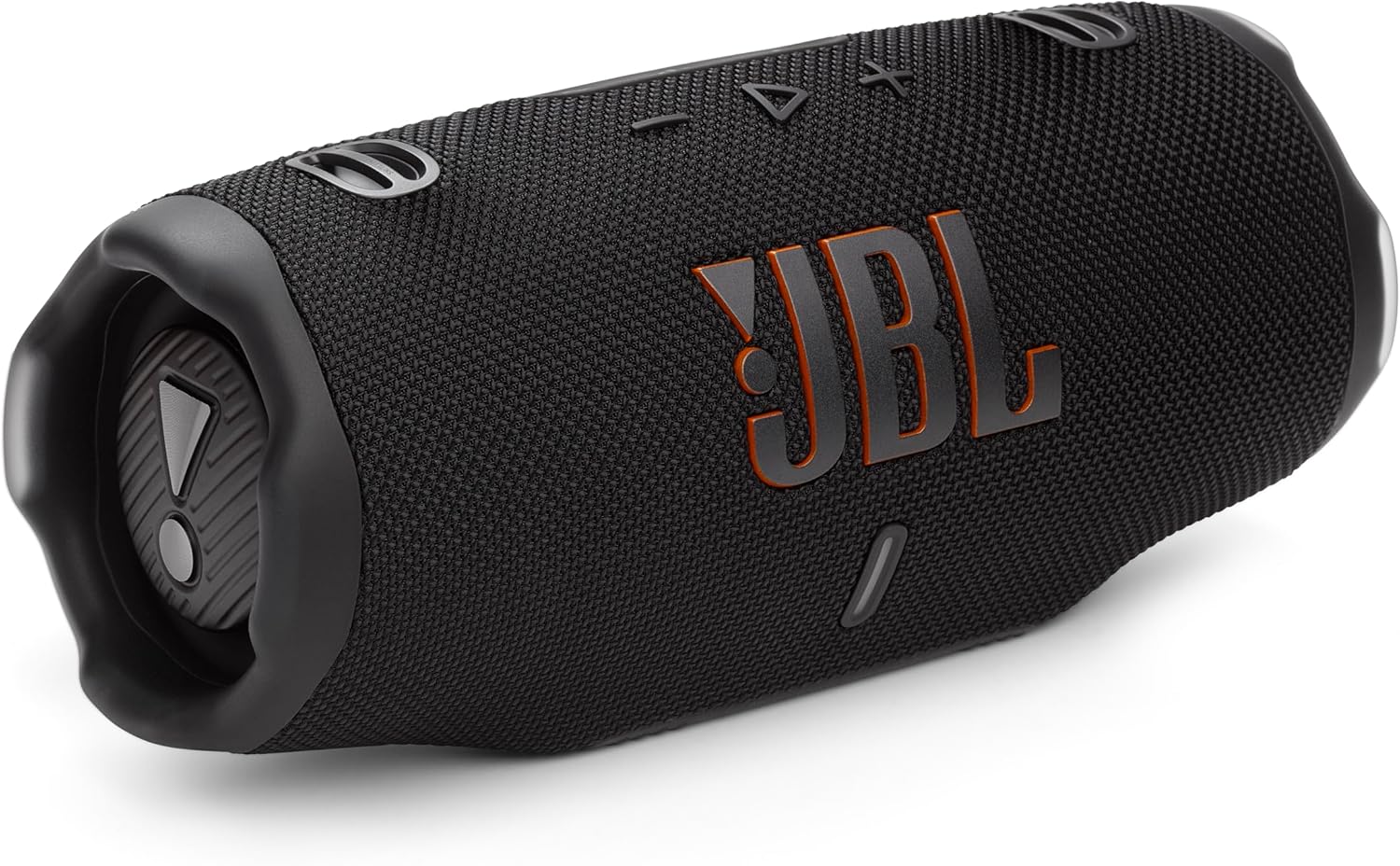
The Charge line has been the sensible default in this category for years and the sixth version keeps the formula: a 2.2-pound cylinder that runs 24 hours on a charge, stretching to 28 with JBL’s Playtime Boost, and doubles as a power bank for a phone over USB.
It is waterproof, dustproof and drop-proof, which covers the three ways portable speakers actually die. AI Sound Boost analyses the signal in real time to hold the sound together as volume rises, and Auracast lets it broadcast to other compatible speakers so several can play the same source at once.
What it does well
- 24 hours of playtime, 28 with Playtime Boost.
- Charges a phone from its own battery.
- Waterproof, dustproof and drop-proof.
- Auracast multi-speaker broadcasting.
What to know before buying
- At 2.2 pounds it is a bag speaker, not a pocket one.
- Using it as a power bank cuts into playtime.
- Boost figures assume the feature is switched on.
2. Marshall Emberton III: 32 Hours and the Best-Looking Option Here
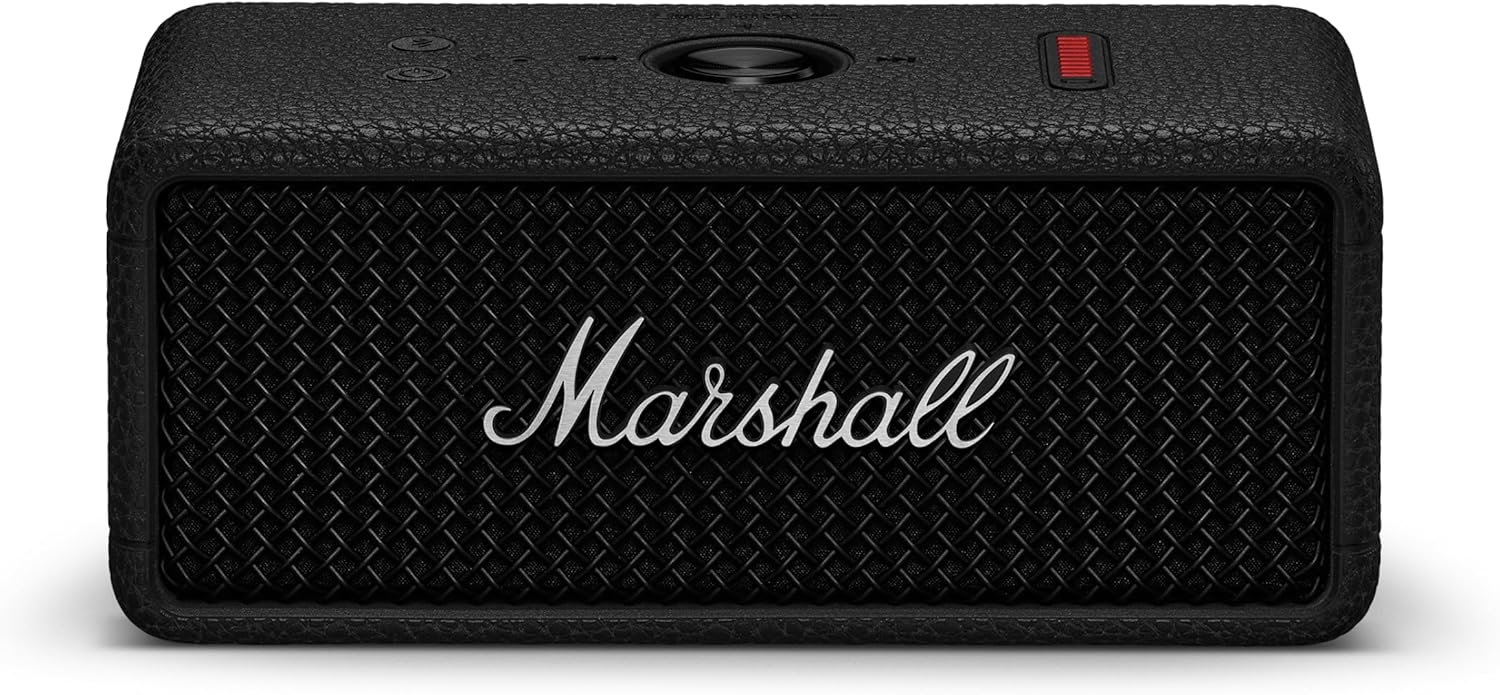
Thirty-two hours of playtime from a 1.5-pound speaker is the headline, and it is the longest runtime in this group by a clear margin. Marshall pairs that with True Stereophonic, its multi-directional sound mode that pushes audio outward rather than forward, so placement matters less in a room.
Dynamic Loudness adjusts tonal balance as volume changes, which keeps bass present at low levels instead of thinning out. The IP67 rating means Marshall will stand behind submersion in one metre of water for 30 minutes, so a poolside knock is not fatal.
What it does well
- 32+ hours of playtime on one charge.
- True Stereophonic multi-directional sound.
- IP67, submersible to 1m for 30 minutes.
- Dynamic Loudness keeps balance at low volume.
What to know before buying
- No power-bank function, unlike the JBL Charge 6.
- The styling is distinctive, which is not to every taste.
- Multi-directional sound trades stereo separation for even coverage.
3. JBL Clip 5: The One That Attaches to Your Bag
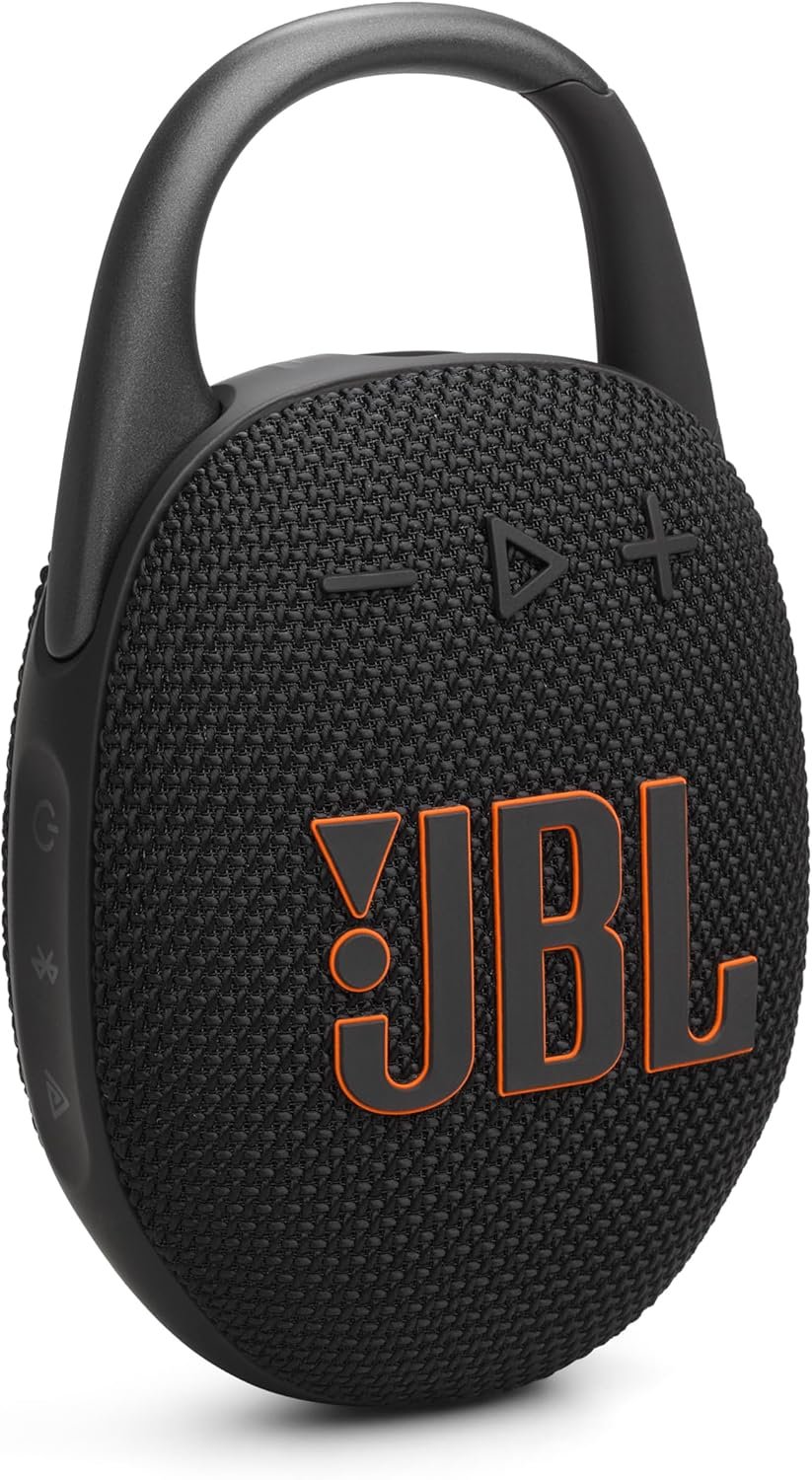
The carabiner is the whole point, and on the fifth version it is fully integrated with a wider opening, so it hooks over a thicker strap or a belt loop than before. At 0.29kg it is small enough that you stop deciding whether to bring it.
Playtime is 12 hours, extending to 15 with Playtime Boost, and the IP67 rating covers both dust and submersion. The sound is genuinely good for the size, though physics still applies: a speaker this small cannot move the air a Charge 6 does, so treat it as personal listening rather than filling a garden.
What it does well
- Integrated carabiner with a wide opening.
- 12 hours of playtime, 15 with boost.
- IP67 dust and waterproof rating.
- Light enough at 0.29kg to carry by default.
What to know before buying
- Too small to fill an outdoor space with sound.
- Bass is limited by the cabinet size, not the tuning.
- Boost mode trades some output for runtime.
4. Bose SoundLink Micro 2nd Gen: Pocket Size With Unusual Bass
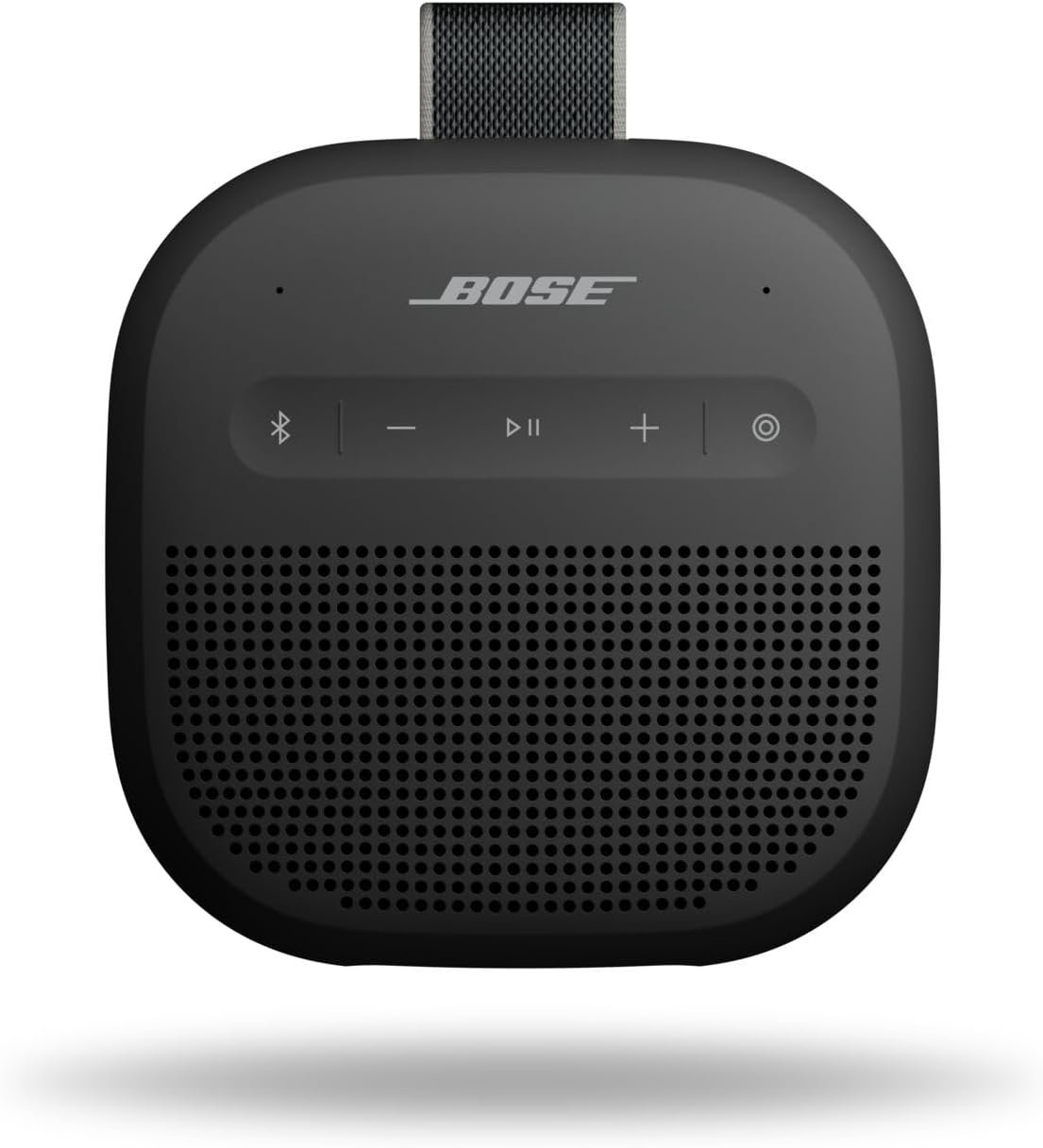
Bose has always made this one punch above its size, and the second generation keeps the trick while doubling battery life to 12 hours. The flat, pocketable body has a tear-resistant utility strap on the back that straps to a handlebar, a backpack or a shower rail.
The construction is the other half of the pitch: a rugged, dust and water resistant design meant to be dropped rather than protected. If you want the smallest speaker that still produces bass you can feel rather than merely hear, this is the one in this group.
What it does well
- Noticeably more bass than its size suggests.
- Up to 12 hours, double the original model.
- Utility strap attaches to bars, bags and rails.
- Rugged, dust and water resistant build.
What to know before buying
- Small drivers still cap maximum volume outdoors.
- No power-bank or multi-speaker broadcast feature.
- Costs more than larger speakers from budget brands.
5. Anker soundcore 2: The Budget Pick That Still Lasts 24 Hours
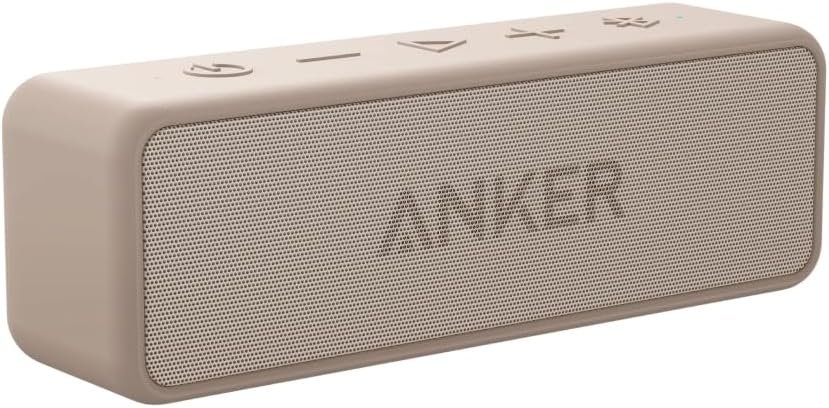
A 5,200mAh battery drives 24 hours of playback here, matching the JBL Charge 6 for runtime at a fraction of the outlay. Output is 12 watts from dual neodymium drivers with a digital signal processor managing the tuning.
Anker’s BassUp processing and a spiral bass port lift the low end, which is the usual weak point at this size and price. IPX7 covers splashes, waves and water vapour, so it handles a bathroom or a poolside without drama, though it is rated for water rather than dust.
What it does well
- 24 hours from a 5,200mAh battery.
- BassUp processing with a spiral bass port.
- IPX7 waterproof rating.
- 12W output from dual neodymium drivers.
What to know before buying
- IPX7 rates water only, with no dust rating.
- 12W cannot match the larger speakers outdoors.
- No Auracast or multi-speaker broadcast.
6. Marshall Acton III: The One That Stays on the Shelf
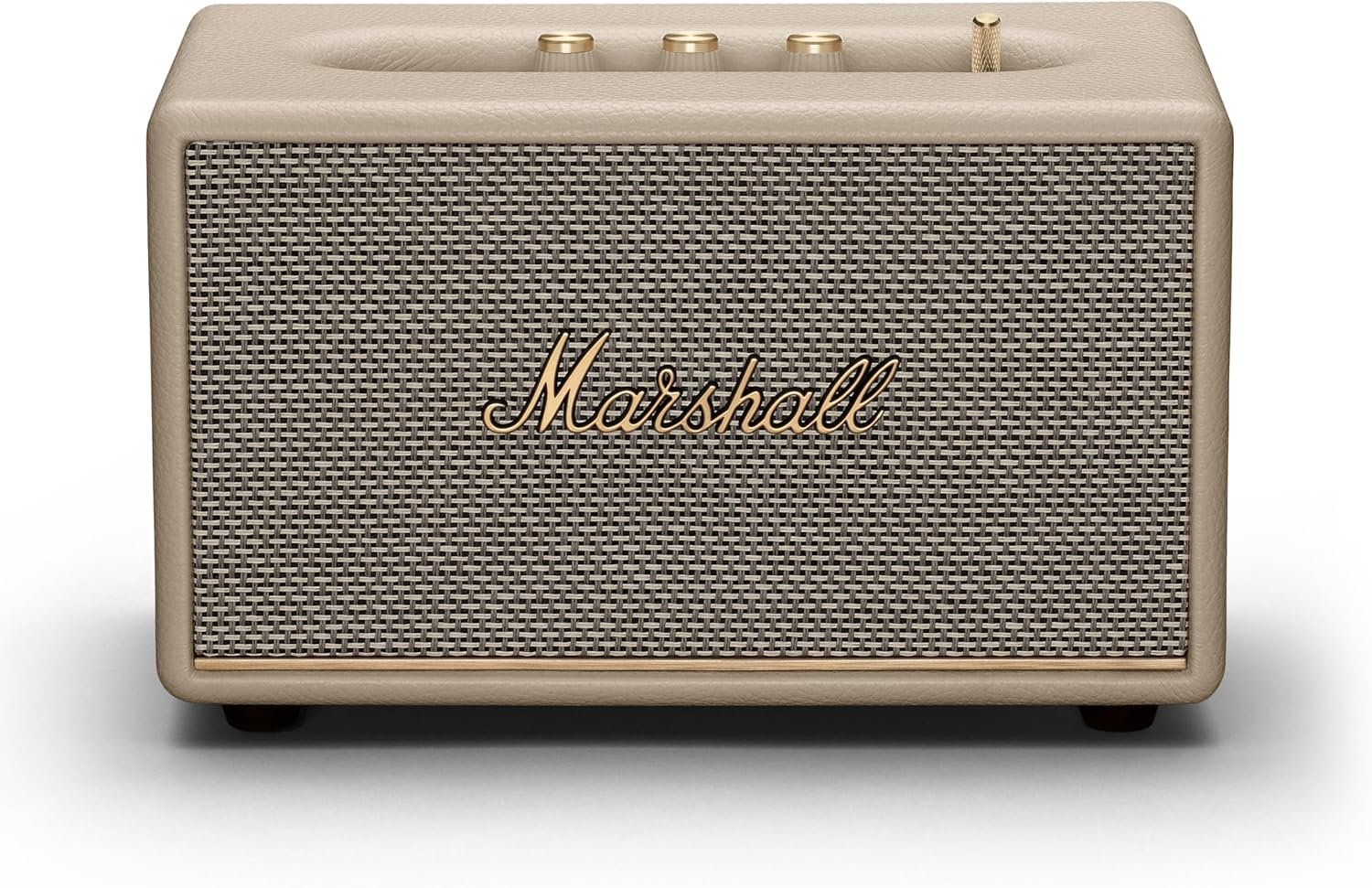
This is a mains-powered home speaker rather than a portable, and that changes what it can do. Freed from a battery, the Acton III delivers a wider soundstage than its predecessor and the room-filling output a 6.3-pound cabinet allows, with analogue-style knobs on top for volume, bass and treble.
Setup is deliberately plain: pair and play, with no app required and no account to create. It also takes an auxiliary input, which a lot of modern speakers have dropped. It is not water resistant, so it belongs indoors on a shelf.
What it does well
- Room-filling output from a mains-powered cabinet.
- Physical knobs for volume, bass and treble.
- Auxiliary input as well as Bluetooth.
- No app or account needed to use it.
What to know before buying
- Not water resistant and not portable.
- Needs a socket, so placement is fixed.
- At 6.3 pounds it is furniture rather than kit.
7. JBL PartyBox 130: Two Hundred Watts and a Light Show
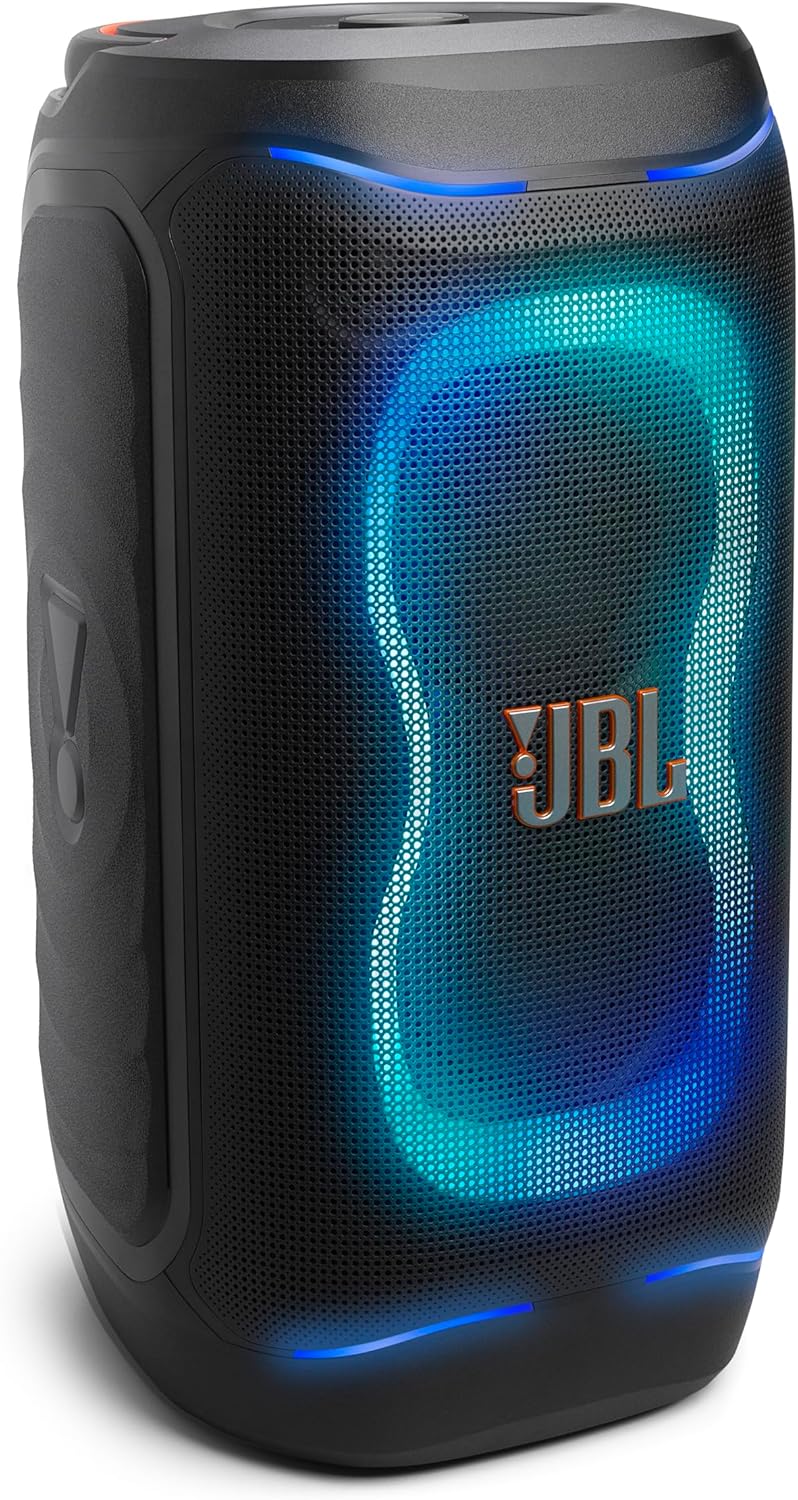
When the requirement is volume for a group outdoors, the portables above all run out of headroom. The PartyBox 130 answers that with 200 maximum watts through a pair of 5.25-inch woofers and two tweeters, which is a different class of output entirely.
AI Sound Boost keeps distortion down as the volume climbs, which is where cheap party speakers fall apart, and a strobe-edge light show runs alongside. The JBL One app controls it from anywhere in the room, so you are not walking back to the speaker to skip a track.
What it does well
- 200 maximum watts from two woofers and two tweeters.
- AI Sound Boost limits distortion at high volume.
- App control from across the room.
- Built-in strobe and edge lighting.
What to know before buying
- Far too large to carry casually.
- Pointless indoors at any sensible volume.
- The light show is a party feature, not a hi-fi one.
IP Ratings: What IPX7 and IP67 Actually Promise
The two digits in an IP rating describe different threats. The first covers solids including dust, the second covers water, and an X in either position means that property was not tested rather than that it failed.
So IPX7, as on the Anker soundcore 2, is a water rating with no dust claim: submersion in one metre for 30 minutes is covered, a sandy beach is not. IP67, as on the Marshall Emberton III and the JBL Clip 5, adds a full dust seal to the same water protection.
For poolside and bathroom use either rating is enough. For beaches, building sites and festivals, the first digit is the one that matters.
Battery Numbers, Boost Modes and What You Actually Get
Several brands now quote two runtimes in one figure. JBL lists the Charge 6 at up to 28 hours, which is 24 hours of normal playback plus four more in Playtime Boost, a mode that reduces output to stretch the remaining charge.
Volume is the other variable nobody prints. Quoted hours assume moderate listening, so a speaker played loudly outdoors will fall well short of its label, which matters most on the smaller models with less battery to give.
Treat the figures as a ranking rather than a promise. Marshall’s 32 hours really is longer than JBL’s 24, even if neither hits its number at full volume.
Which Bluetooth Speaker to Buy
The JBL Charge 6 is the right choice for most people. It is rugged in all three ways that matter, runs 24 hours, charges a phone in an emergency and plays loud enough for a garden, which is a combination nothing else here matches at one price.
Choose differently when one use dominates. The Marshall Emberton III wins on battery and looks, the JBL Clip 5 and Bose SoundLink Micro are the two worth carrying every day, the Anker soundcore 2 gets most of the way there for far less, the Marshall Acton III is the one to buy if it never leaves the house, and the PartyBox 130 is for outdoor gatherings where volume is the point. Pair any of them with wireless earbuds for solo listening and noise cancelling headphones for travel.
Frequently Asked Questions
What is Auracast and do I need it?
Auracast is a Bluetooth broadcasting feature that lets one source play to many compatible receivers at once, which is how the JBL Charge 6 can share audio with other Auracast speakers. It is useful if you own or plan to own more than one compatible speaker, and irrelevant if you do not.
Is IPX7 enough for the beach?
Not really. IPX7 covers submersion in water but carries no dust rating, so sand is not accounted for. A speaker rated IP67, such as the JBL Clip 5 or the Marshall Emberton III, seals against dust as well and is the safer choice on sand.
How long do bluetooth speakers actually last on a charge?
Less than the label at high volume. Quoted figures assume moderate listening, and several brands combine a base runtime with a reduced-output boost mode, as JBL does with its 24-plus-4 hour figure for the Charge 6. Use the numbers to rank models rather than to plan a day.
Can a portable speaker replace a home speaker?
For background listening, yes. For filling a living room, a mains-powered cabinet like the Marshall Acton III has physical advantages a battery speaker cannot match, because it is larger and never has to ration power to protect runtime.
Related Articles
As an Amazon Associate, Fox Bulletin earns from qualifying purchases.

Get the Fox Bulletin briefing
The stories that matter, in your inbox. No spam, unsubscribe anytime.
Newsletter signup will be available soon.
Related stories

Best Office Chairs: 7 Mesh, Leather and Gaming Picks
Seven office and gaming chairs compared on adjustment points, lumbar support, weight capacity and materials, so you can match the chair to your desk hours.
Best Gaming Monitor: 7 Picks From 1080p to OLED
Seven gaming monitors covering 1080p, 1440p, OLED and ultrawide, with the refresh rate and panel trade-offs that decide which one belongs on your desk.
Amazon Prime Benefits: Everything Included for $14.99 a Month
Amazon Prime costs $14.99 a month and covers ten benefit categories, including a fuel discount, Grubhub+ and pharmacy savings most members never use. Everything included, and the cheaper tiers.