

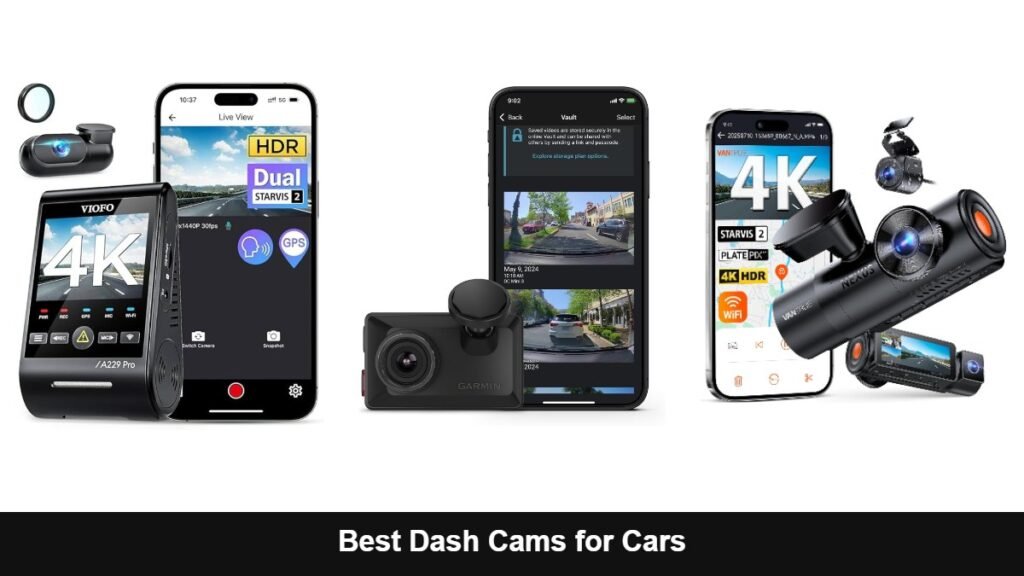
The best dash cam for cars is the one that records the plate in front of you at night and keeps recording when the car is parked, because those are the two moments the footage is for. Resolution matters less than the sensor behind it: every camera below except the Garmin Mini 3 uses a Sony STARVIS 2 sensor or a fast lens, which is what separates a readable plate from a smear of headlights. After that, the choice comes down to how many cameras you want, whether you will hardwire it for parking mode, and how much you want to see from your phone.
The eight dash cams below run from a key-sized 1080p camera to a three-channel rideshare setup and a 4K camera with its own LTE connection. Resolutions, sensors, parking-mode requirements and card limits come from each maker’s listing and site, checked on 29 September 2026. If you also want to keep the windshield clean enough for the lens, our car microfiber towel guide covers that.
Best Dash Cams for Cars at a Glance
Start with the parking column. Every camera here can watch a parked car, but most need a hardwire kit that is sold separately, and the Garmins also need a paid subscription for alerts.
| Dash cam | Cameras | Front sensor | Screen | Parking mode needs | Max card |
|---|---|---|---|---|---|
| VIOFO A229 Pro 2CH | 4K front, 2K rear | Sony STARVIS 2 IMX678 | 2.4 in | HK4 hardwire kit, sold separately | 512GB |
| Garmin Dash Cam X310 | 4K front | Not stated | 2.4 in touchscreen | Constant power cable and Vault subscription | 512GB |
| 70mai M310 Plus | 4K front | Not stated, F1.55 lens | None | UP03 or UP06 hardwire kit, sold separately | Not stated |
| REDTIGER F7NP | 4K front, 1080p rear | Sony STARVIS 2 | 3.18 in | Hardwire kit, sold separately | 256GB, card included |
| THINKWARE U3000 2CH | 4K front, 2K rear | Sony STARVIS 2 | None | OBD-II cable, included | 256GB, 64GB included |
| Vantrue N4 Pro S | 4K front, 1080p cabin, 2.5K rear | Sony STARVIS 2 IMX678 | 3.19 in | Hardwire kit, sold separately | 1TB |
| Garmin Dash Cam Mini 3 | 1080p front | Not stated | None | Constant power cable and Vault subscription | 512GB |
| BlackVue DR970X LTE Plus II | 4K front, 1080p rear | Sony STARVIS 2 | None | Hardwiring cable, included | 1TB, 64GB included |
1. VIOFO A229 Pro 2CH: Best Dash Cam for Cars Overall
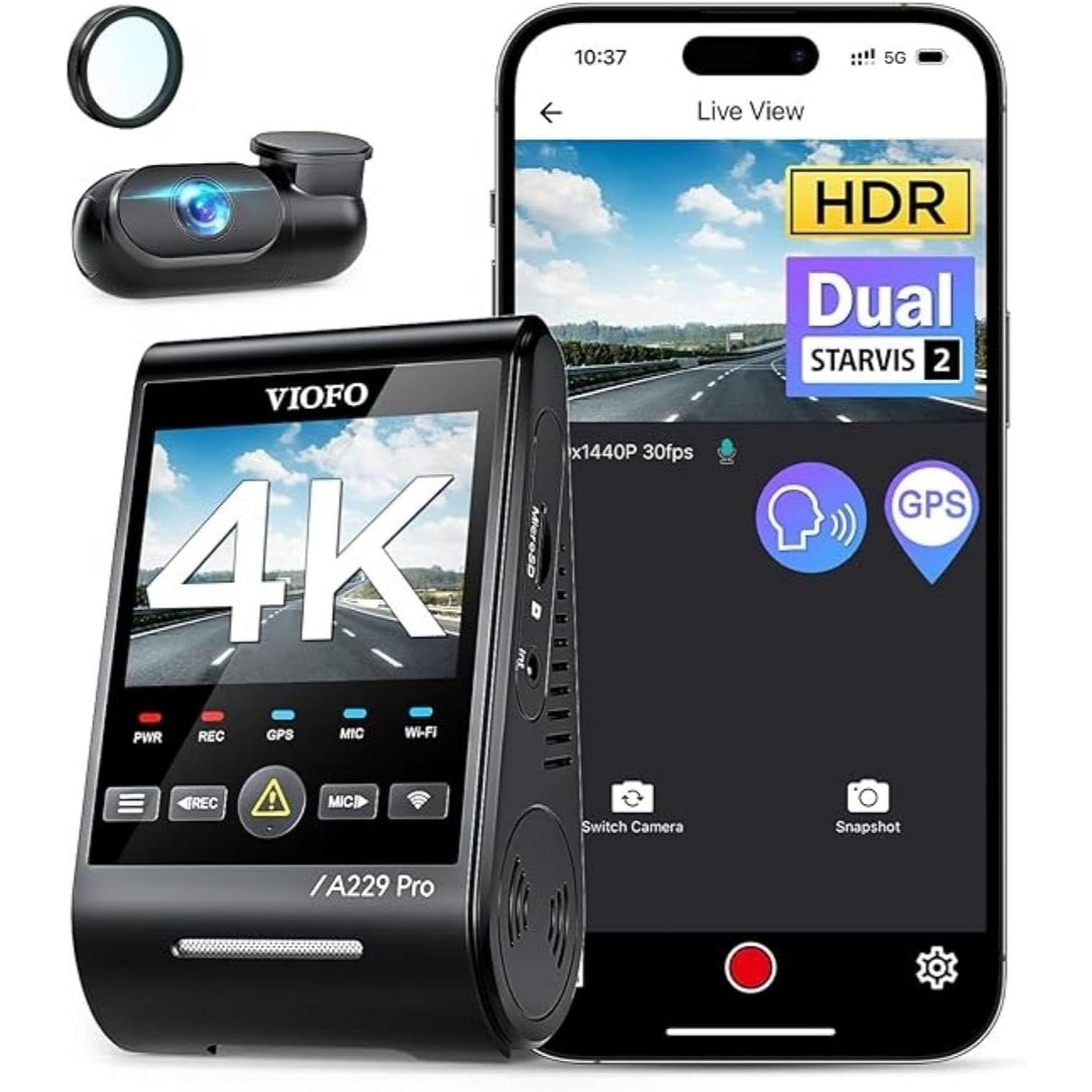
Cameras: 4K front, 2K rear · Sensors: Sony STARVIS 2 IMX678 and IMX675 · Wi-Fi: 5GHz · Max card: 512GB
The A229 Pro is the camera to buy if you want the best night footage front and rear without paying for cloud features you will not use. Both cameras use Sony STARVIS 2 sensors with HDR, which is what lets the rear camera read a plate under sodium lights rather than just show a glow. The front records 4K and the rear 2K, and a quad-mode GPS stamps speed and location onto the file.
Parking mode is buffered: when it detects motion it saves 15 seconds before and 30 seconds after, with low-bitrate and time-lapse options to save card space. That mode needs VIOFO’s HK4 hardwire kit, which is not in the box. Twelve voice commands cover locking a clip, taking a photo and switching the screen, and 5GHz Wi-Fi moves clips to the VIOFO app quickly. There is no card in the box, so budget for a high-endurance microSD up to 512GB.
What it does well
- STARVIS 2 sensors with HDR on both cameras.
- Buffered parking recording with three modes.
- Quad-mode GPS, 5GHz Wi-Fi and voice control.
What to know before buying
- Hardwire kit and memory card are sold separately.
- No cloud or LTE features.
2. Garmin Dash Cam X310: Best 4K Dash Cam for Cars
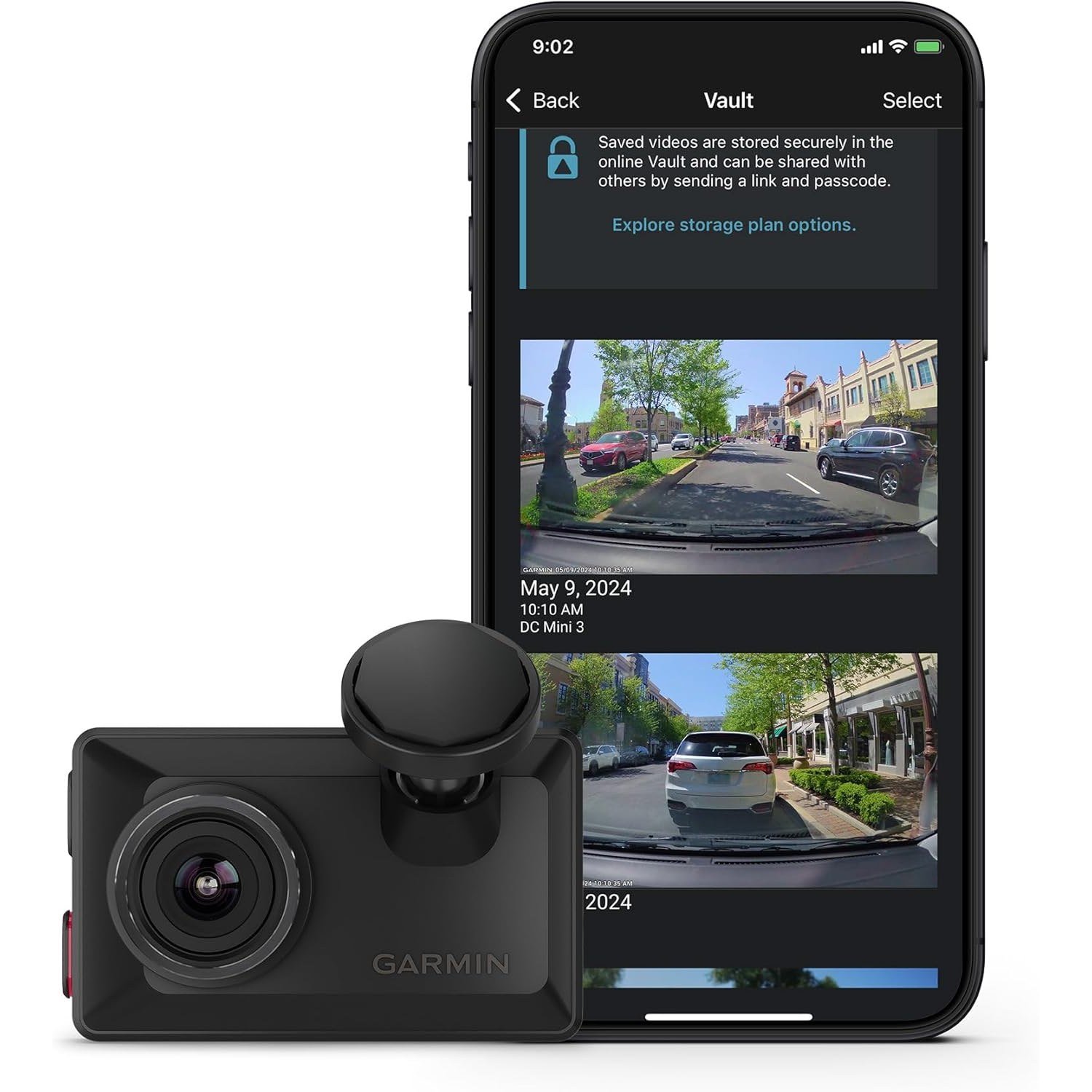
Cameras: 4K front · Field of view: 140 degrees · Screen: 2.4 in touchscreen · Max card: 512GB
Garmin’s X310 is the easiest 4K camera here to live with. It is compact, has a 2.4-inch touchscreen for playback and settings, and includes a polarising lens that cuts dashboard reflections off the windshield, something most rivals sell as an add-on. Incidents are saved automatically with GPS position, date and time, and voice commands save a clip or mute audio without touching the camera.
The catch is that Garmin’s best features live behind its Vault subscription. Saved clips upload to the Vault over Wi-Fi so you never have to pull the card, and the parking guard alerts and remote live view need a paid plan, a constant power cable and a Wi-Fi network at the parking spot. Without the plan you can still view and download clips in the Garmin Drive app when you are near the car.
What it does well
- 4K with a built-in polariser.
- Touchscreen and voice control.
- Automatic incident clips with GPS.
What to know before buying
- Parking alerts and live view need a Vault subscription and home Wi-Fi.
- Front camera only.
3. 70mai M310 Plus: Best Budget Dash Cam for Cars
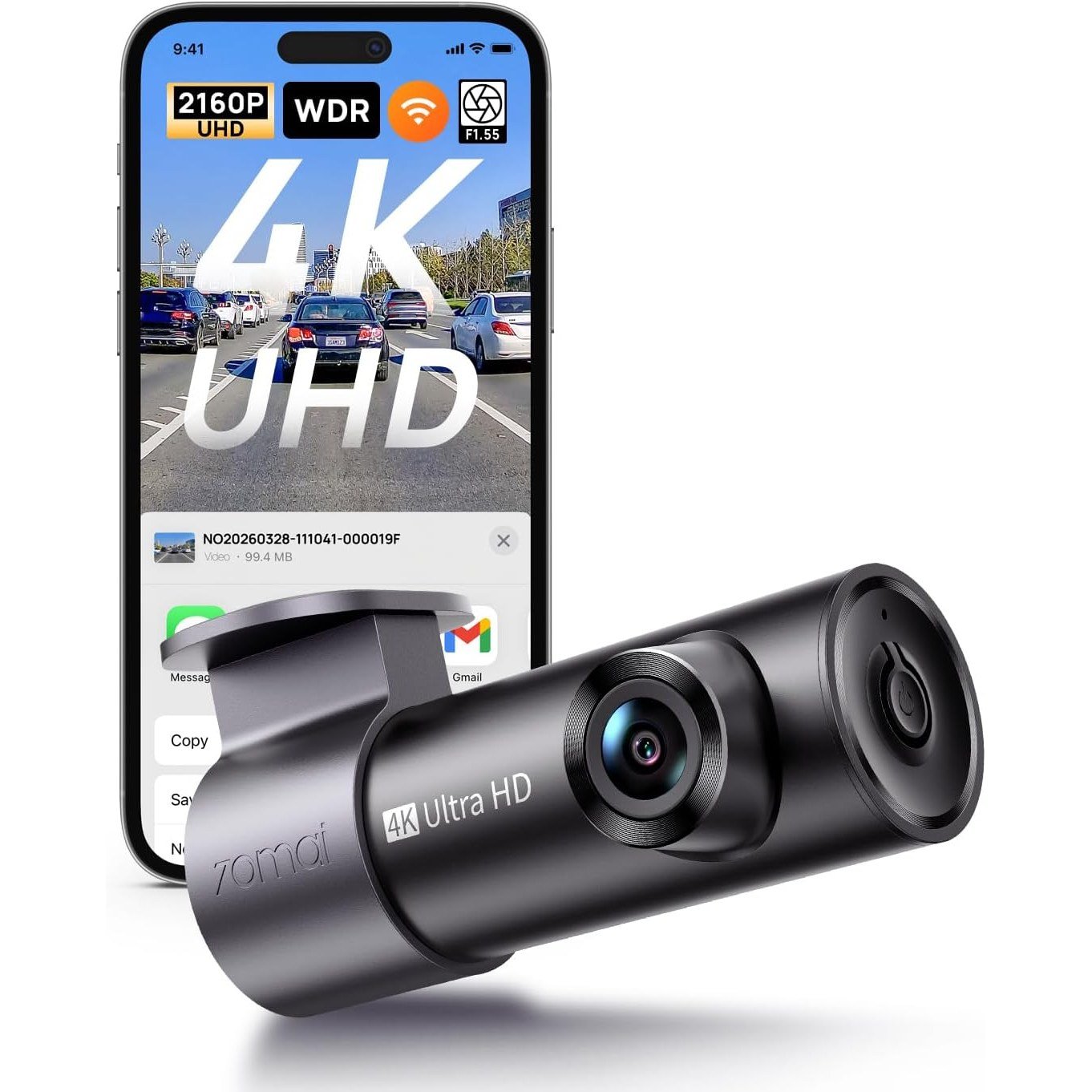
Cameras: 4K front · Field of view: 140 degrees · Lens: F1.55 · Screen: none
The M310 Plus is a screenless 4K front camera that keeps the features people actually use. An F1.55 lens, wide dynamic range and 3D noise reduction handle night driving and tunnel exits, and the G-sensor locks a clip when it detects an impact. Its smart pre-recording is the clever part: after a hit it locks up to 1 to 3 minutes of footage from before the impact, so the lead-up is saved too.
Everything is controlled from the 70mai app over Wi-Fi, with voice commands for locking video or taking a photo. Parking mode records impacts and supports time-lapse, with an 11.8V cut-off to protect the battery, but it needs 70mai’s UP03 or UP06 hardwire kit. It powers over USB-C with an 11.5-foot cable, long enough to route around the A-pillar on most cars.
What it does well
- 4K with an F1.55 lens at a budget price.
- Pre-recording locks the minutes before an impact.
- Low-voltage protection in parking mode.
What to know before buying
- No screen and no GPS.
- Parking mode needs a separate hardwire kit.
4. REDTIGER F7NP: Best Front and Rear Dash Cam for the Money
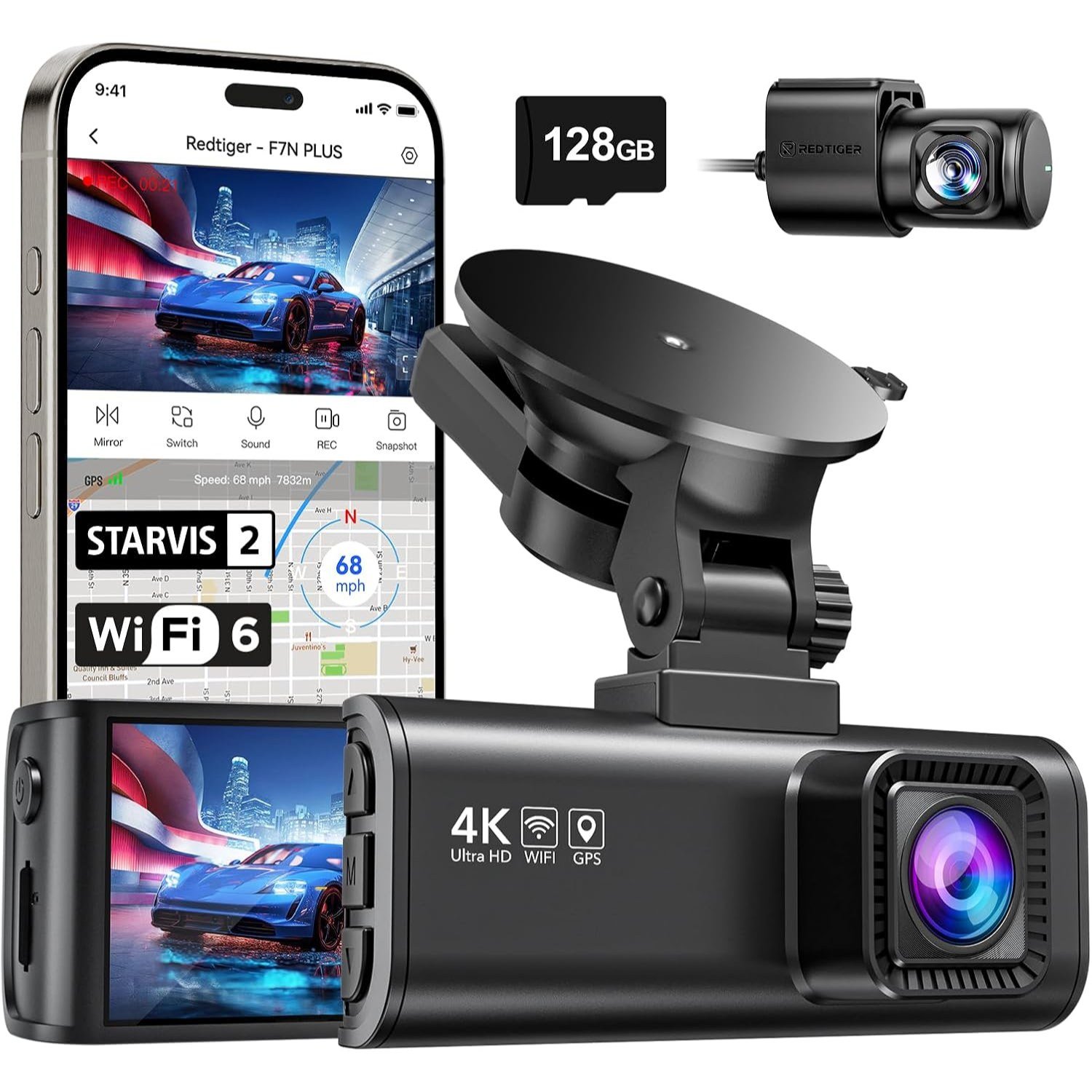
Cameras: 4K front, 1080p rear · Field of view: 170 front, 140 rear · Screen: 3.18 in · Card: included
The F7NP is the front-and-rear kit for people who want everything in one box. It ships with a memory card, a GPS mount and a rear camera, so it records both ends of the car the day it arrives. The front uses a STARVIS 2 sensor behind an F1.5 six-layer lens, with a wide 170-degree view that catches the lanes either side, and the 3.18-inch screen makes setup and playback simple.
It runs on a supercapacitor rather than a lithium battery, which is the safer choice for a car that bakes in summer, and REDTIGER backs it with an 18-month warranty. Wi-Fi is 5.8GHz for fast downloads to the app, where you can also see route and speed. Parking mode offers time-lapse and impact recording but needs a hardwire kit. The rear camera is 1080p, a step behind the 2K rears on the VIOFO and Thinkware.
What it does well
- Card, GPS mount and rear camera in the box.
- Supercapacitor power and an 18-month warranty.
- Wide 170-degree front view with a STARVIS 2 sensor.
What to know before buying
- Rear camera is 1080p.
- Card limit is 256GB.
5. THINKWARE U3000 2CH: Best Dash Cam for Parking Mode
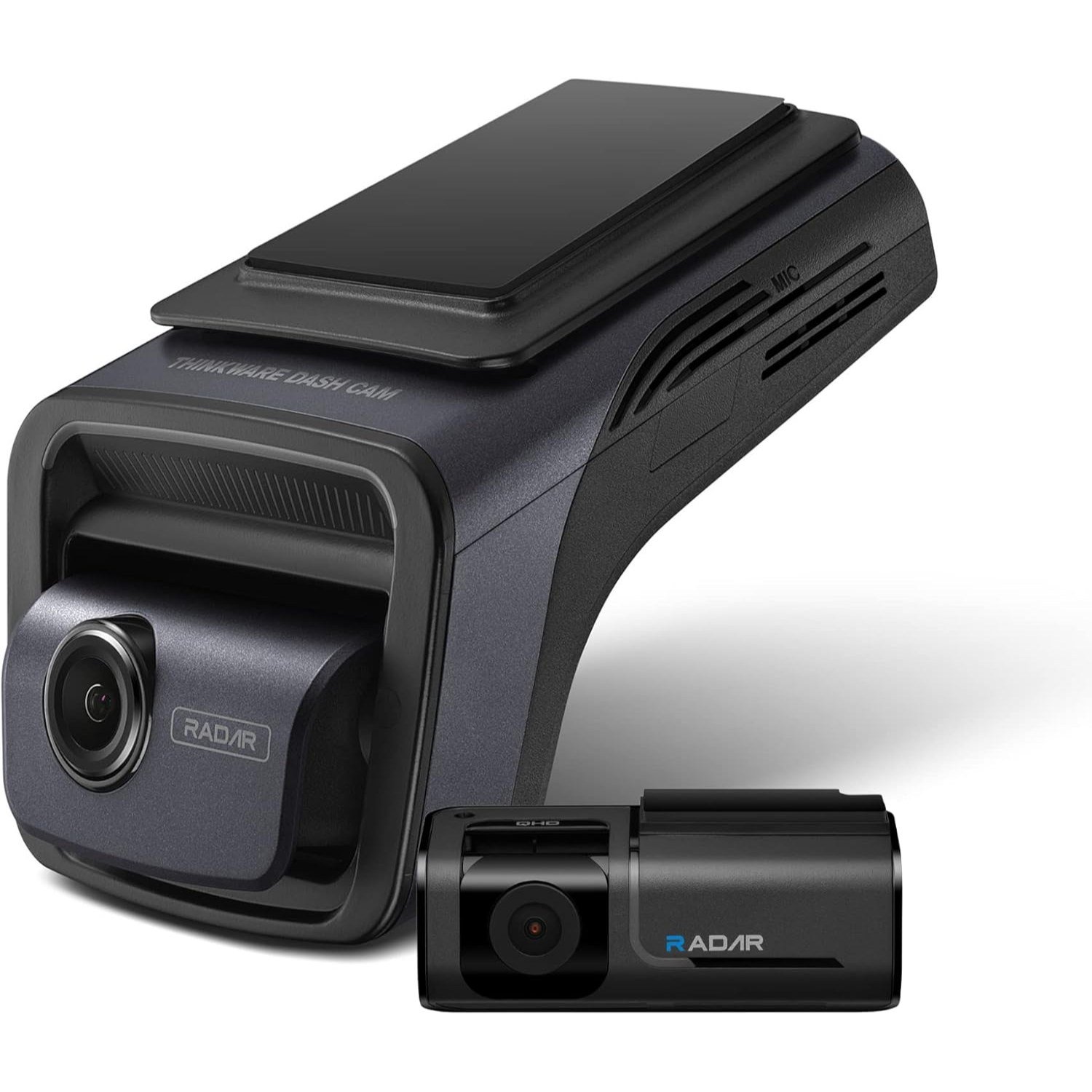
Cameras: 4K front, 2K rear · Sensor: Sony STARVIS 2 · Parking: built-in radar, OBD-II cable included · Card: 64GB included
The U3000 is built around parking. It has a radar sensor inside, so instead of running the image processor all night to spot motion, it idles on very little power and wakes when the radar sees something, then saves a 20-second clip with 10 seconds of buffer before the event. That means longer surveillance on the car’s own battery. The OBD-II power cable is in the box, so there is no separate hardwire kit to buy.
Recording is 4K front and 2K rear on STARVIS 2 sensors, with Thinkware’s Super Night Vision 4.0 and an adjustable bitrate. There is no screen; setup pairs over Bluetooth to the Thinkware Link app, and the Thinkware Connected app adds remote live view and impact notifications over the internet. A 64GB card and a CPL filter are included, and it runs on a supercapacitor.
What it does well
- Radar parking mode with buffering and very low drain.
- OBD-II cable, 64GB card and CPL filter included.
- 4K front and 2K rear with STARVIS 2.
What to know before buying
- No screen, so setup is app-only.
- Card limit is 256GB.
6. Vantrue N4 Pro S: Best 3-Channel Dash Cam for Rideshare Drivers
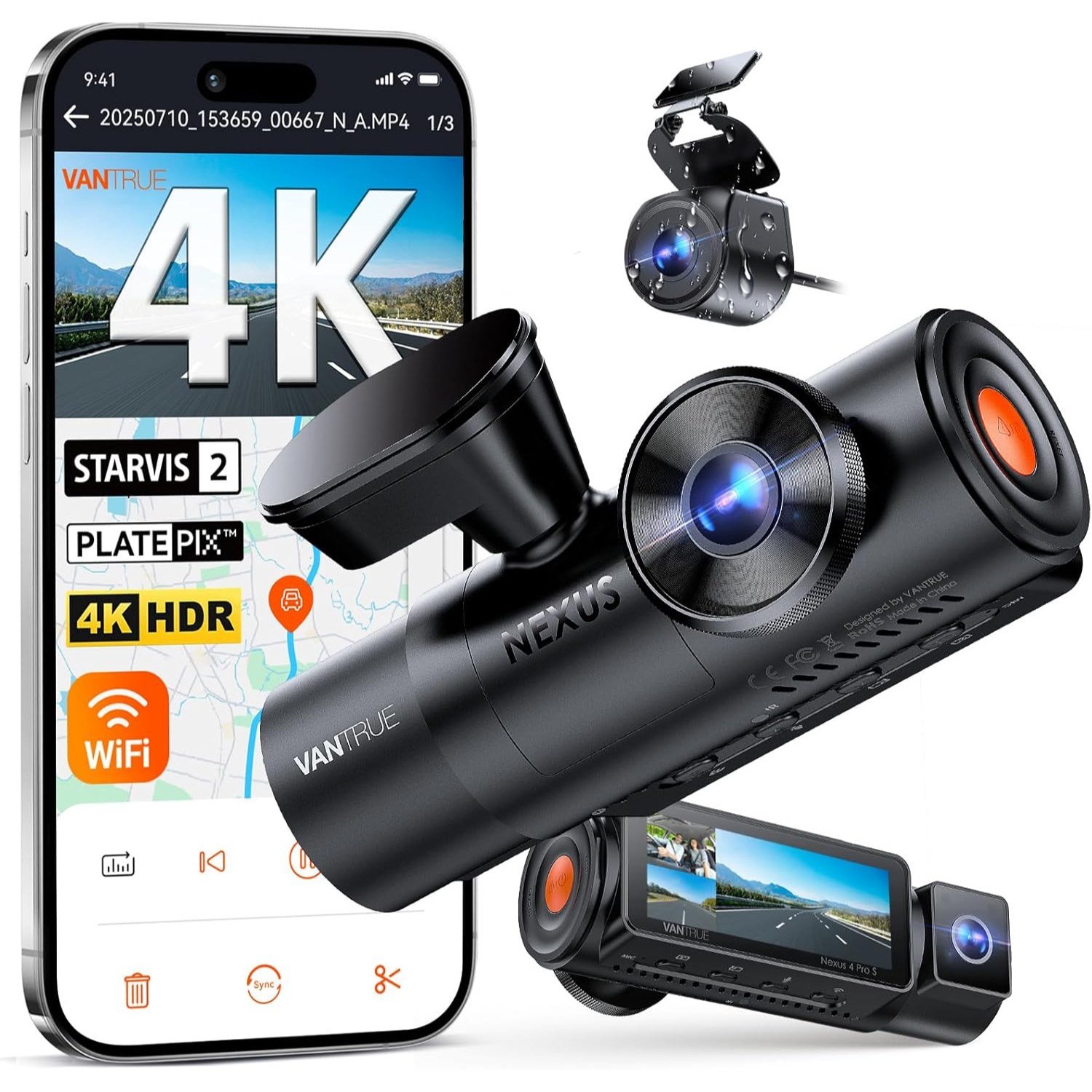
Cameras: 4K front, 1080p cabin, 2.5K rear · Sensors: triple Sony STARVIS 2 · Screen: 3.19 in · Max card: 1TB
If you drive for Uber or carry passengers, the N4 Pro S records the road, the cabin and the rear at once, and it is the first three-channel camera to put a STARVIS 2 sensor on all three lenses. The cabin camera has infrared LEDs for night pickups, the front uses the IMX678 with adaptive HDR and Vantrue’s plate-reading mode, and the rear is a 2.5K unit rated IP67 so it can mount outside on a truck or RV.
When you do not need the cabin view, a front-and-rear mode runs the two outside cameras at 4K and 2.5K and, Vantrue says, 30 percent cooler. A supercapacitor keeps it recording from -4 to 158 degrees Fahrenheit, GPS is built into the mount, and it takes cards up to 1TB, which matters when three streams fill a card fast. Parking mode is buffered but needs Vantrue’s hardwire kit; the maker’s own product page confirms it is sold separately.
What it does well
- Three STARVIS 2 cameras, including an IR cabin camera.
- Waterproof 2.5K rear camera.
- Supports 1TB cards and 5GHz Wi-Fi.
What to know before buying
- Hardwire kit and card are sold separately.
- Three cameras mean more cable to hide.
7. Garmin Dash Cam Mini 3: Best Small Dash Cam for Cars
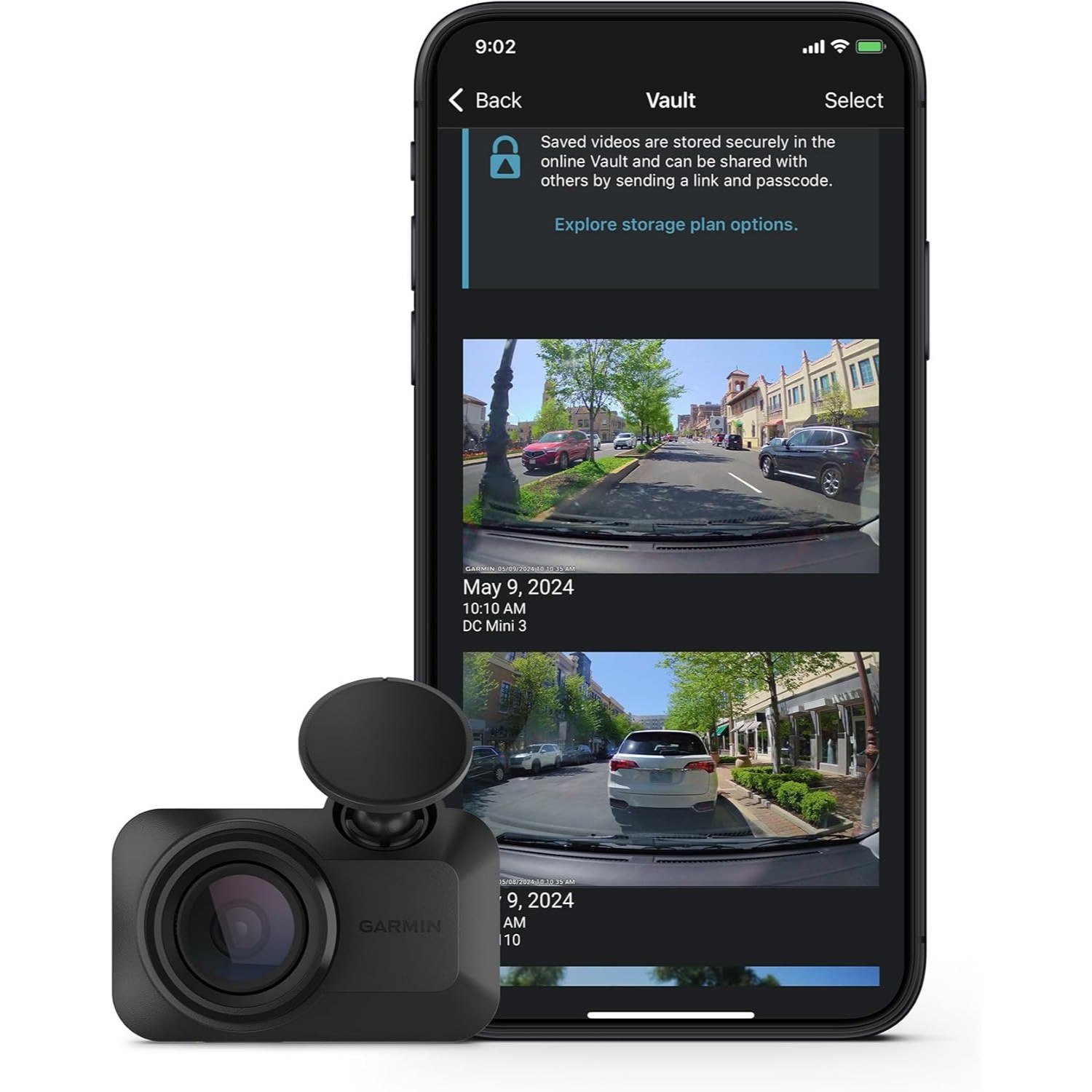
Cameras: 1080p front · Field of view: 140 degrees · Screen: none · Max card: 512GB
The Mini 3 is the size of a car key and disappears behind the mirror, which is the point: nothing on the windshield to tempt a thief or block the view. It records 1080p with HDR through a built-in polariser, saves incidents automatically with date and time, and takes voice commands to save a clip or start and stop audio. Setup and playback happen in the Garmin Drive app.
Like the X310, its Vault cloud storage, parking guard alerts and remote live view need a paid subscription, a constant power cable and Wi-Fi where the car is parked. There is no GPS, so clips carry no speed or location, and the card is sold separately. For a second car or a small dash, that is a fair trade for the size.
What it does well
- Key-sized and almost invisible on the glass.
- Built-in polariser and HDR.
- Voice control and automatic incident saving.
What to know before buying
- 1080p only, with no GPS.
- Parking alerts need a Vault subscription and home Wi-Fi.
8. BlackVue DR970X LTE Plus II: Best Dash Cam With Cloud and LTE
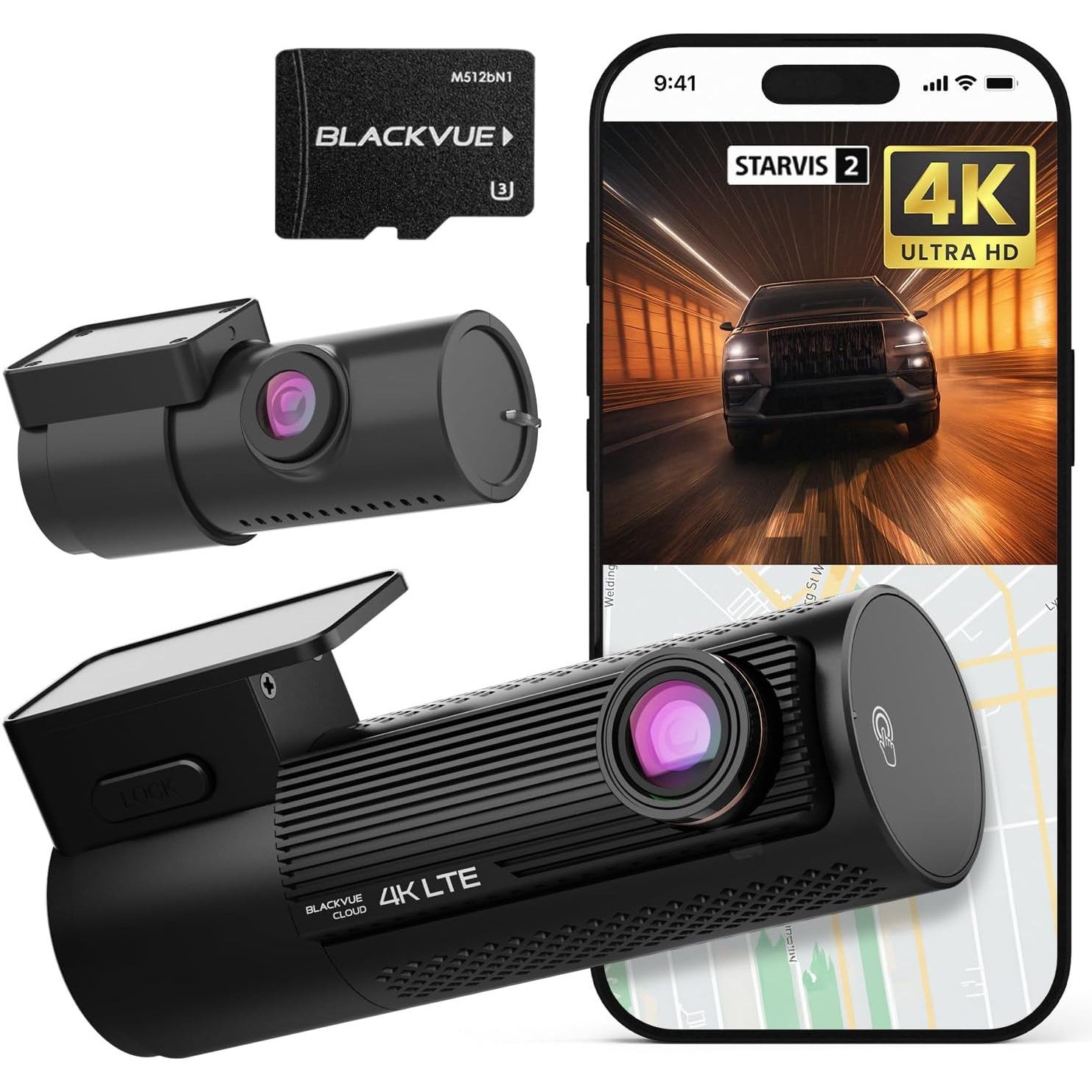
Cameras: 4K front, 1080p rear · Sensor: Sony STARVIS 2 with HDR · Connection: built-in 4G LTE, SIM not included · Max card: 1TB
The DR970X LTE Plus II is for people who want to check on the car from anywhere. It has an LTE modem built in, so with a SIM installed it streams live view, remote playback, GPS tracking and push alerts through BlackVue’s cloud without a phone hotspot. This North American version is tuned for US and Canadian networks, and BlackVue recommends T-Mobile in the US.
Recording is 4K front on a STARVIS 2 sensor with HDR and Full HD rear, using H.265 to fit more on the card; a 64GB card is included and it takes up to 1TB. The hardwiring cable is in the box, which makes the buffered parking mode with motion, impact and time-lapse ready to go, and a backup power system saves the current clip if power is cut. Costs to plan for are the SIM plan and, if you park for days, a separate battery pack.
What it does well
- LTE cloud with live view and alerts, no hotspot needed.
- Hardwiring cable and 64GB card included.
- Supports 1TB cards.
What to know before buying
- Needs a SIM and data plan for cloud features.
- Rear camera is 1080p.
Do You Need a Hardwire Kit for a Dash Cam?
Only for parking mode. Every dash cam here records while driving from the 12V socket or a USB port. To record while the car is off, the camera needs constant power from the fuse box, and that is what the hardwire kit or OBD-II cable provides, with a voltage cut-off so it cannot flatten the battery. The Thinkware and BlackVue include that cable; the VIOFO, 70mai, REDTIGER and Vantrue sell it separately. The two Garmins need a constant power cable plus a Vault subscription and Wi-Fi at the parking spot for alerts.
Supercapacitor vs Battery Dash Cam: Which Is Better in Heat?
A supercapacitor holds just enough charge to save the last file when power is cut, and it tolerates heat that damages a lithium battery. REDTIGER’s testing puts supercapacitors at -40 to 85 degrees Celsius against a typical 0 to 55 for lithium cells, and found dashboards reach 75 to 90 degrees in a parked car. The VIOFO, REDTIGER, Thinkware, Vantrue and BlackVue here all use supercapacitors. The trade-off is that a supercapacitor cannot run the camera on its own, which is another reason parking mode needs constant power.
Where Can You Mount a Dash Cam on the Windshield?
Behind the mirror, high and central, is the safest spot in most states, and it is where the compact Garmins are designed to sit. California is the strictest: Vehicle Code section 26708 allows a video event recorder only in a 7-inch square in the lower corner farthest from the driver, a 5-inch square in the lower corner nearest the driver outside the airbag zone, or a 5-inch square at the top centre of the windshield, and requires a posted notice that passengers may be recorded. Check your own state’s obstruction rule before you stick the mount down.
Which Memory Card Should You Use in a Dash Cam?
A high-endurance card rated for continuous video. A dash cam overwrites the card in a loop all day, which wears ordinary cards out quickly, so buy one sold for dash cams and security cameras with a V30 or U3 rating, format it in the camera every month or so, and stay within the camera’s limit: 256GB on the REDTIGER and Thinkware, 512GB on the VIOFO, 70mai and Garmins, and 1TB on the Vantrue and BlackVue.
Which Dash Cam Should You Buy?
For most drivers the VIOFO A229 Pro is the one: STARVIS 2 sensors front and rear, buffered parking mode and no subscription. If you want one camera and a screen, the Garmin X310 is the simplest 4K option, and the 70mai M310 Plus is the budget pick. The REDTIGER F7NP gets you front and rear with the card in the box.
Choose the Thinkware U3000 if the car sits on the street overnight, the Vantrue N4 Pro S if you carry passengers, the Garmin Mini 3 if you want nothing visible on the glass, and the BlackVue if you want to see the car from your phone wherever it is. If you are shopping for the car too, our SUV under $50,000 guide compares seven on price and mpg.
Frequently Asked Questions
What is the best dash cam for cars?
The VIOFO A229 Pro for most people, with the Garmin X310 as the easiest single 4K camera and the Thinkware U3000 for parking protection. Rideshare drivers should look at the Vantrue N4 Pro S.
Is 4K worth it on a dash cam?
It helps with plates at distance, but the sensor and lens matter more at night. A 4K camera with a STARVIS 2 sensor beats a 4K camera without one, and the Garmin Mini 3 at 1080p is still usable in daylight.
Do dash cams record when the car is off?
Only in parking mode with constant power from a hardwire kit or OBD-II cable. Without it, every camera here shuts down when the ignition goes off.
Do dash cams drain the car battery?
Hardwire kits have a voltage cut-off that stops recording before the battery drops too low, and the 70mai sets it at 11.8V. Radar parking on the Thinkware uses the least power. For multi-day parking, BlackVue sells a separate battery pack.
Do I need a subscription for a dash cam?
Not for the VIOFO, 70mai, REDTIGER, Thinkware or Vantrue. The Garmins need a Vault plan for cloud storage, parking alerts and live view, and the BlackVue needs a SIM data plan for its LTE features.
Are dash cams legal in the US?
Yes, but windshield placement is regulated. California limits cameras to specific squares on the glass and requires a notice about recording passengers, and many states have general obstruction rules. Mount high behind the mirror unless your state says otherwise.
Related Articles

Get the Fox Bulletin briefing
The stories that matter, in your inbox. No spam, unsubscribe anytime.
Newsletter signup will be available soon.
Related stories
Best Mobile Cooler for Gaming: 7 Phone Coolers Compared on Power and Noise
The best mobile cooler for gaming is a magnetic Peltier cooler that plugs into a wall charger and chills the back of your phone below room temperature, because that is what stops…

Best Samsung Galaxy Z Fold8 Ultra Cases: Top 8 Picks
The 6 best Samsung Galaxy Z Fold8 Ultra cases, from Spigen to official Samsung, plus why Fold8 cases will not fit the Ultra.

Best Samsung Galaxy Z Fold8 Cases: Top 8 Picks
The 6 best Samsung Galaxy Z Fold8 cases, from Spigen to official Samsung and dbrand, plus why Fold8 Ultra cases will not fit.