

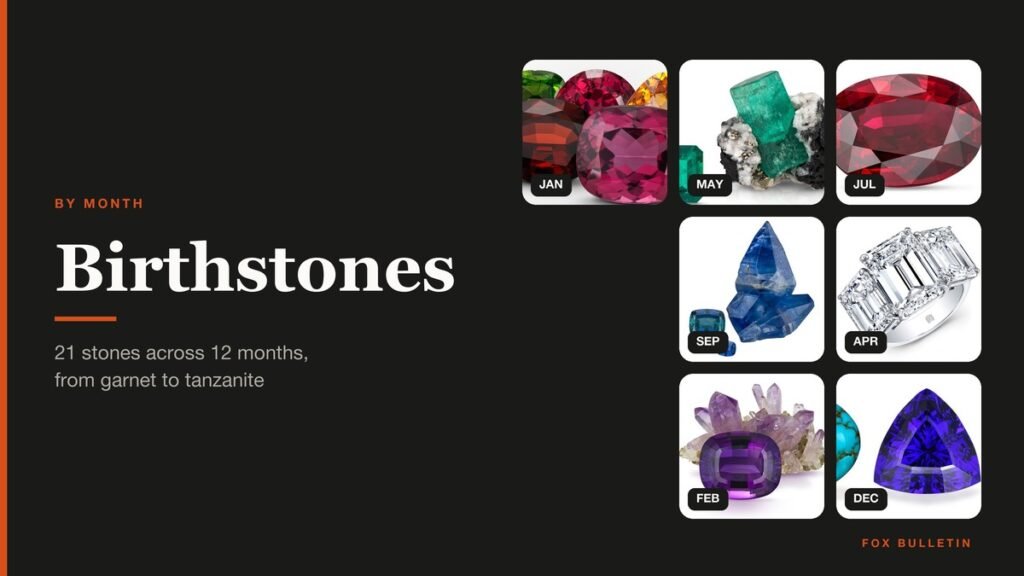
Birthstones are the gems assigned to each month of the year, from garnet in January to tanzanite, turquoise and zircon in December. The modern list used by American jewelers dates to 1912, when a national trade association agreed on one standard chart, and it has been updated three times since.
Several months now have more than one stone, so there are 21 birthstones in all on the current chart. Below is the complete 2026 list with each stone’s color, hardness, history and care needs, followed by how the list was built, where it came from, and what to check before buying one.
Birthstones Chart: Every Month’s Stone, Color and Hardness
Hardness is on the Mohs scale of 1 to 10, where higher numbers resist scratching better. Anything around 7.5 or above holds up well in a ring worn daily.
| # | Month | Birthstone(s) | Color | Mohs hardness |
|---|---|---|---|---|
| 1 | January | Garnet | Deep red (most common) | 6.5 to 7.5 |
| 2 | February | Amethyst | Purple | 7 |
| 3 | March | Aquamarine, bloodstone | Pale blue; dark green | 7.5 to 8; 6.5 to 7 |
| 4 | April | Diamond | Colorless | 10 |
| 5 | May | Emerald | Green | 7.5 to 8 |
| 6 | June | Pearl, alexandrite, moonstone | Cream; green to red; white with blue sheen | 2.5 to 3; 8.5; 6 to 6.5 |
| 7 | July | Ruby | Red | 9 |
| 8 | August | Peridot, spinel, sardonyx | Light green; pink and red; banded | 6.5 to 7; 8; 6.5 to 7 |
| 9 | September | Sapphire | Deep blue | 9 |
| 10 | October | Opal, tourmaline | Multicolor; pink and others | 5 to 6.5; 7 to 7.5 |
| 11 | November | Topaz, citrine | Yellow to orange | 8; 7 |
| 12 | December | Tanzanite, turquoise, zircon | Blue to violet; sky blue; blue | 6 to 7; 5 to 6; 6 to 7.5 |
Birthstones by Month: The Stones and Their Stories
Each month below shows that month’s stones as photographed by the Gemological Institute of America, with the facts that matter for wearing and buying them.
1. January: Garnet
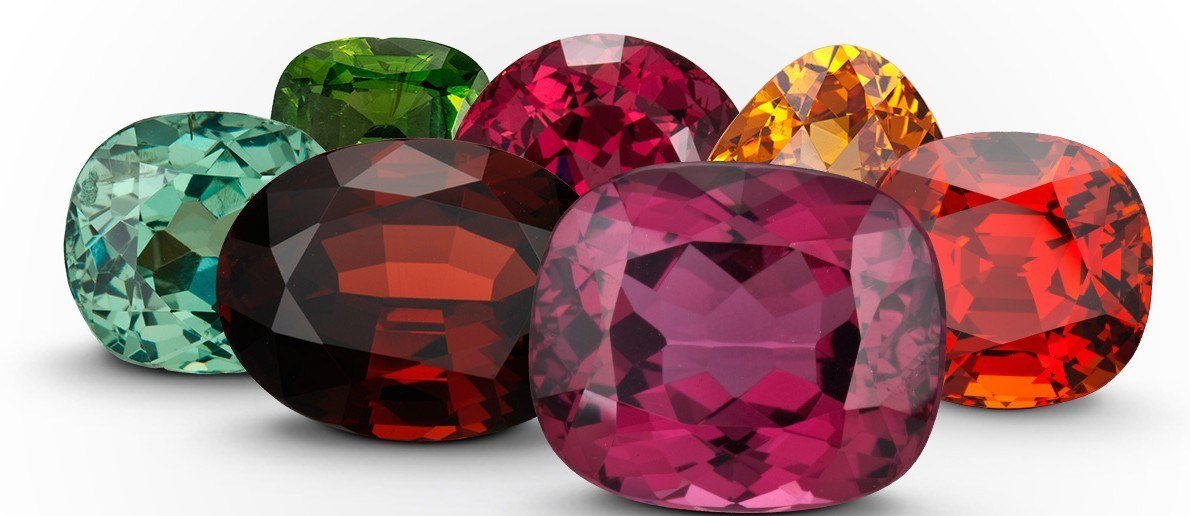
Stone: Garnet | Color: Red, orange, yellow, purple, green | Hardness: Mohs 6.5 to 7.5
Garnet takes its name from the medieval Latin granatus, meaning pomegranate, for the deep red seeds the most common stones resemble. It has been worn since the Bronze Age: Egyptian pharaohs wore red garnet necklaces and Romans carved garnet signet rings.
Garnet is a group, not a single mineral. Its five gem species include pyrope and almandine, the classic reds, plus green varieties such as tsavorite and demantoid. GIA suggests earrings, brooches and pendants over daily rings, and notes most garnets are untreated.
2. February: Amethyst
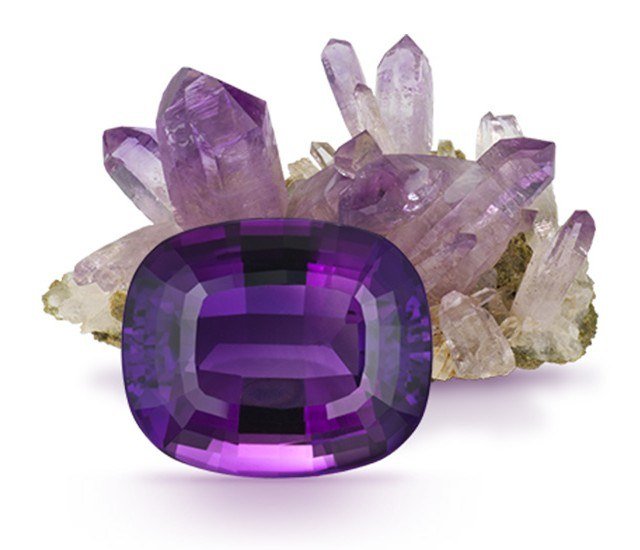
Stone: Amethyst | Color: Lilac to deep purple | Hardness: Mohs 7
Amethyst comes from the Greek amethystos, “a remedy against drunkenness,” and Greek myth tied it to Bacchus, the god of wine. Catherine the Great wore it, and the Duchess of Windsor wore a Cartier amethyst bib necklace to a gala at Versailles in 1953.
It was rare and costly until large Brazilian deposits were found in the 19th century. Brazil, Bolivia, Zambia and Arizona’s Four Peaks mine supply it today. Amethyst is purple quartz, tough enough for rings, though some stones fade in strong light.
3. March: Aquamarine and bloodstone
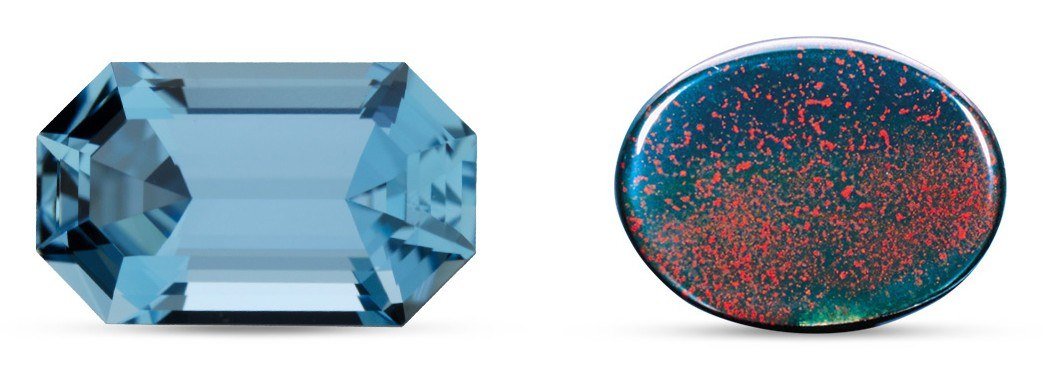
Stone: Aquamarine; bloodstone | Color: Green-blue; dark green with red spots | Hardness: Mohs 7.5 to 8; 6.5 to 7
Aquamarine means seawater in Latin, and sailors believed it calmed the waves. It is a blue to greenish blue beryl, related to emerald, and hard enough for everyday wear. Brazil gave Eleanor Roosevelt a 1,298-carat aquamarine in 1936.
Bloodstone, March’s traditional stone, is a dark green chalcedony flecked with red iron oxide spots, also called heliotrope. Most bloodstone on the market comes from India. It was March’s main stone on the 1912 list, with aquamarine as the alternate.
4. April: Diamond
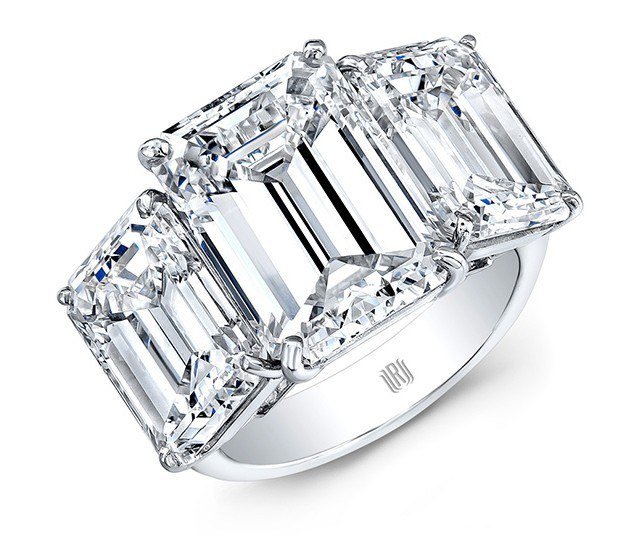
Stone: Diamond | Color: Colorless, plus rare colors | Hardness: Mohs 10
The name comes from the Greek adamas, “invincible.” Diamond is the hardest natural material, 10 on the Mohs scale. The first recorded diamond engagement ring was given by Archduke Maximilian of Austria to Mary of Burgundy in 1477.
India traded diamonds as early as the 4th century BCE, Brazil led for more than 150 years from the early 1700s, and South Africa’s Kimberley finds in the late 1860s created the modern market. Botswana, Russia, Canada and Australia are major sources now, and GIA notes that about 40 percent of the world’s rough is sorted in Botswana.
5. May: Emerald
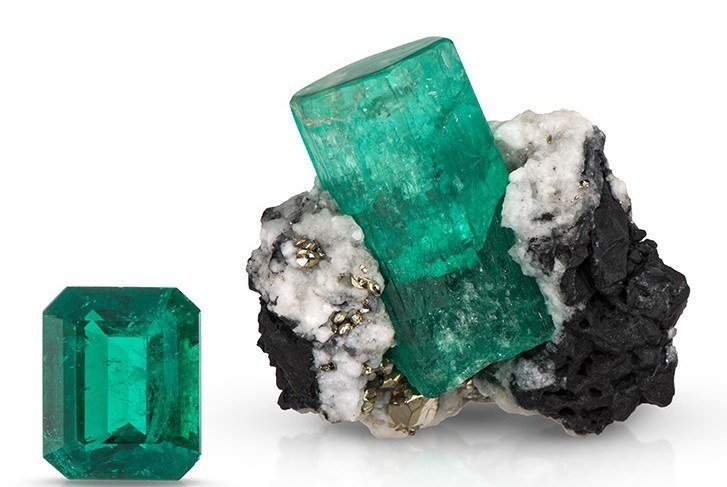
Stone: Emerald | Color: Green | Hardness: Mohs 7.5 to 8
Emerald traces to the ancient Greek smaragdos, “green gem.” Cleopatra prized it, and Pliny the Elder wrote that “nothing greens greener.” Colombia has produced the finest emeralds for more than 500 years, from mines such as Muzo and Chivor.
Despite its hardness, emerald needs care. Emeralds are commonly fracture-filled with oils or resins, so GIA warns never to use an ultrasonic cleaner and to avoid heat and hot dishwater. Warm soapy water and a soft brush are the safe method.
6. June: Pearl, alexandrite and moonstone
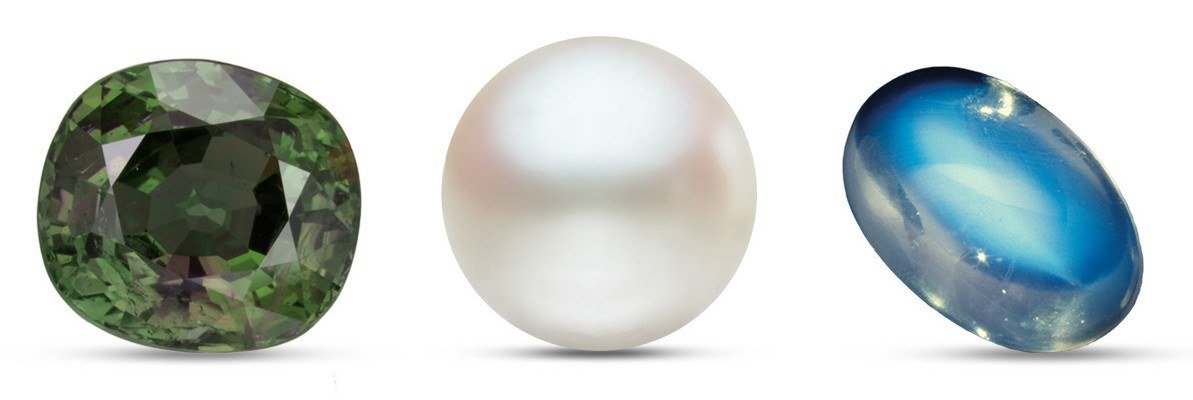
Stone: Pearl; alexandrite; moonstone | Color: White and many colors; green to red; blue sheen | Hardness: Mohs 2.5 to 3; 8.5; 6 to 6.5
June is one of three months with three birthstones. Pearl is the only organic one, grown inside a mollusk, and cultured pearls now make up the vast majority of sales. At 2.5 to 3 on the Mohs scale, pearls should go on after perfume and makeup and never be stored in plastic.
Alexandrite, added in 1952, changes from green in daylight to red under incandescent light. It was found in Russia’s Ural Mountains in 1830 and named after Alexander II of Russia. Moonstone, a feldspar with a floating blue glow, was a favorite of Art Nouveau jewelers like Lalique and Tiffany.
7. July: Ruby
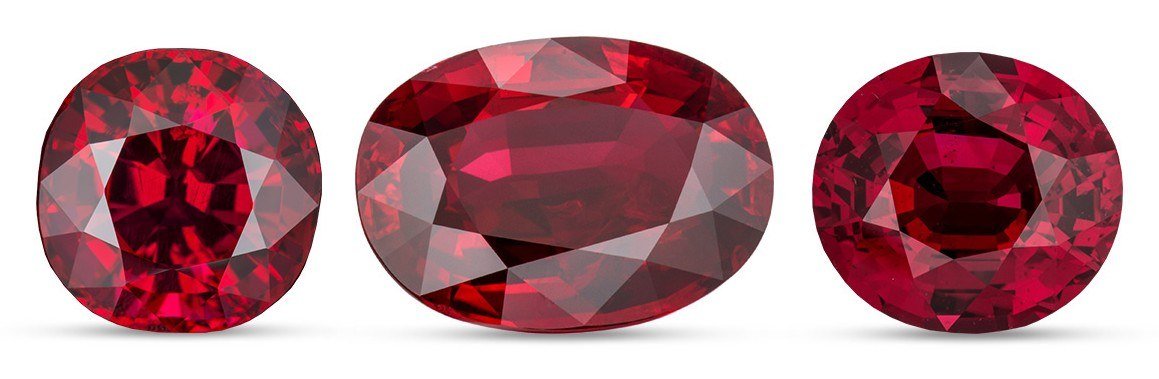
Stone: Ruby | Color: Red | Hardness: Mohs 9
Ruby is red corundum, colored by chromium, and its name comes from the Latin ruber, red. Ancient India called it the king of precious stones. At 9 on the Mohs scale it is second only to diamond, which makes it a strong choice for a ring.
Myanmar’s Mogok valley has supplied fine rubies for more than five centuries, and Mozambique’s Montepuez deposit is a major modern source. Heat treatment is common and accepted, but glass-filled rubies are fragile, and GIA advises asking how any ruby was treated before you buy.
8. August: Peridot, spinel and sardonyx
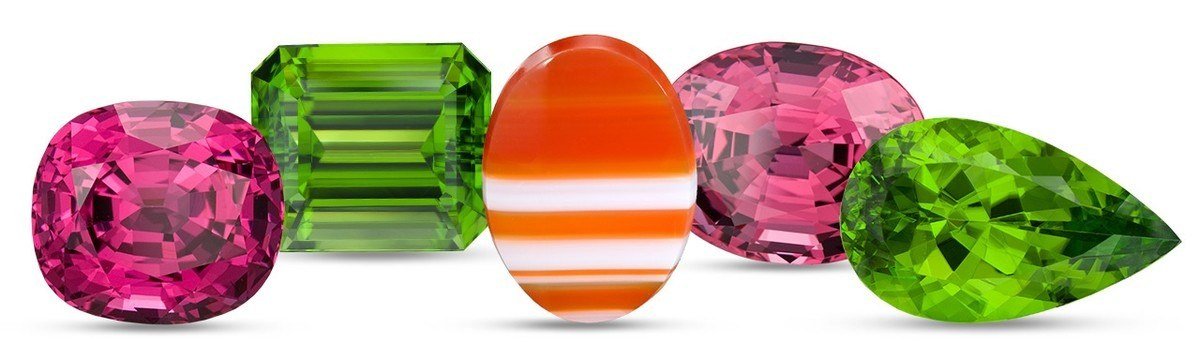
Stone: Peridot; spinel; sardonyx | Color: Yellowish green; red, pink, blue and more; banded red and white | Hardness: Mohs 6.5 to 7; 8; 6.5 to 7
Peridot is gem-quality olivine, the yellowish green stone mined on the Red Sea island of Zabargad possibly since the 300s BCE. Some has even arrived on Earth inside meteorites. The 200 carats of “emeralds” on Cologne Cathedral’s Shrine of the Three Holy Kings turned out to be peridot.
Spinel joined the list in 2016, the third update to the modern chart, and comes in red, pink, purple and blue. The Black Prince’s “Ruby” in Britain’s Imperial State Crown is actually a spinel. Sardonyx, banded sard and onyx, is the original August stone with a history of more than 4,000 years.
9. September: Sapphire
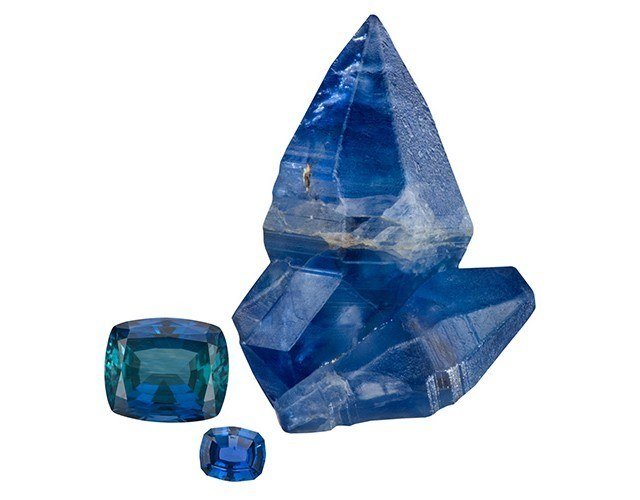
Stone: Sapphire | Color: Blue, plus most other colors | Hardness: Mohs 9
Sapphire is ruby’s sister: both are corundum, and any color other than red is sapphire. Ancient Persians believed the earth rested on a giant sapphire that colored the sky. Princess Diana’s engagement ring was set with a 12-carat blue sapphire.
Kashmir sapphires, found after a Himalayan landslide around 1881, are the most famous. Myanmar, Sri Lanka, Madagascar, Australia and Montana also produce them. With hardness 9 and no cleavage, sapphire is one of the best stones for jewelry worn every day.
10. October: Opal and tourmaline
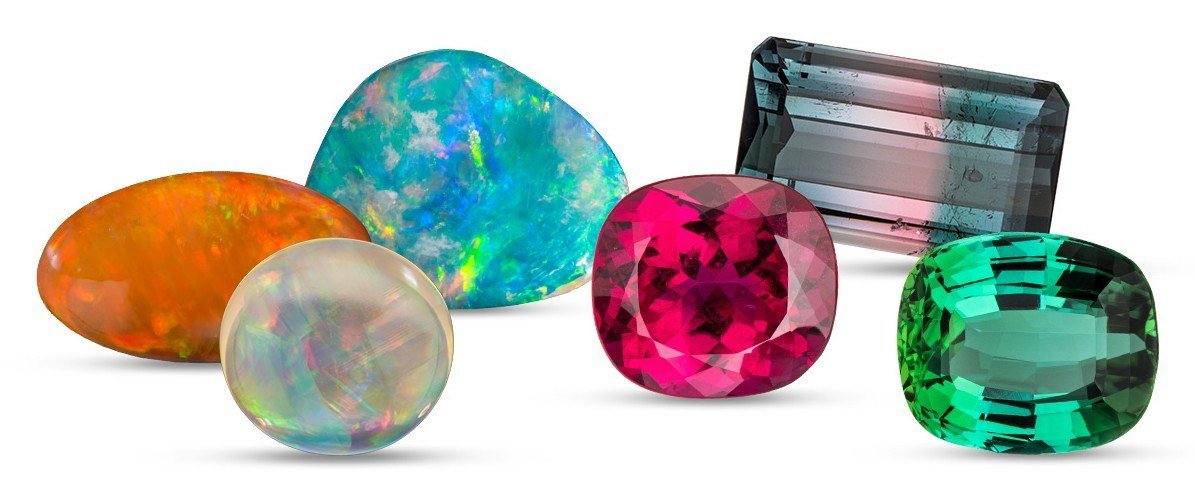
Stone: Opal; tourmaline | Color: Shifting flashes of color; every color | Hardness: Mohs 5 to 6.5; 7 to 7.5
Opal is known for play-of-color, flashes that shift as the stone moves. Bedouins believed it held lightning. Australia is the most productive source, from Lightning Ridge black opal to Coober Pedy, with Ethiopia and Mexico also important. Opal can crack with heat or a sudden temperature change.
Tourmaline comes in more colors than almost any gem, often several in one crystal; its Sinhalese name means “stone with mixed colors.” It was October’s alternate on the 1912 list, and pink tourmaline was confirmed in 1952. Maine’s Mount Mica deposit, found in 1820, is a famous U.S. source.
11. November: Topaz and citrine
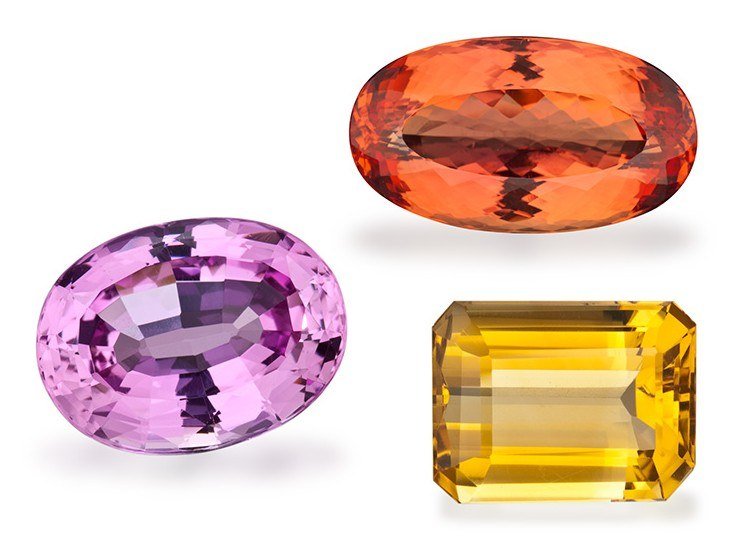
Stone: Topaz; citrine | Color: Colorless, blue, yellow, orange, pink; yellow to brownish orange | Hardness: Mohs 8; 7
Topaz comes in many colors, though most blue topaz sold today is colorless topaz that was irradiated and heated. Imperial topaz, a pinkish orange variety, is linked to Ouro Preto in Brazil, mined for more than 200 years. Topaz is hard but can split with a sharp knock, so avoid steam and ultrasonic cleaners.
Citrine, added in 1952, is yellow to brownish orange quartz named for the French citron, lemon. GIA notes that most citrine on the market is heat-treated amethyst. It is durable enough for normal wear and comes mainly from Bolivia, Spain, Madagascar, Mexico and Uruguay.
12. December: Tanzanite, turquoise and zircon
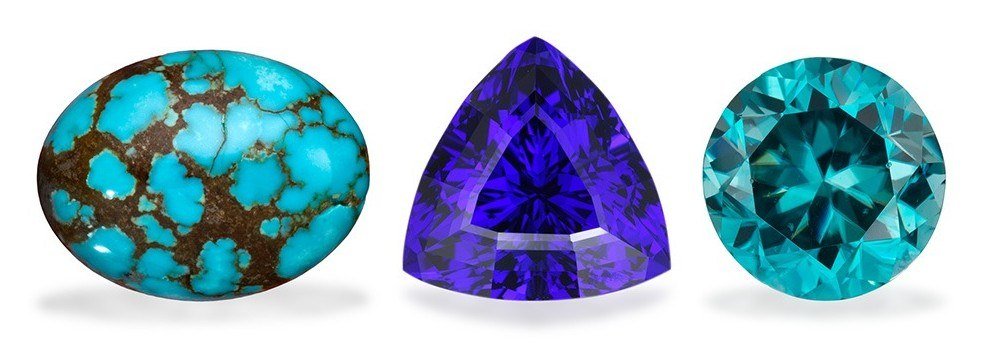
Stone: Tanzanite; turquoise; zircon | Color: Blue to violet; blue to green; many colors | Hardness: Mohs 6 to 7; 5 to 6; 6 to 7.5
Tanzanite, the newest December stone, was added in 2002. It is a blue-violet zoisite mined commercially only in Tanzania’s Merelani Hills, and Tiffany & Co. launched it in 1968. Most starts out brownish and is heat-treated to its blue color.
Turquoise is the oldest of the three; it decorates King Tutankhamun’s funerary mask, and Iran’s Nishapur mines have worked it for more than 1,000 years. Zircon, added in 1952 in place of lapis lazuli, was long mistaken for diamond. Both turquoise and tanzanite are softer, so earrings and pendants suit them best.
Where the Idea of Birthstones Came From
The tradition starts with the breastplate of the high priest Aaron, described in Exodus 28 as four rows of three stones, one for each of the 12 tribes of Israel. In the first century, the historian Josephus linked those 12 stones to the 12 months and the 12 signs of the zodiac, and St. Jerome repeated the idea about three centuries later.
Wearing a stone for your own birth month came much later. Mineralogist George Frederick Kunz, writing in his 1913 The Curious Lore of Precious Stones, traced the custom to Poland in the 18th century. Older lists varied by country and by jeweler until the 1912 Kansas City meeting set one U.S. standard.
How the Modern Birthstones List Was Made and Changed
The U.S. list is a jewelry-trade decision, not an astrological one. When tanzanite was added, an American Gem Trade Association executive put it plainly: there is no astrological authority that assigns birthstones. The changes so far:
| Year | Change |
|---|---|
| 1912 | National Association of Jewelers adopts a standard list in Kansas City, with alternates for five months |
| 1952 | Jewelry Industry Council of America adds alexandrite (June) and citrine (November), confirms pink tourmaline (October), and replaces lapis lazuli with zircon (December) |
| 2002 | American Gem Trade Association adds tanzanite for December |
| 2016 | Jewelers of America and the American Gem Trade Association add spinel for August |
Some stones people think of as recent were there from the start. The 1912 chart, as printed by Kunz, already listed aquamarine, moonstone, peridot and tourmaline as alternates, alongside the main stones. Kunz himself objected to giving any month two or three stones, and to pearl, which he said is “not a stone in any sense of the word.”
Modern vs. Traditional Birthstones and the UK List
“Traditional” usually means the older stone for a month, such as bloodstone for March or sardonyx for August, while “modern” means the current trade chart. Britain has its own version. The National Association of Goldsmiths set a uniform list in 1937, and its chart differs in several ways:
- Rock crystal is an alternate for April, chrysoprase for May and cornelian for July.
- Lapis lazuli is an alternate for September rather than December.
- October is opal only, with no tourmaline.
- There is no alexandrite, spinel or zircon.
Birth month and zodiac sign do not line up, since the signs change around the 20th of each month. Someone born on March 25 has aquamarine as a birthstone but Aries as a sign; our guide to all 12 zodiac signs lists the dates.
Which Birthstones Hold Up to Everyday Wear
If a birthstone is going in an engagement ring or a ring worn every day, hardness and toughness matter more than tradition. Based on GIA’s care guidance:
- Best for daily rings: diamond (April), ruby (July), sapphire (September), alexandrite (June), spinel (August), aquamarine (March) and amethyst (February).
- Fine with some care: tourmaline (October), citrine (November) and topaz (November), which is hard but can split if knocked.
- Better in earrings or pendants: pearl and moonstone (June), opal (October), tanzanite and turquoise (December), peridot (August) and garnet (January).
For cleaning, warm soapy water and a soft brush suit most stones on the list, while pearls only need a soft, damp cloth. GIA advises against ultrasonic and steam cleaners for emerald, moonstone, peridot, topaz, tourmaline, tanzanite and turquoise.
How to Buy a Birthstone: Treatments and Lab-Grown Stones
Many birthstones are treated. Heat is routine for ruby, sapphire, tanzanite and blue zircon, emeralds are usually oiled or resin-filled, and most blue topaz is irradiated. Under the FTC’s Jewelry Guides, 16 CFR 23.24, sellers must disclose a treatment that is not permanent, needs special care, or significantly affects value.
Lab-grown stones are legal and often cheaper, but they must be labeled. The same FTC guides bar using the word “birthstone” for a lab-grown stone unless “laboratory-grown” or “laboratory-created” comes right before it. A few questions to ask any jeweler:
- Is the stone natural or laboratory-grown?
- Has it been treated, and how?
- Does the treatment need special care?
- Is there a lab report, such as a GIA identification report, for a higher-value stone?
A birthstone makes a personal gift because it carries the recipient’s month. If gifts are how someone feels appreciated, that fits one of the five love languages too.
Frequently Asked Questions
Which months have three birthstones?
June (pearl, alexandrite, moonstone), August (peridot, spinel, sardonyx) and December (tanzanite, turquoise, zircon). They are the only three months with three stones on the modern list.
Who decides the official birthstones?
Jewelry trade groups. The National Association of Jewelers set the U.S. list in 1912, and later changes came from the Jewelry Industry Council of America, the American Gem Trade Association and Jewelers of America.
What is the newest birthstone?
Spinel, added for August in 2016. Before that, tanzanite joined December in 2002.
Can a lab-grown stone be a birthstone?
Yes, as long as it is clearly labeled. FTC rules require “laboratory-grown” or “laboratory-created” right before the word “birthstone” or the gem name.
Related Articles

Get the Fox Bulletin briefing
The stories that matter, in your inbox. No spam, unsubscribe anytime.
Newsletter signup will be available soon.
Related stories

When Is Thanksgiving? This Year’s Date and the Next 10 Years
Thanksgiving 2026 falls on Thursday, November 26. Here is every date through 2035, the 1941 law behind the fourth-Thursday rule, and what happens that week.
Zodiac Signs: All 12 Dates, Meanings and Constellations
The 12 zodiac signs from Aries to Pisces: dates, elements, modalities and rulers, the constellation behind each sign, and why the Sun is no longer where the signs say.
The 5 Love Languages: What Each One Means and How to Use It
Words of affirmation, quality time, gifts, acts of service and physical touch: what each love language means, how to find yours, and what the studies found.