

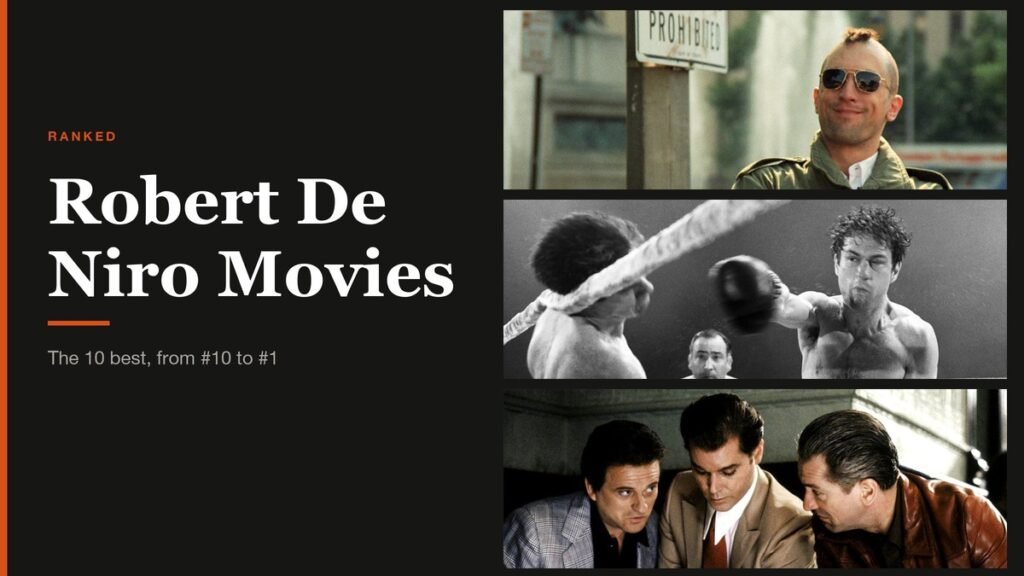
Robert De Niro movies helped define what American screen acting looked like from the 1970s onward. Robert De Niro came out of the New York film scene of the late 1960s, became Martin Scorsese's most important collaborator, and won Oscars for playing a young Vito Corleone and the boxer Jake LaMotta. Later decades brought comedy, franchises and a late return to Scorsese, but his reputation still rests on a run of performances so intense that they changed how a generation of actors approached a role.
The countdown puts the performance first. A film rises when De Niro builds something unforgettable out of the part, when the role shows a side of him that nothing else does, or when it shaped the rest of his career; the overall quality of the film decides the close calls. That is why a supporting turn can outrank a lead, and why a comedy holds a place among the crime epics. Scorsese dominates, as he must, but the countdown also makes room for Coppola, Cimino, Mann and a very funny road movie.
Robert De Niro Movies Ranked by Role and Director
| # | Movie | Year | Role | Director |
|---|---|---|---|---|
| 1 | Taxi Driver | 1976 | Travis Bickle | Martin Scorsese |
| 2 | Raging Bull | 1980 | Jake LaMotta | Martin Scorsese |
| 3 | GoodFellas | 1990 | James Conway | Martin Scorsese |
| 4 | The Godfather Part II | 1974 | Vito Corleone | Francis Ford Coppola |
| 5 | The Deer Hunter | 1978 | Michael Vronsky | Michael Cimino |
| 6 | Heat | 1995 | Neil McCauley | Michael Mann |
| 7 | The King of Comedy | 1982 | Rupert Pupkin | Martin Scorsese |
| 8 | Casino | 1995 | Sam 'Ace' Rothstein | Martin Scorsese |
| 9 | Killers of the Flower Moon | 2023 | William Hale | Martin Scorsese |
| 10 | Midnight Run | 1988 | John Wesley “Jack” Walsh | Martin Brest |
10. Midnight Run (1988)
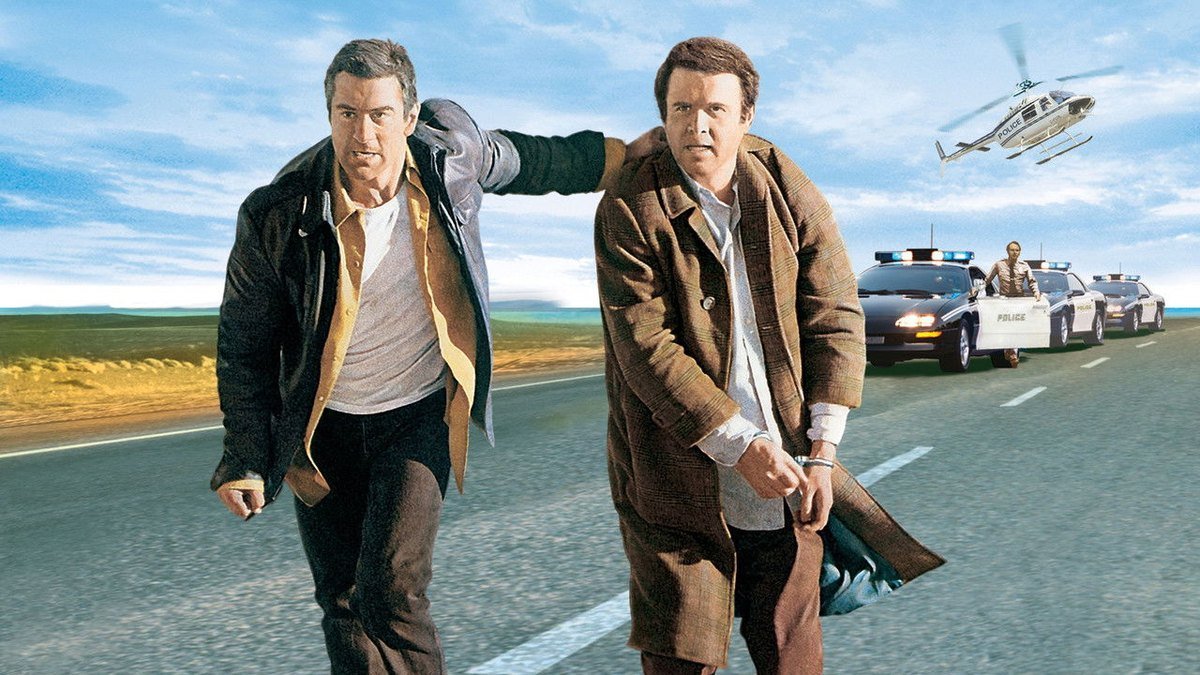
Martin Brest's Midnight Run casts De Niro as Jack Walsh, a former Chicago cop turned bounty hunter who takes a job bringing back Jonathan Mardukas, an accountant who embezzled millions from the mob, played by Charles Grodin. The assignment is supposed to be a quick flight from New York to Los Angeles, but Mardukas refuses to fly, and the trip becomes a cross-country chase by train, bus and car. Yaphet Kotto plays the FBI agent Alonzo Mosely, John Ashton is the rival bounty hunter Marvin Dorfler, and Dennis Farina plays the mobster Jimmy Serrano.
This is De Niro's finest comedy, and it works because he plays Walsh completely straight: grumpy, profane and determined, with a broken marriage behind him and a dream of opening a coffee shop. His bickering with Grodin develops into a genuine, reluctant friendship, and the final scene earns its warmth. It opens the countdown because it showed, years before his broader comedies, that his intensity could be hilarious. It remains one of the most rewatchable films he ever made.
9. Killers of the Flower Moon (2023)
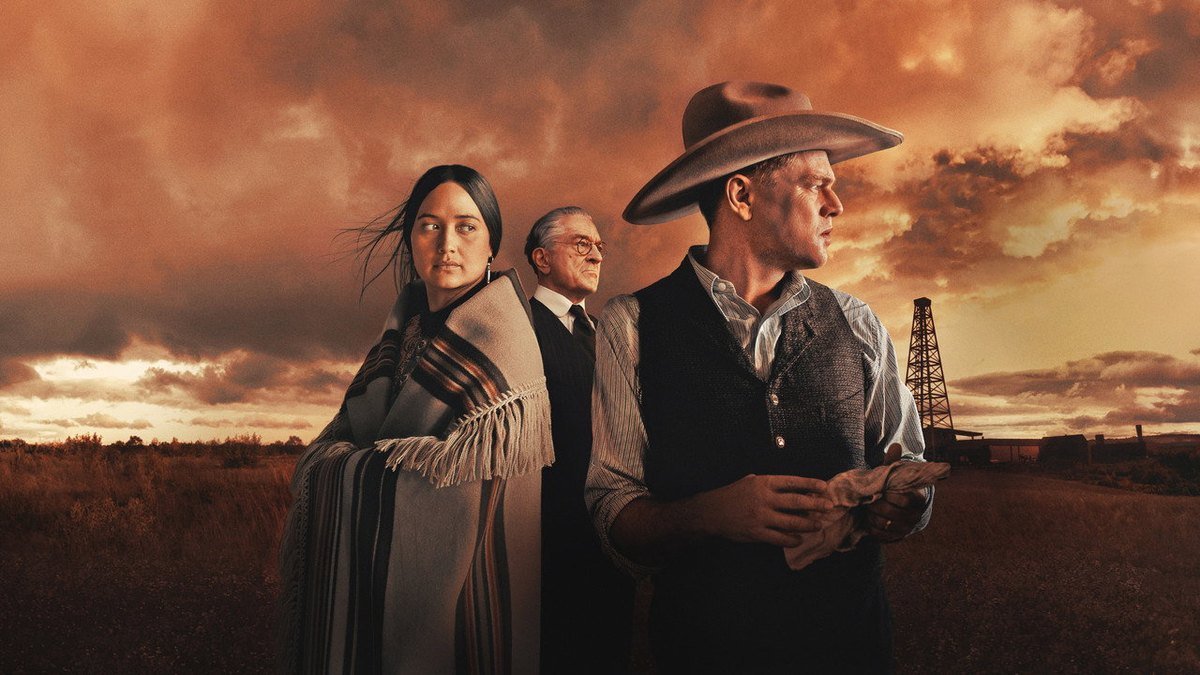
Scorsese's Killers of the Flower Moon returns to a real series of murders in 1920s Oklahoma, where members of the oil-rich Osage Nation were killed for their wealth. De Niro plays William Hale, a cattleman who presents himself as the Osage's devoted friend and benefactor while orchestrating the killings. Leonardo DiCaprio plays his nephew Ernest Burkhart, whom Hale steers into marrying Mollie, an Osage woman played by Lily Gladstone, and Jesse Plemons plays Tom White, the federal agent who arrives to investigate.
Hale is a monster with a soft voice, and De Niro's achievement is to make his friendliness completely convincing. He offers loans, gifts and fatherly advice while treating murder as a business plan, and his scenes manipulating DiCaprio's weak, greedy Ernest are quietly horrifying. It is a late-career triumph that earned him a Best Supporting Actor nomination at the 2024 Academy Awards, and it ranks ninth only because the film rightly centers on Mollie and Ernest.
8. Casino (1995)
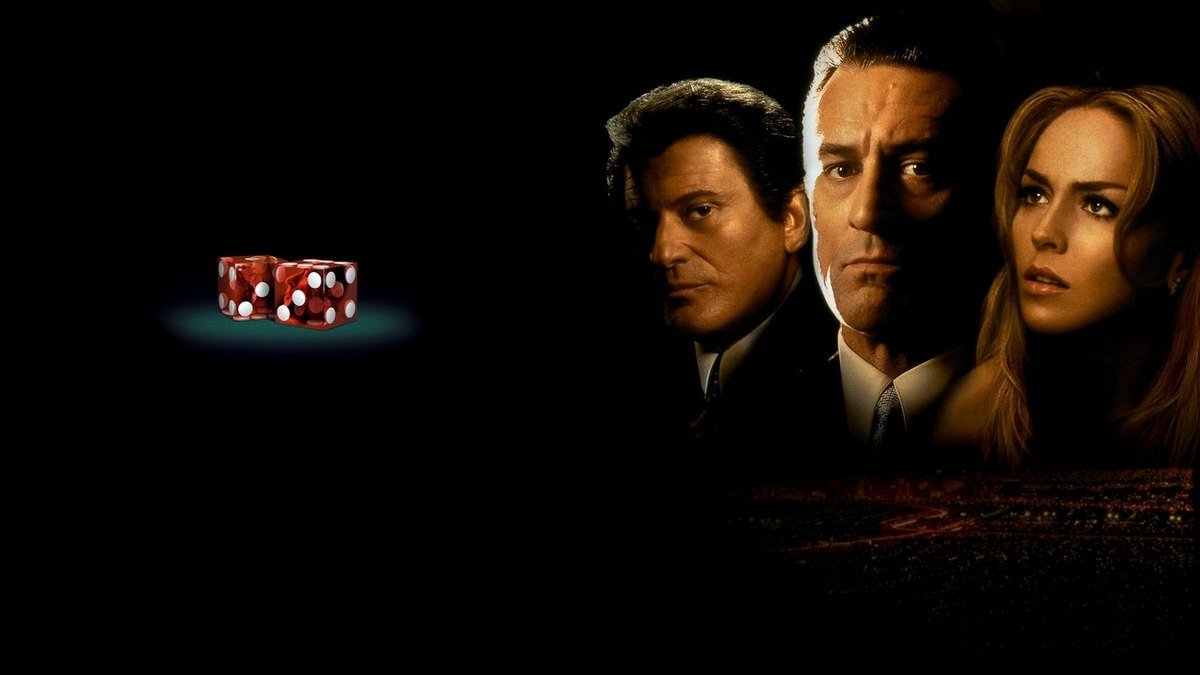
In Scorsese's Casino, De Niro plays Sam 'Ace' Rothstein, a brilliant sports handicapper sent by Midwest mob bosses to run a Las Vegas casino in the 1970s. Ace keeps the skimmed money flowing back to them, but his world is undermined by his marriage to Ginger McKenna, a glamorous hustler played by Sharon Stone, and by his childhood friend Nicky Santoro, a violent enforcer played by Joe Pesci. James Woods plays Lester Diamond, Ginger's former boyfriend, and Don Rickles plays Billy Sherbert, Ace's casino manager.
Ace is a perfectionist in a world that runs on chaos, and De Niro plays him as cool, precise and increasingly helpless as the people he loves wreck everything he has built. The voice-over narration, shared with Pesci, carries the film's sense of a vanished era. It sits eighth because the role is more reactive than his greatest work, but few performances capture so well the slow ruin of a man who thought he could control the odds.
7. The King of Comedy (1982)
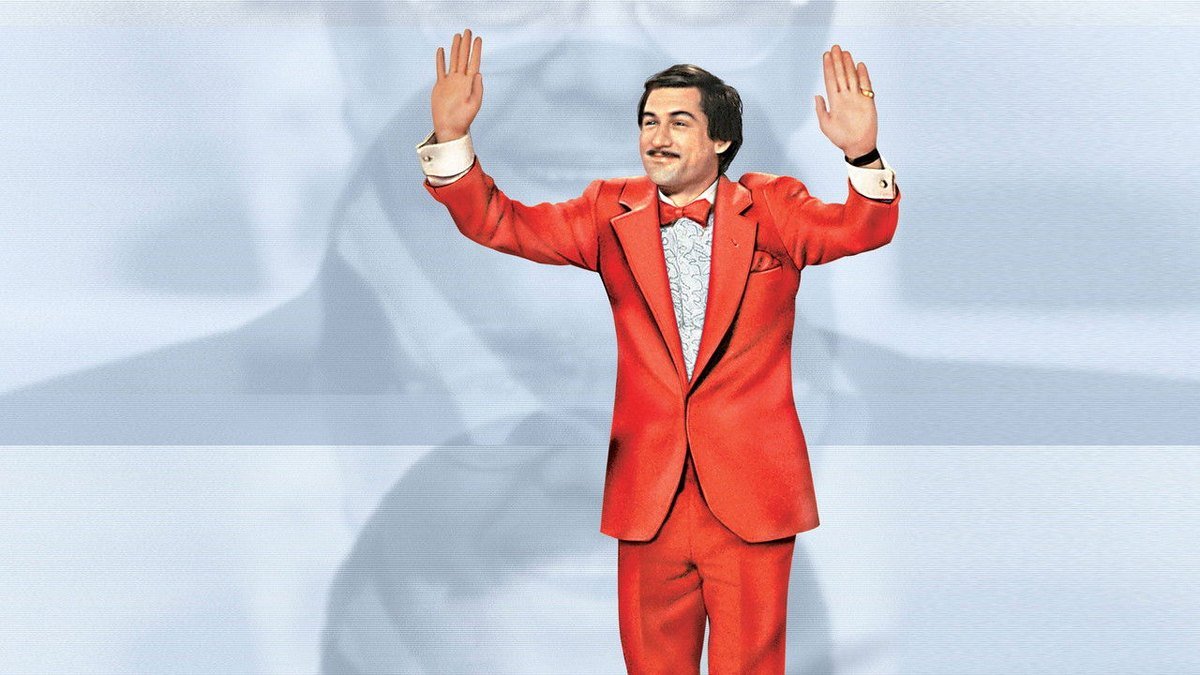
Scorsese's The King of Comedy stars De Niro as Rupert Pupkin, a would-be stand-up comedian in his thirties who still lives with his mother and rehearses talk show appearances in her basement. Convinced that his big break is owed to him, Rupert stalks the late-night host Jerry Langford, played by Jerry Lewis, and eventually kidnaps him with the help of Masha, an unhinged fellow fan played by Sandra Bernhard, demanding a spot on the show as ransom. Diahnne Abbott plays Rita, a bartender Rupert tries to impress.
Rupert is the comic cousin of Travis Bickle, another lonely man desperate to be noticed, but De Niro plays him with a grinning, unstoppable confidence that is funny and deeply uncomfortable at once. He never accepts rejection; he simply reframes it as a misunderstanding. Lewis, playing it completely straight, makes a perfect foil. It ranks seventh as one of his boldest performances, a satire of celebrity that looks more prescient with every passing year.
6. Heat (1995)
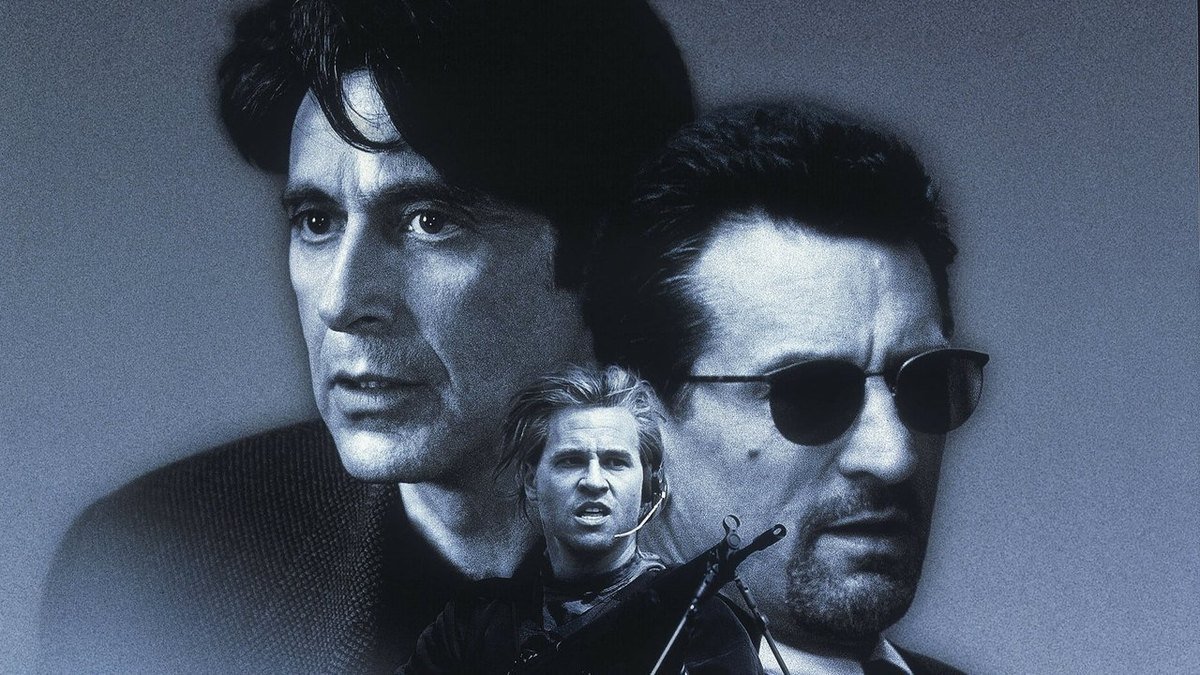
Michael Mann's Heat sets De Niro's professional thief Neil McCauley against Al Pacino's obsessive detective Vincent Hanna in a sprawling Los Angeles crime saga. Neil runs a disciplined crew, including Val Kilmer's Chris Shiherlis and Tom Sizemore's Michael Cheritto, with jobs arranged through a fence named Nate, played by Jon Voight. Neil lives by a rule that he must be ready to abandon everything in his life at a moment's notice, until a relationship with a young graphic designer complicates his plans.
De Niro plays Neil as the cool mirror image of Pacino's volcanic cop, and their meeting over coffee in a diner is the film's quiet centerpiece. Neil's precision and loneliness make him oddly sympathetic, and the downtown bank robbery shootout is among the great action sequences of its decade. Sixth place recognizes one of his most controlled performances, and the film belongs on any shortlist of essential action movies.
5. The Deer Hunter (1978)
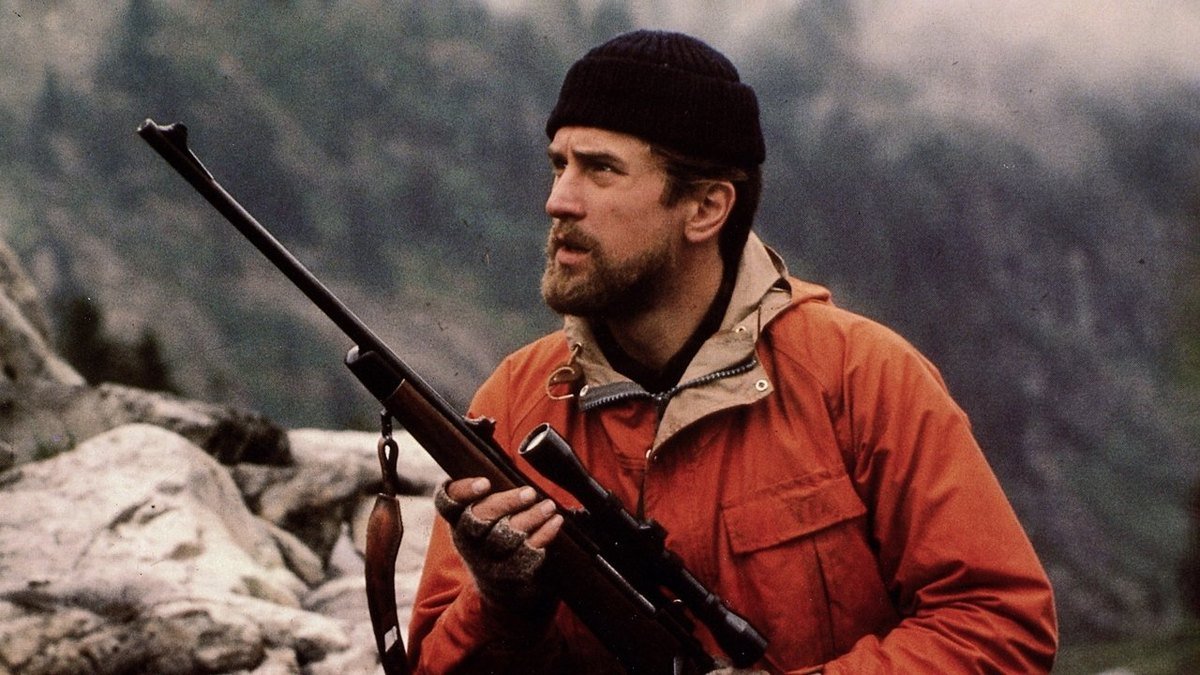
Michael Cimino's The Deer Hunter follows a group of steelworkers from a small Pennsylvania town before, during and after the Vietnam War. De Niro plays Michael Vronsky, the most disciplined of the friends and a dedicated deer hunter, who ships out with Nick, played by Christopher Walken, and Steven, played by John Savage. The long opening wedding sequence introduces the community they leave behind, including Meryl Streep as Linda, Nick's girlfriend, and John Cazale as Stan. In Vietnam, the friends are captured and forced into games of Russian roulette.
Michael is a man of control, convinced a deer should be taken with a single clean shot, and De Niro shows that code being tested past breaking point. His return home is played with heartbreaking restraint: he cannot face the welcome party, and he grows close to Linda without ever saying what he feels. The performance earned a Best Actor nomination at the 1979 Academy Awards. Fifth place reflects a towering role in a film that remains overwhelming, and his final scenes with Walken are among the most painful he has played.
4. The Godfather Part II (1974)
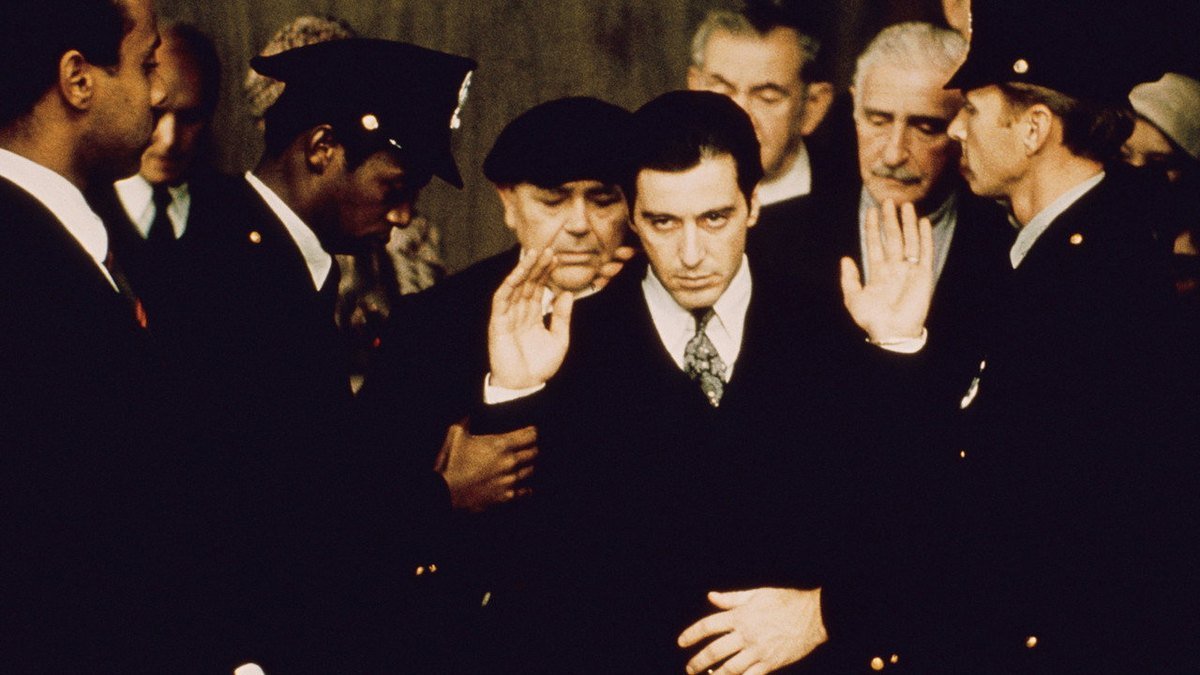
Francis Ford Coppola's The Godfather Part II moves between parallel stories. In one, Al Pacino's Michael Corleone tightens his grip on the family business in the late 1950s, with Robert Duvall as Tom Hagen, Diane Keaton as Kay and John Cazale as Fredo. In the other, De Niro plays the young Vito Corleone, who arrives in New York as an orphaned boy from Sicily, grows up in the immigrant streets of Little Italy and rises to power by challenging Don Fanucci, the neighborhood extortionist, in the early decades of the century.
De Niro had to play a younger version of a character Marlon Brando had already made iconic, and he does it largely in Sicilian, through stillness, watchful eyes and a soft voice that hints at the man Vito will become. The killing of Fanucci during a street festival is a masterpiece of slow-building tension. He won the Academy Award for Best Supporting Actor at the 1975 ceremony, his first Oscar. It ranks fourth only because his screen time is shared with Pacino's half of the story.
3. GoodFellas (1990)
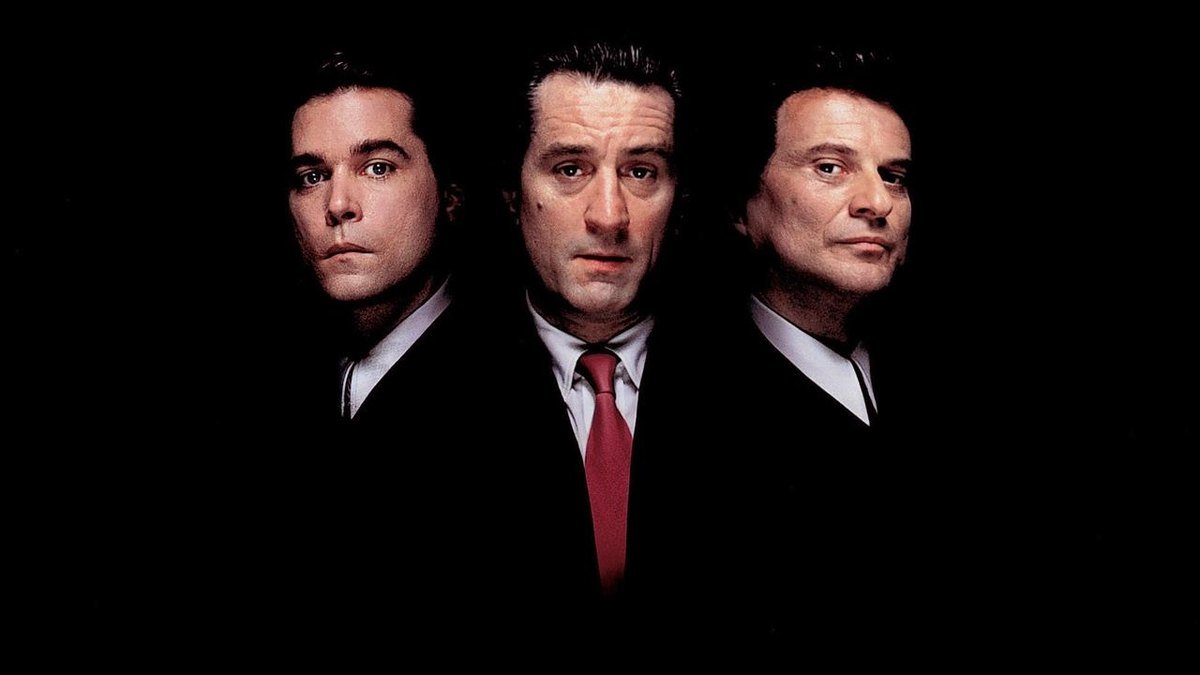
In Scorsese's GoodFellas, De Niro plays Jimmy Conway, a charismatic Irish-American hijacker who takes young Henry Hill, played by Ray Liotta, under his wing in the New York mob of the 1950s through the 1970s. Jimmy can never become a made man because of his heritage, but he is respected, generous with tips and quietly lethal. Joe Pesci plays the volatile Tommy DeVito, Paul Sorvino is the neighborhood boss Paul Cicero, and Lorraine Bracco plays Henry's wife Karen, whose view of the life changes over the years.
De Niro takes a supporting role and makes it unforgettable. Jimmy laughs easily and hands out cash, but after the Lufthansa heist the film's most chilling moments come from watching him decide that his own crew has become a liability. A single slow push in on De Niro smoking at a bar, silently weighing a murder, says more than pages of dialogue. Third place recognizes a performance built on menace kept just below the surface, in what may be the most entertaining crime film ever made.
2. Raging Bull (1980)
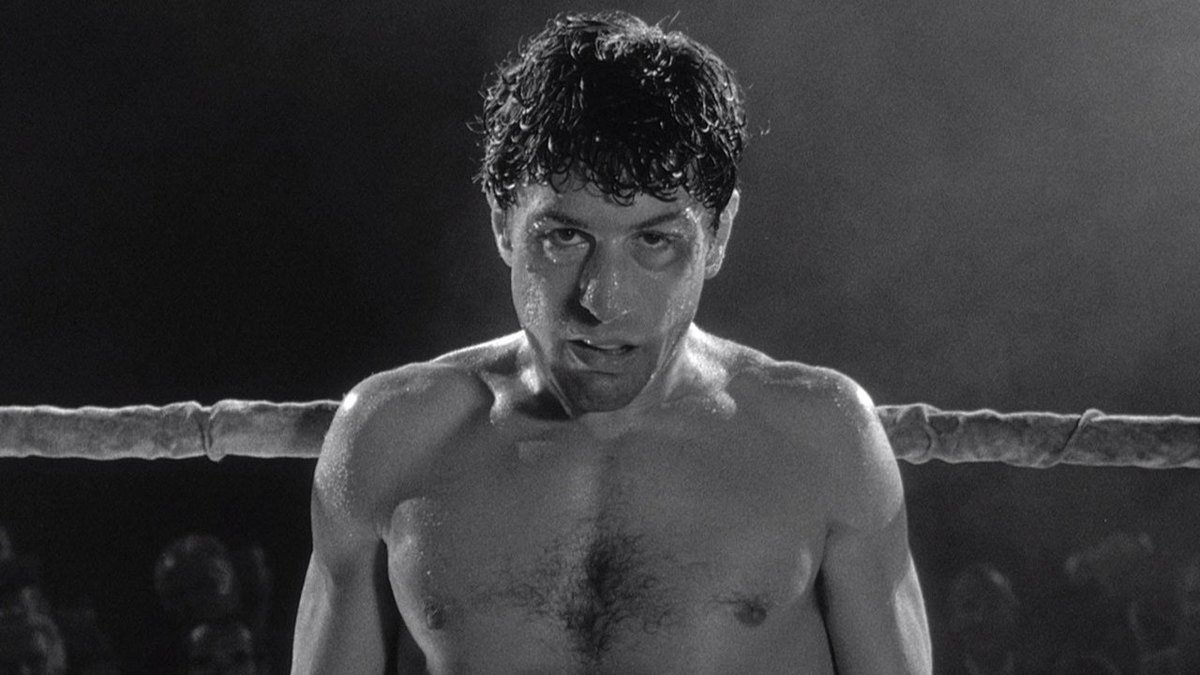
Shot in stark black and white, Scorsese's Raging Bull traces the rise and collapse of Jake LaMotta, a middleweight boxer whose violence in the ring is matched by his jealousy and cruelty outside it. Joe Pesci plays his brother and manager Joey, Cathy Moriarty plays Vickie, the teenage girl Jake pursues and marries, and Frank Vincent and Nicholas Colasanto play Salvy and Tommy Como, local mob figures who want a piece of his career. The story runs from the 1940s into his later years as a bloated nightclub entertainer.
De Niro's LaMotta is a frightening, pitiful figure, a man who can only express himself by hurting someone, including himself. The fight scenes are brutal, but the domestic scenes are harder to watch, as Jake's paranoia turns on Vickie and Joey. In the final stretch De Niro is almost unrecognizable, heavy, slow and rehearsing his act in front of a mirror. He won the Academy Award for Best Actor at the 1981 ceremony and the Golden Globe for Best Actor in a Motion Picture Drama. It ranks second by a hair.
1. Taxi Driver (1976)
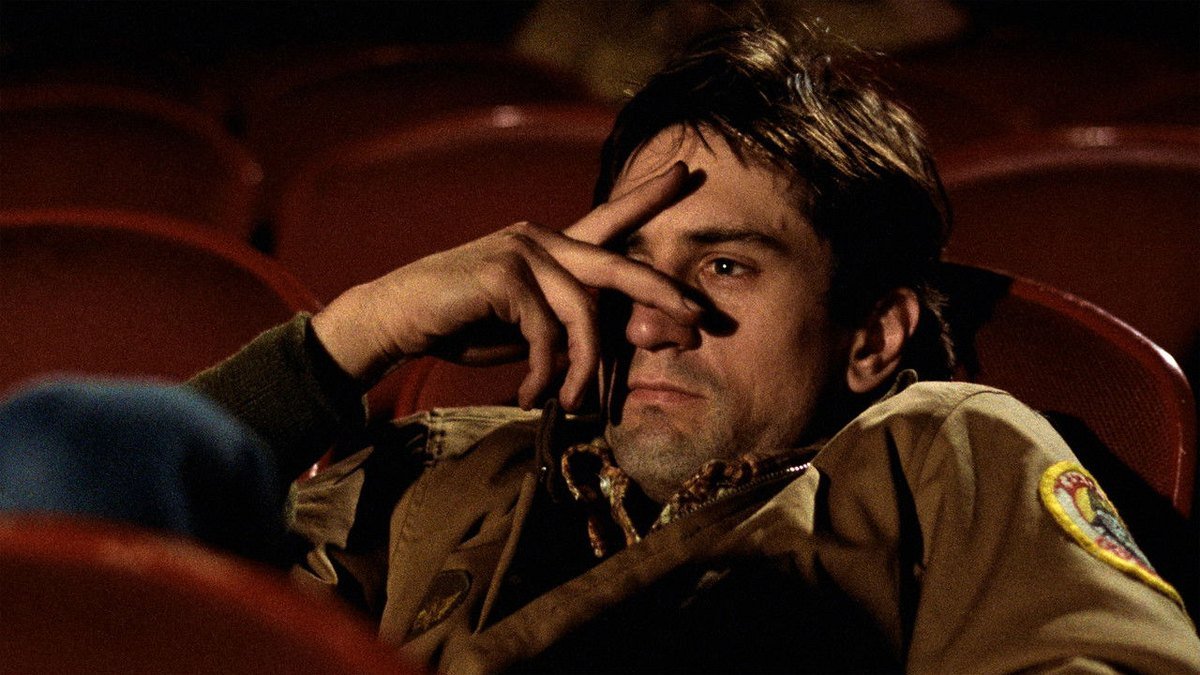
Martin Scorsese's Taxi Driver follows Travis Bickle, a lonely former Marine who cannot sleep and takes a job driving a cab through New York's most squalid neighborhoods at night. Travis fixates on Betsy, a campaign worker played by Cybill Shepherd, and after she rejects him he turns his attention to rescuing Iris, a twelve-year-old runaway played by Jodie Foster, from her pimp Sport (Harvey Keitel). Peter Boyle plays Wizard, an older cabbie who offers Travis useless advice as his mind darkens.
No De Niro character has been more imitated or analyzed, and the performance still feels dangerous. Travis is awkward and almost sweet in his early scenes, then increasingly rigid as loneliness curdles into a plan for violence, and De Niro makes every step of that slide feel plausible. The mirror scene is the famous moment, but quieter details, like his disastrous decision to take Betsy to a porn theater on a date, are just as revealing. It earned him a Best Actor nomination at the 1977 Oscars, and it takes first place.
Robert De Niro and Martin Scorsese: The Partnership That Defined an Era
Martin Scorsese directed more of the countdown than anyone else: Taxi Driver, Raging Bull, GoodFellas, The King of Comedy, Casino and Killers of the Flower Moon. Their work together began with Mean Streets in 1973 and also includes Cape Fear and The Irishman, which makes it one of the longest actor and director collaborations in American film.
What Scorsese gave De Niro was room to go further than other directors allowed: into ugliness, obsession and moral collapse, with no requirement that the audience like the man on screen. What De Niro gave Scorsese was total commitment, the willingness to make Travis, Jake, Rupert and Ace as unpleasant as they needed to be. The later films add something new, age and regret, so that Killers of the Flower Moon plays as a dark reflection on the charming villains of their earlier work.
Honorable Mentions: More De Niro Worth Your Time
- Ronin (1998): as Sam, a former intelligence operative hired by a team of mercenaries in France, in a thriller remembered for its car chases.
- Analyze This (1999): as Paul Vitti, a mob boss who starts seeing Billy Crystal's psychiatrist after panic attacks.
- Wag the Dog (1997): as Conrad Brean, a political fixer who invents a war to distract from a presidential scandal.
- Cop Land (1997): as Lt. Moe Tilden, an internal affairs investigator circling a town full of corrupt police officers.
- Stardust (2007): as Captain Shakespeare, a feared sky pirate with a secret soft side, in one of the most charming fantasy adventures of its decade.
- Joker (2019): as Murray Franklin, a late-night host whose show becomes the stage for the film's climax, a pointed echo of The King of Comedy.
Frequently Asked Questions
What is Robert De Niro's best movie?
Taxi Driver (1976) takes first place for his performance as Travis Bickle, with Raging Bull a very close second.
How many Oscars has Robert De Niro won?
Two: Best Supporting Actor for The Godfather Part II at the 1975 ceremony and Best Actor for Raging Bull at the 1981 ceremony.
Which Robert De Niro movies did Martin Scorsese direct?
Among his very best, Scorsese directed Taxi Driver, Raging Bull, GoodFellas, The King of Comedy, Casino and Killers of the Flower Moon.
Do Robert De Niro and Al Pacino share scenes in Heat?
Yes. De Niro plays the thief Neil McCauley and Pacino plays the detective Vincent Hanna, and their conversation in a diner is the heart of the film.
Related Articles
- Best Movies of All Time: Top 10 Ranked
- Most Oscar Wins: The 15 Most Decorated Films Ever
- Best Thriller Movies: 8 Mysteries Ranked by Record
- Leonardo DiCaprio Movies Ranked: The 10 Best, From Shutter Island to The Wolf of Wall Street
- Clint Eastwood Movies Ranked: 10 Best, From A Fistful of Dollars to Unforgiven

Get the Fox Bulletin briefing
The stories that matter, in your inbox. No spam, unsubscribe anytime.
Newsletter signup will be available soon.
Related stories
Johnny Depp Movies Ranked: 10 Best, From Sweeney Todd to Ed Wood
Scissor hands, a drunken pirate, a cheerful B-movie director and a Boston gangster: the ten Johnny Depp performances that matter most, counted down.
Keanu Reeves Movies Ranked: The 10 Best, From Bill & Ted to The Matrix
Ted Logan, Johnny Utah, Neo and John Wick: here are the ten films that turned Reeves from a cheerful slacker into one of the great action stars.
Jake Gyllenhaal Movies Ranked: 10 Best, From October Sky to Nightcrawler
Obsessives, loners and men coming apart: the ten Jake Gyllenhaal performances that matter most, counted down to his chilling career best.